
Archive for the ‘Kay Stroud’ Category
Make a Game-Changing New Year’s Resolution Leave a comment
 While some of us are still dealing with the influx of visitors, festivities and sun-soaked holidays, in the back of our minds is the niggling thought that 2015 has already begun and now is the time to make our New Year’s resolutions, before it’s too late.
Your Age Doesn’t Define You 6 comments
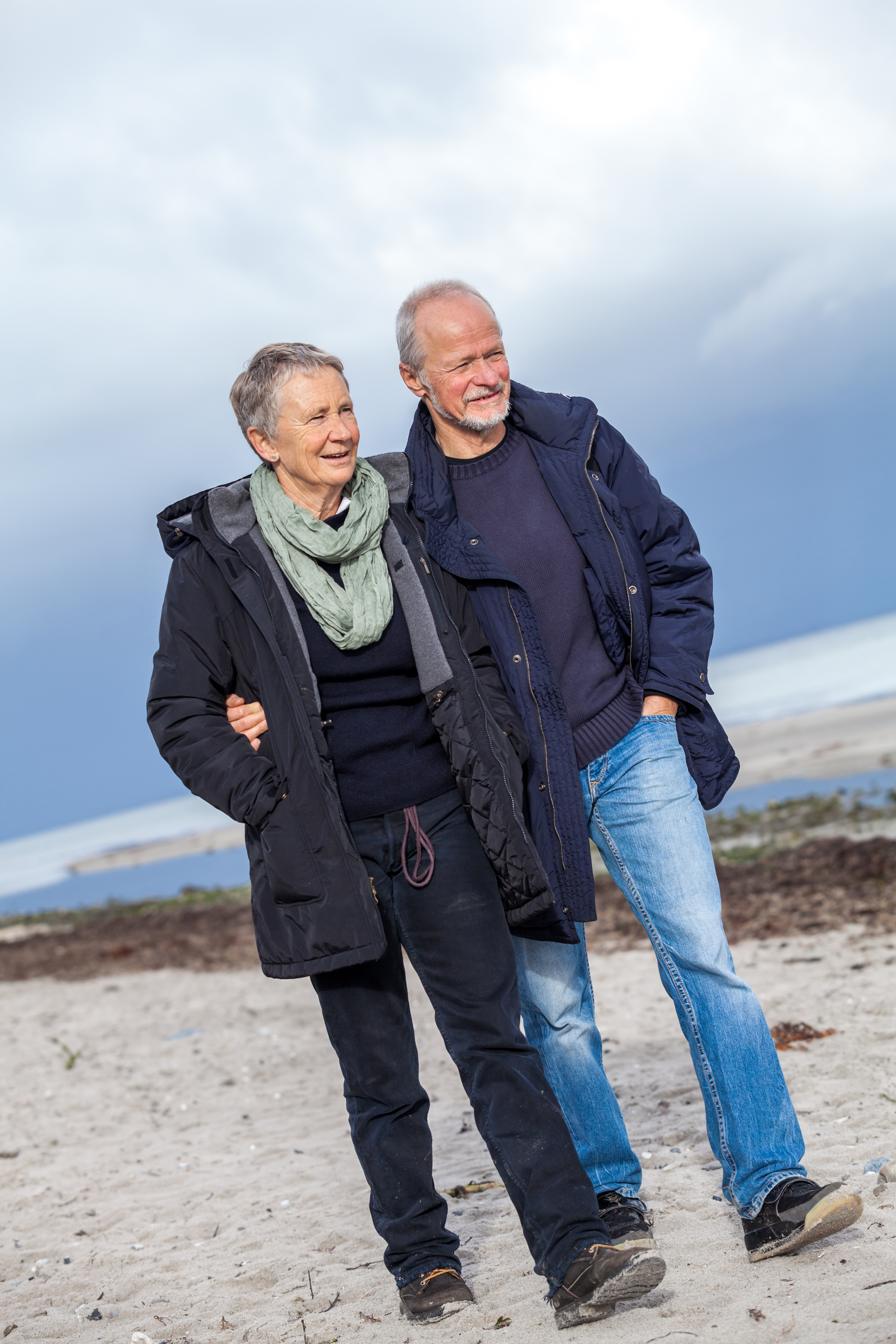 Do you believe that you are you are ‘as young as you feel’? That you’re free to take charge of your own health, happiness and wellbeing, no matter what your age?
In frustration at some of the ingrained beliefs about aging that he saw shackling his colleagues and friends as they grew older, an American baseball legend asked, “How old would you be if you didn’t know how old you were?” implying that you need to break out of the mental conditioning that makes you think you are defined by your age.
The calendar is a useful way to let you know the date, but if you let yourself be hemmed in by your chronological age, you may lock yourself out of potentially valuable opportunities.
Nextgen population researchers have recognised the greater import of health, cognitive function and life expectancy rather than age data as they plan for future populations. “We should not consider someone who is 60 or 65 to be an older person,” said researcher Sergei Scherbov. “Saying that ‘40 is the new 30’ .. is truer than people know.”
We’ve heard how our health age can be years younger than our calendar age, if we’re active and eat sensibly. Now, research into the mind/body/spirit connection in several fields, including neuroscience and meditation, adds evidence to the claim that it is our mindset, more than the food we eat or the exercise we do, that affects our physical body.
Excited by the health implications of the mind sciences, a Cleveland Clinic Foundation exercise psychologist compared individuals who worked out at a gym against another cohort who just visualized working out. Not surprisingly, the gym-goers experienced a 30 percent increase in muscle. However, the ones who only thought about working out also experienced a 13% increase in muscle strength, urging us to think beyond the physical to mental attitudes and capacities.
Many integrative health practitioners take this a step further, asserting that it is spiritual thoughts and practices that make a significant difference to better health and longevity. Mary Baker Eddy, an early researcher into this connection in her book, Science and Health, suggests that we “…. shape our views of existence into loveliness, freshness, and continuity, rather than into age and blight” for a longer, healthier and happier life.
She also suggests that it’s time to stop focussing on the body so much, and be aware of the myths about aging that are constantly influencing us. Be aware that “timetables of birth and death are so many conspiracies against manhood and womanhood”, and stop keeping a record of ours or others ages; or at least dispute the assumptions of debility and aging every time you buy a birthday card.
Healthwise, it’s worth acknowledging that spiritual, mindful or positive thoughts bring vitality, freshness and promise to each day.
Some have broken free from the belief that they’re ruled by an aging body. You too can adopt a mental attitude of ageless being, and look forward to experiencing the health benefits.
This article, Your Age Doesn’t Define You, is by Kay Stroud. Kay is a health writer focussing on the leading edge of consciousness, spirituality and health. Her articles can be found on Health4Thinkers.
5 Tips to All Round Better Health Leave a comment
 1. Hope
Hope is the stuff of change, recovery and healing, according to Dr Shane Lopez, author of the new book: Making Hope Happen: Create the Future You Want for Yourself and Others. “Hope is half optimism. The other half is the belief in the power that you can make it so”, writes Lopez.
Hopeful people make an investment in the future that pays off in the present: in the way they eat, exercise, conserve energy, take care of themselves and stick to their treatment plan. He suggests that this sort of “change in mind-set has the power to alter neurochemistry”.
It takes work to keep your thinking in tune with what’s good around you. For me, trust that ‘good will win’ lifts me out of the daily grind of thinking that what I see and hear is all there is to us, into a mental realm a bit higher.
2. Show Your Gratitude
Studies show that saying ‘thanks’ reduces stress, and giving back through volunteering is good for your heart, in more ways than one
For example, researchers from the University of British Columbia found that volunteers who felt more empathy and put in more time and effort not only experienced greater mental health but also better cardiovascular health.
Research cited by Dr Stephen Post in his book Why Good Things Happen to Good People also found that giving in high school predicts good physical and mental health in late adulthood; generous behaviour reduces adolescent depression and suicide risk; giving quells anxiety; giving to others helps facilitate self-forgiveness and increases your longevity; giving is so powerful that sometimes even just ‘thinking’ charitable thoughts helps us.
This could be the right moment to volunteer to do Meals on Wheels or tuck shop duty, offer to coach your friend in maths or put up your hand to coach the soccer team …. and give thanks. It could not only help others, but also help you.
3. Love
We need to move past our cultural preconceptions that sometimes equate love only with infatuation, sexual desire or fairytale endings. Love is kindness and compassion.
“Love literally [makes] people healthier”, reported Dr Barbara Fredrickson, Professor of Psychology at the University of North Carolina.
“People tend to liken their emotions [like loving] to the weather, viewing them as uncontrollable,” said Fredrickson. This research shows not only that our emotions are controllable, but also that we can take the reins of our daily emotions and steer ourselves toward better physical health.
Love – moments of warmth, connection and openness sprinkled throughout your day – holds the key to improving our mental and physical health as well as lengthening our life.
4. Forgive
It’s one of the hardest things to do, but if you do it will make a big difference to your happiness, your relationships and your health.
For example, researchers from the University of California in San Diego found that people who let go of their anger could decrease the physical effects of stress.
Forgiveness is aptly described as ‘a change of heart’. Iowa doctor, Katherine Hurst MD, says, “I had a patient who went through a rough divorce and it took her years to get over it. She was on antidepressants, blood pressure meds and sleeping pills. When she finally forgave him and forgot about the marriage she was able to go off all of them”.
5. Meditate
Take some time to meditate, or contemplate, each morning, even if only for a few minutes. Studies have shown that prayer, meditation and attendance at religious services all benefit health in ways that scientists cannot fully explain.
“… [meditating] even 5 or 10 minutes, say a couple of times a day can start to produce significant benefits”, affirms Dr Craig Hassad, internationally recognised expert in Mindfulness Meditation, now a resident at Monash University Medical School. And it seems that many can now attest to the health benefits of doing just that.
The inclusion of meditation or prayer as part of our health care is increasingly being recommended by doctors to treat both mental and physical illness. In time, could meditation be seen as ‘the new normal’?
I find that using only one of these fabulous 5 tips brightens my day and makes me feel a whole lot better – renewed and revitalised – which points to the proposition that we’re much more than just a body.
It’s clear that these 5 easy tips are mental change agents that empower us, and make us happier and more fulfilled.
Growing numbers of people are seeing how mental approaches like this also lead to surprisingly better physical and mental health.
This article is by Kay Stroud. Kay is a health writer focussing on the leading edge of consciousness, spirituality and health. Her articles can be found on Health4Thinkers.
Why being young at heart works. Is there a science behind it? 1 comment
 Thank you to Sarah Marinos of body+soul at the Courier-Mail, for writing an article recently on the health benefits of thinking and acting younger – “Why being young at heart works“. Amongst the myriad of ads by the pharmaceutical companies, this article was unexpectedly thought-provoking and brought to my attention the work of Dr Ellen Langer, Harvard University psychologist and scientific investigator who conducted a landmark experiment 30 years ago where she had seniors live in a secluded monastery as though it were 1959. The results were surprising. After a week of living as though they were younger men, the pensioners were more flexible, had better hearing and memory and felt stronger. And they also looked younger.
This experiment was the forerunner of the British ABC’s TV program, the Young Ones that I recommended in a previous blog post, “Could it be that we all have the power to think ourselves young again?”
Langer has studied the way our mind influences our body and appearance and is the person who coined the word ‘mindfulness’. “When people are taught to be mindful in a fashion very different from meditation, they become more creative, healthier, and happier”, she wrote.
In Langer’s book, counterclockwise: Mindful Health and the Power of Possibility, she reminds readers that many definitive-sounding medical diagnoses are in fact best guesses. In a sense, this is a book about the limits of empirical knowledge. But as Langer sees it, the ambiguity that inevitably accompanies medical research can be profoundly liberating. If we can’t be sure that a diagnosis — or a widely accepted truism such as “memory loss is inevitable with age” — is true, we’re less likely to apply a self-limiting label to ourselves.
So what does this mean for you and me? Are these experiments miracles or is there a law in place?
I put the question another way. What if society’s current standards and expectations were the aberration and health and eternal life the reality?
The consistent findings from these experiments point to a law or science in place. I understand it to be a divine Science. Towards the end of the 19th Century the author of the first and complete book about the laws of reality, Mary Baker Eddy wrote, “Because of human ignorance of the divine Principle, Love, the Father of all is represented as a corporeal creator; hence men recognize themselves as merely physical, and are ignorant of man as God’s image or reflection and of man’s eternal incorporeal existence.” (Science and Health with Key to the Scriptures)
Christian Science makes it clear that mankind’s misunderstanding of the reality of being, of what God is and of what man really is, handicaps our life experience thus far.
This article by Kay Stroud was orginially published on her blog site. Kay is a health writer focussing on the leading edge of consciousness, spirituality and health. Contact her to learn more about it, including Christian Science, via www.health4thinkers.com.
Are we all now on the same mind, body, spirit page? Leave a comment
 Recently, thousands of people attended the Mind Body Spirit Festival in Brisbane. I made my way there through the gloomy weather on Sunday, to find a really ‘happening’ event, a lot like the Health Harmony and Soul Expo held on the Gold Coast earlier in the year.
There were a surprising number of Millennials and Gen Ys amongst the Baby Boomers and Gen Xs in attendance, as ready to explore the ideas of philosophy and religion, as they were to try out the organic tea or get their ‘reading’.
I got the impression that there was general agreement between those on stands and within their vibrant audience that health is about very much more than treating a body.
Quite a few I spoke to had pondered the mental nature of health, had heard about the medical research into the effects of spiritual and religious sentiments such as forgiveness and gratitude.
Dozens were eager to add their contribution to the ‘gratitude tree’ by writing down what they were grateful for … and pinning it on the murraya bush in the Christian Science Reading Room stand.
Don’t get me wrong. The majority of these people harboured a healthy scepticism of anything nonsensical or obviously geared to a purely money-making concern.
The astounding thing is that these were your average Aussie ‘blokes’ and ‘sheilas’. Just like the lady I met today. While her job was in real estate, she confided when I mentioned that I was a health blogger, that she’d investigated kinesiology and other alternative therapies and knew how important her thoughts were to her wellbeing.
It’s not surprising to learn that two-thirds of Australians use complementary and alternative medicine (CAM), and many of these recognise the interconnectedness of our thoughts with our health.
Suddenly results from thought-based treatments such as placebos, epigenetics, psychotherapy and meditation are big news.
A medico who turned from Western medical treatments when they failed to help her, took matters into her own hands. Through her research, Dr Lissa Rankin discovered that traditional health care was missing a couple of crucial insights:
taking responsibility for your own wellbeing is essential; and that we need to care for the whole package – our mind, heart and soul.
Rankin’s book, Mind Over Medicine, advances understanding of the great conundrum of the past 150 years – how our mind, bodies and spirit interconnect.
She found that thoughts, feelings and beliefs can alter the body’s physiology, discerned that loneliness, pessimism, depression, fear and anxiety damage the body, while intimate relationships, gratitude, meditation and creativity turn on the body’s self-healing processes.
Theologian, author, and founder of Christian Science, Mary Baker Eddy wrote and taught about the mental nature of disease way back in the 19th century.
She proved that a Mind-based (or God-based) view of health and life leads to cures in both mind and body.
Eddy described some of the states of thought that might generate disease in her book, Science and Health with Key to the Scriptures, which endorses what many people like Rankin recognise as harmful to health today.
She wrote, “Hatred, envy, dishonesty, fear, and so forth, make a man sick, and neither material medicine nor Mind can help him permanently, even in body, unless it makes him better mentally, and so delivers him from his destroyers.”
For me, it’s imperative to recognise my spiritual identity, which Jesus exemplified and explained so well, and can be nurtured and discovered through daily prayer and meditation. I find that this also keeps the body healthy, as well as repairing and healing.
It looks like many are now ‘on the same page’, sharing the profound knowledge that happiness and health are dependent on a healthy mind, body and spirit.
This article by Kay Stroud, a health blogger who is interested in the mind-body connection, was originally published on her blog, Spotlight on Spirituality and Health. It was also published on these media websites: Toowoomba Chronicle, Wanganui Chronicle, The Aucklander, Grafton Daily Examiner, Coffs Coast Advocate, Bay of Plenty Times.
Women opt to take a different sort of health pledge 1 comment
 Picture this. A young mum powering around the front lawn behind a lawn mower, baby in the pouch on her chest screaming his head off.
Reserve your judgement, because in a very short time he has calmed down owing to the monotonous noise and rhythm. The mother has used her wisdom, love and creativity to avert several hours of frustration for them both.
That mum was me over 30 years ago, and I found that parenting took the most energy, intelligence, selflessness, generosity, kindness, forgiveness, decisiveness, endurance, perseverance, enthusiasm, commitment, organisation and wisdom that I have ever needed to muster.
You’d have to agree that we need to be both mentally and physically fit and healthy to manage the complexities of raising a family.
Recently it was the inaugural, national Women’s Health Week, dedicated to improving the physical and emotional health and wellbeing of all Australian women right across the life span and addressing a range of women’s health issues holistically and to keep women well.
Taking time out for themselves, getting active, eating well and reaching out to family and friends are some of the pledges we’re being encouraged to make during this week.
Have a look at their website. There are the usual pledges to exercise more and eat a balanced diet, but it’s interesting to note that there are also a surprising number of pledges that acknowledge the importance of the quality of our thoughts to our health and wellbeing. For instance, “I pledge to be more grateful on a daily basis”, “I pledge to take better care of myself both physically and spirituality”, “I pledge to practise controlling my thoughts and focusing on the here and now”, “I pledge to love myself”.
All well and good you may say, but how can a spiritual viewpoint help with some of the critical mental challenges we experience when we become parents?
Experiencing post-natal depression after the birth of her eldest daughter well-known news presenter, author and columnist Jessica Rowe struggled with feelings of inadequacy, resentment, fear and shame. It was only when she summoned the courage to ask for help that the psychiatrist helped her to overcome these feelings.
I sought a similar, though different, sort of help as I dealt with the issues of isolation and uncertainty during the early years of child-rearing. I can truly say that it was my daily spiritual practice that developed a growing understanding of the divine Mind and maintained my mental health during this time. When I was ‘tuned in’, it brought moment-by-moment inspiration and answers about the how to, what, when, who and why of child rearing.
Explaining the benefits of ‘tuning in’ to the Divine, 19th century mind/body researcher and religious reformer Mary Baker Eddy, identified Moses’ unwilling acceptance of leadership and subsequent courageous nation-changing actions as such ‘tuning in’, “illustrat(ing) the grand human capacities of being bestowed by immortal Mind.”
“Australia has become increasingly secular over the years. Despite this, however, it is interesting to see a significant relationship between spiritual experiences and better mental health (lower depressive and anxiety symptoms)”, the conclusions of a recent study conducted by the School of Psychiatry and Clinical Neurosciences at the University of Western Australia found.
As healthcare continues to evolve and provide more complete, holistic care for patients, the importance of religion and spirituality is increasingly being emphasised as a central determinant of quality of life and conferring positive benefits to mental health, even to coping with the distress of early motherhood.
Psychologists are now developing and evaluating a variety of spiritually integrated approaches to treatment, including: forgiveness programs to help divorced people come to terms with bitterness and anger; programs to help survivors of sexual abuse deal with their spiritual struggles; treatments for women with eating disorders that draw on their spiritual resources; and programs that help drug abusers re-connect to their higher selves”.
Pledges to develop our spirituality, by taking the time to be more grateful, love ourselves and others more, to be kind when someone is mean or thoughtless, to do a good deed each day and to forgive (even drivers who hog the inside lane) will bring not only increased mental health, but can also benefit us physically.
Along with women’s health, September offers many opportunities to consider a spiritual approach to dealing with mental health issues: RU OK Day, Exercise Your Mood Month and World Suicide Prevention Day.
Ladies, this week join the growing numbers of women choosing to adopt and benefit from a spiritual practice for all round wellbeing.
This article by Kay Stroud, a health blogger who is interested in the mind-body connection, was originally published on her blog, Spotlight on Spirituality and Health. It was also published at The Toowoomba Chronicle, and on these other APN news sites: the Sunshine Coast Daily, the NSW Northern Star and the Mackay Daily Mercury.
Ageing Gracefully or Ageless Grace? 1 comment
 This post by Kay Stroud was first published on her blog, Spotlight on Spirituality and Health, and these APN news sites: Sunshine Coast Daily, Bundaberg NewsMail and Tweed MyDaily News.
“Aging is not lost youth but a new stage of opportunity and strength.” ~ Betty Friedan
“Men do not quit playing because they grow old; they grow old because they quit playing.” ~ Oliver Wendell Holmes
“You are as young as your faith, as old as your doubt; as young as your self-confidence, as old as your fear; as young as your hope, as old as your despair.” ~ Douglas MacArthur
“We are not victims of aging, sickness, and death. These are part of scenery, not the seer, who is immune to any form of change. This seer is the spirit, the expression of eternal being.” ~ Deepak Chopra
Great thinkers throughout time reveal that being old is very much about your attitude or state of mind. I’ve seen people in their 20s who seem old and others in their 90s who appear youthful.
Older Aussies might be whingeing themselves into an early grave, according to new research linking life-expectancy with attitude. Apparently, approaching old age with negative expectations can directly affect how long you live (Aussie seniors suffering from serious case of self-loathing, The Morning Bulletin, 25 October 2012).
We all want to look and feel young. Some turn to drugs and supplements seeking the elixir of life. The latest is Resveratrol, a molecule found in red wine and now available as a dietary supplement; although, its benefits are probably more from the placebo effect than anything else (The Conversation).
Others are looking to something else; a spiritual viewpoint. This is decidedly positive, as Australian researchers suggest, “Although we are largely a secular society, spiritual care should not be seen as an ‘optional extra’ for older people”. The search for meaning in later life becomes more urgent. One important view of ageing is of a spiritual journey” (Spiritual care and ageing in a secular society, MacKinlay and Trevitt, 2007).
And just this month, an even more conclusive study published in the Journal of Gerontology stated that although it was clear that personal control declines with age, they discovered that it declines less in those with high religious commitment. And here’s the interesting thing. Those that relied on God to help them control their lives, knowing that ‘all things are possible when I work together with God’ – this God-mediated control not only increased with age but partially compensated for losses in personal control. Given the significant impact that declining personal control has on mental health (and possibly physical health as well) this has very positive health benefits (Trajectories of late-life change in God-mediated control, Hayward and Krause (2013) Journal of Gerontology (Psychol & Soc Sci, part B) 68 (1):49-58)
A thirst for fun, adventure, fresh achievements and new knowledge should be part of every life-stage. However, it seems that simply aiming to age gracefully or even dis-gracefully may be missing many of the benefits of gaining a more spiritual viewpoint.
Spiritual practices, religion and near death experiences such as Dr Eban Alexander’s affirm that we continue on after the death of the body.
This knowledge “… will master either a desire to die or a dread of the grave, and thus destroy the great fear that besets mortal existence,” explains Mary Baker Eddy, an early researcher into the connection between consciousness, spirituality and health.
This realisation brings an incomparable peace and shows in ageless grace in later years.
We can only benefit from medical science and religion concurring on the need to allay the fears associated with ageing and death. As they continue to work together, it seems fairly certain that ‘ageless grace’ will become more and more achievable for us all.
 Christian Science Canberra