 Eliminating fear is good for your health say experts.
Mind-Body Interventions such as patient support groups, prayer, spiritual healing and a state of calmness produced through meditation, can all help reduce bodily stress.
Fear is like luggage you carry around with you. It comes in all shapes and sizes. Some fears you can put down and walk away from. Others seem to be firmly attached to you. You know the kind I’m talking about. It can be a fear of going to the dentist, speaking in public, personal safety, not being able to pay the bills, fear of getting sick, and yes, even a fear of dying.
You often know when you feel nervous or afraid, through certain bodily sensations. For example, you get butterflies in the stomach, sweaty palms, dry mouth, shortness of breath, or rapid heartbeats. On such occasions, fear itself seems to be quite tangible, even physically concrete.
While fear appears to be expressed in a bodily way, it actually starts in thought. This may appear obvious, but it’s a point that often gets overlooked when we’re caught up in an anxious moment, or feeling ill. Being aware of this mind-body connection, provides a starting point for working beyond fear. It leads to finding a pathway for resolving a fearful situation, and to achieving better health.
One way to achieve fearless living, is to practice calm thinking whenever those internal alarm bells are sounding. According to Herbert Benson, M.D. Associate Professor of Medicine at Harvard Medical School and founder of the Mind Body Medical Institute, this can be accomplished by “prescribing meditation – not just medication”. As the author or co-author of more than 170 scientific publications and seven books, Benson encourages a state of calmness through meditation as a means of reducing the bodily stress which is often engendered by fear.
While there are various ways to meditate, one method that many people have found to be effective involves spiritual thinking, or prayer. Thoughts of divine protection, as I’ve discovered, can help dissolve fearful concerns about health and personal wellbeing. This can calm thought, prevent fear from governing the body, and correct health problems engendered by fear. And why not? Evidence of the effect of spiritual thinking on the body are not new. One pioneer and writer on health and spirituality, Mary Baker Eddy, documented them during the last century.
Today modern health campaigner Deepak Chopra, MD, is exploring paths beyond western medicine and surgery. Although a board-certified endocrinologist, he believes that “The experiences of joy, compassion, and meditative quiescence (calmness) could be powerful tools to restore homeostasis (a state of equilibrium) and strengthen our self-repair mechanisms.”
Chopra is not alone in his views. In August 2012, I attended the Australasian Integrative Medicine Association conference in Melbourne. Doctors, nurses and other health care professionals who were present, discussed ways an integrative medicine practice could help patients achieve “optimal health and healing.” This included making use of “all appropriate therapeutic approaches, health care professionals and disciplines”, as well as “Mind-Body Interventions such as patient support groups, meditation, prayer, spiritual healing, …”
Those in the medical fraternity who seek the healing of fear and of fear-related illness through complementary practices, are to be commended. As Chopra says, “The mystery of healing remains unsolved. If we combine wisdom and science, tradition and research, mind and body, there is every hope that the mystery will reveal its secrets more and more fully.” Such unbiased inquiry as he proposes, could lead us to understand how to live a fear-free, healthy life and to the role that spiritual thinking can play in the healing that follows.
This article, Fearless Living is Healthy Living, by Beverly Goldsmith was originally published on her blog site, Spirituality and Health Connect. Beverly is a Melbourne-based health writer who provides a diversity of health content on how spirituality and thought affect health.
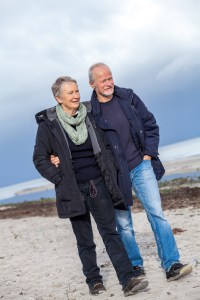 Do you believe that you are you are ‘as young as you feel’? That you’re free to take charge of your own health, happiness and wellbeing, no matter what your age?
In frustration at some of the ingrained beliefs about aging that he saw shackling his colleagues and friends as they grew older, an American baseball legend asked, “How old would you be if you didn’t know how old you were?” implying that you need to break out of the mental conditioning that makes you think you are defined by your age.
The calendar is a useful way to let you know the date, but if you let yourself be hemmed in by your chronological age, you may lock yourself out of potentially valuable opportunities.
Nextgen population researchers have recognised the greater import of health, cognitive function and life expectancy rather than age data as they plan for future populations. “We should not consider someone who is 60 or 65 to be an older person,” said researcher Sergei Scherbov. “Saying that ‘40 is the new 30’ .. is truer than people know.”
We’ve heard how our health age can be years younger than our calendar age, if we’re active and eat sensibly. Now, research into the mind/body/spirit connection in several fields, including neuroscience and meditation, adds evidence to the claim that it is our mindset, more than the food we eat or the exercise we do, that affects our physical body.
Excited by the health implications of the mind sciences, a Cleveland Clinic Foundation exercise psychologist compared individuals who worked out at a gym against another cohort who just visualized working out. Not surprisingly, the gym-goers experienced a 30 percent increase in muscle. However, the ones who only thought about working out also experienced a 13% increase in muscle strength, urging us to think beyond the physical to mental attitudes and capacities.
Many integrative health practitioners take this a step further, asserting that it is spiritual thoughts and practices that make a significant difference to better health and longevity. Mary Baker Eddy, an early researcher into this connection in her book, Science and Health, suggests that we “…. shape our views of existence into loveliness, freshness, and continuity, rather than into age and blight” for a longer, healthier and happier life.
She also suggests that it’s time to stop focussing on the body so much, and be aware of the myths about aging that are constantly influencing us. Be aware that “timetables of birth and death are so many conspiracies against manhood and womanhood”, and stop keeping a record of ours or others ages; or at least dispute the assumptions of debility and aging every time you buy a birthday card.
Healthwise, it’s worth acknowledging that spiritual, mindful or positive thoughts bring vitality, freshness and promise to each day.
Some have broken free from the belief that they’re ruled by an aging body. You too can adopt a mental attitude of ageless being, and look forward to experiencing the health benefits.
This article, Your Age Doesn’t Define You, is by Kay Stroud. Kay is a health writer focussing on the leading edge of consciousness, spirituality and health. Her articles can be found on Health4Thinkers.

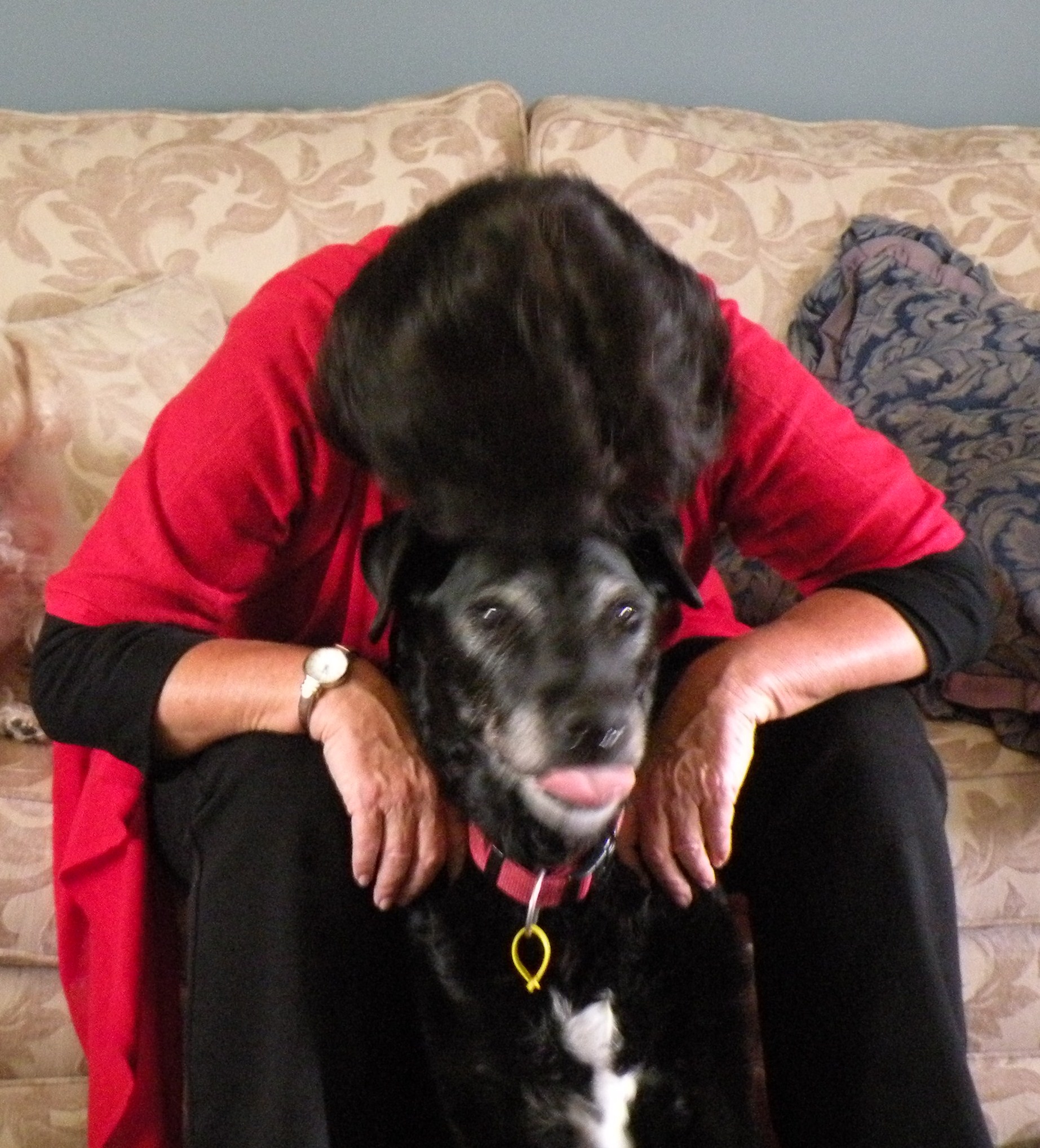
It’s been a year now since Monty left us. We guessed he was about four when he came to us. He had been trained as a bomb squad dog but his boundless energy and unstoppable joy for life rendered him unsuitable for such a delicate and serious career and he was adopted out. His new owners also found him a handful and he moved to a temporary home and then to another longer stay, but these owners too were unable to meet his needs.
When he came to our attention we were looking for a family dog and without even meeting him we somehow knew that he was the right dog for us. He proved to be perfect! He revelled in our long walks through the bush, the runs up our local Mt Taylor and just being one of the boys with our son and his friends.
When our son grew up and left home Monty prompted me from my somewhat sedentary life style and made sure that I had regular long walks. No matter what the weather he was always keen to be out. He brought joy to any activity. He adored us; he would put himself between me and any perceived danger. I have no doubt that he would lay down his life for any one of us. He fiercely protected our home and the variety of cats and chooks and guinea pigs that he saw come and go in our family.
Once a year he had a trip to the vet. When we had had him for about seven years the vet warned us that Monty may not be back next year. He cautioned that dogs of his type were not long lived and that Monty had ‘done well’. The following year we returned and gently the vet suggested that we prepare for Monty not being with us much longer. I was noticing that our walks were getting slower and shorter and most days now he would sleep a deep sleep much of the day. When he was awake he was happy and well, but he slept most of the time. It occurred to me that the vet was right and that he may just slide away.
This idea did not sit well with me and I prayed about it. Not a prayer asking God to make it right, but a prayer that seeks a better understanding of the truth of the situation; a prayer that confirms the good and denies the wrong. I could accept that animals come and go in our lives but I could not accept that life was a downhill slide into oblivion. The qualities we loved about Monty: love, affection, devotion, loyalty, energy, exuberance, joy, protection, selflessness, constancy – these were spiritual qualities and as such they were immortal. They could not be contained or curtailed by a material body. They were independent of matter.
“Except for the error of measuring and limiting all that is good and beautiful, man would enjoy more than threescore years and ten and still maintain his vigor, freshness, and promise. Man, governed by immortal Mind, is always beautiful and grand. Each succeeding year unfolds wisdom, beauty, and holiness.”
I thought on these ideas for a few weeks applying them to Monty. Gradually over this time he became more wakeful and his old energy levels returned. We were back doing our brisk five kilometer walks and still he had energy. In fact one day my husband asked if I had been praying for Monty. ‘If so’, he said, ‘Could you stop now – he has more energy than I can cope with.’
Monty stayed with us for nearly five more years. His joy for life remained till the end. Even on his last morning he watched me eagerly to see whether I was putting on my walking shoes in case there was the chance of a walk.
I learned many lessons about life from living with Monty but most importantly I learned that we can say NO to suggestions of age.
 One Saturday morning I was standing in the foyer of a young peoples’ theatre. Students were gathering for their weekly drama lesson. A teacher who had been away the previous several lessons arrived. I watched as one by one children sidled over to her.
“I did my piano exam,” one told her.
“I’ve auditioned for an arts program.”
“I lost my tooth.”
Their teacher embraced each with a comment, or smile, or hug – an affirmation of value. Children know when teachers or coaches care for them and they shine under this attention. Apart from the instruction in drama, football, or swimming, this is also of real value.
As kids become adolescents they enjoy finding people that care for them enough to verbally spar with them, let them exercise their wit, reason and questioning of the world. They want teachers, coaches, friends and neighbours to care enough not to always agree with them as they develop their own unique identities. Finding a variety of situations where this can safely happen can be a challenge.
In the Christian Science Sunday School time is given for the fostering of caring respectful relationships. Grouped around similar ages up to 20, a teacher or facilitator typically stays for two to three years. Relevant ideas from unique thinkers in the Bible and the book, Science and Health with Key to the Scriptures by Mary Baker Eddy, prompt discussion.
Along with a pre-teen group, I was part of an exploration of an idea from this book: ‘The divine Mind maintains all identities, from a blade of grass to a star, as distinct and eternal.’ There were no right or wrong answers. It included a discovery of our spiritual identity, our pets and the local water-ways!
This group grew in confidence at school and in extra-curricular activities. They uncovered something about their spiritual identity. As part of the group I learned about soccer umpiring, teenage movies, pokemon and mine-craft. Our regular one-hour a week together was a cheerful win-win all round!
In Canberra the Christian Science Sunday School operates every Sunday 10.00 – 11.00 am. It is located at the corner of Macquarie and Bligh Street in Barton. Visitors and new pupils up to the age of 20 are warmly welcomed. Instruction in classes is based on the Ten Commandments, the Beatitudes and the Lord’s Prayer.
 1. Hope
Hope is the stuff of change, recovery and healing, according to Dr Shane Lopez, author of the new book: Making Hope Happen: Create the Future You Want for Yourself and Others. “Hope is half optimism. The other half is the belief in the power that you can make it so”, writes Lopez.
Hopeful people make an investment in the future that pays off in the present: in the way they eat, exercise, conserve energy, take care of themselves and stick to their treatment plan. He suggests that this sort of “change in mind-set has the power to alter neurochemistry”.
It takes work to keep your thinking in tune with what’s good around you. For me, trust that ‘good will win’ lifts me out of the daily grind of thinking that what I see and hear is all there is to us, into a mental realm a bit higher.
2. Show Your Gratitude
Studies show that saying ‘thanks’ reduces stress, and giving back through volunteering is good for your heart, in more ways than one
For example, researchers from the University of British Columbia found that volunteers who felt more empathy and put in more time and effort not only experienced greater mental health but also better cardiovascular health.
Research cited by Dr Stephen Post in his book Why Good Things Happen to Good People also found that giving in high school predicts good physical and mental health in late adulthood; generous behaviour reduces adolescent depression and suicide risk; giving quells anxiety; giving to others helps facilitate self-forgiveness and increases your longevity; giving is so powerful that sometimes even just ‘thinking’ charitable thoughts helps us.
This could be the right moment to volunteer to do Meals on Wheels or tuck shop duty, offer to coach your friend in maths or put up your hand to coach the soccer team …. and give thanks. It could not only help others, but also help you.
3. Love
We need to move past our cultural preconceptions that sometimes equate love only with infatuation, sexual desire or fairytale endings. Love is kindness and compassion.
“Love literally [makes] people healthier”, reported Dr Barbara Fredrickson, Professor of Psychology at the University of North Carolina.
“People tend to liken their emotions [like loving] to the weather, viewing them as uncontrollable,” said Fredrickson. This research shows not only that our emotions are controllable, but also that we can take the reins of our daily emotions and steer ourselves toward better physical health.
Love – moments of warmth, connection and openness sprinkled throughout your day – holds the key to improving our mental and physical health as well as lengthening our life.
4. Forgive
It’s one of the hardest things to do, but if you do it will make a big difference to your happiness, your relationships and your health.
For example, researchers from the University of California in San Diego found that people who let go of their anger could decrease the physical effects of stress.
Forgiveness is aptly described as ‘a change of heart’. Iowa doctor, Katherine Hurst MD, says, “I had a patient who went through a rough divorce and it took her years to get over it. She was on antidepressants, blood pressure meds and sleeping pills. When she finally forgave him and forgot about the marriage she was able to go off all of them”.
5. Meditate
Take some time to meditate, or contemplate, each morning, even if only for a few minutes. Studies have shown that prayer, meditation and attendance at religious services all benefit health in ways that scientists cannot fully explain.
“… [meditating] even 5 or 10 minutes, say a couple of times a day can start to produce significant benefits”, affirms Dr Craig Hassad, internationally recognised expert in Mindfulness Meditation, now a resident at Monash University Medical School. And it seems that many can now attest to the health benefits of doing just that.
The inclusion of meditation or prayer as part of our health care is increasingly being recommended by doctors to treat both mental and physical illness. In time, could meditation be seen as ‘the new normal’?
I find that using only one of these fabulous 5 tips brightens my day and makes me feel a whole lot better – renewed and revitalised – which points to the proposition that we’re much more than just a body.
It’s clear that these 5 easy tips are mental change agents that empower us, and make us happier and more fulfilled.
Growing numbers of people are seeing how mental approaches like this also lead to surprisingly better physical and mental health.
This article is by Kay Stroud. Kay is a health writer focussing on the leading edge of consciousness, spirituality and health. Her articles can be found on Health4Thinkers.
 Thank you to Sarah Marinos of body+soul at the Courier-Mail, for writing an article recently on the health benefits of thinking and acting younger – “Why being young at heart works“. Amongst the myriad of ads by the pharmaceutical companies, this article was unexpectedly thought-provoking and brought to my attention the work of Dr Ellen Langer, Harvard University psychologist and scientific investigator who conducted a landmark experiment 30 years ago where she had seniors live in a secluded monastery as though it were 1959. The results were surprising. After a week of living as though they were younger men, the pensioners were more flexible, had better hearing and memory and felt stronger. And they also looked younger.
This experiment was the forerunner of the British ABC’s TV program, the Young Ones that I recommended in a previous blog post, “Could it be that we all have the power to think ourselves young again?”
Langer has studied the way our mind influences our body and appearance and is the person who coined the word ‘mindfulness’. “When people are taught to be mindful in a fashion very different from meditation, they become more creative, healthier, and happier”, she wrote.
In Langer’s book, counterclockwise: Mindful Health and the Power of Possibility, she reminds readers that many definitive-sounding medical diagnoses are in fact best guesses. In a sense, this is a book about the limits of empirical knowledge. But as Langer sees it, the ambiguity that inevitably accompanies medical research can be profoundly liberating. If we can’t be sure that a diagnosis — or a widely accepted truism such as “memory loss is inevitable with age” — is true, we’re less likely to apply a self-limiting label to ourselves.
So what does this mean for you and me? Are these experiments miracles or is there a law in place?
I put the question another way. What if society’s current standards and expectations were the aberration and health and eternal life the reality?
The consistent findings from these experiments point to a law or science in place. I understand it to be a divine Science. Towards the end of the 19th Century the author of the first and complete book about the laws of reality, Mary Baker Eddy wrote, “Because of human ignorance of the divine Principle, Love, the Father of all is represented as a corporeal creator; hence men recognize themselves as merely physical, and are ignorant of man as God’s image or reflection and of man’s eternal incorporeal existence.” (Science and Health with Key to the Scriptures)
Christian Science makes it clear that mankind’s misunderstanding of the reality of being, of what God is and of what man really is, handicaps our life experience thus far.
This article by Kay Stroud was orginially published on her blog site. Kay is a health writer focussing on the leading edge of consciousness, spirituality and health. Contact her to learn more about it, including Christian Science, via www.health4thinkers.com.
 And they that are Christ’s have crucified the flesh with the affections and lusts. (Paul: The Bible – Galatians 5: 24)
Does erudite theology regard the crucifixion of Jesus chiefly as providing a ready pardon for all sinners who ask for it and are willing to be forgiven? Does spiritualism find Jesus’ death necessary only for the presentation, after death, of the material Jesus, as a proof that spirits can return to earth? Then we must differ from them both. (Science and Health with Key to the Scriptures p24)
Jesus of Nazareth taught and demonstrated man’s oneness with the Father, and for this we owe him endless homage. His mission was both individual and collective. He did life’s work aright not only in justice to himself, but in mercy to mortals, — to show them how to do theirs, but not to do it for them nor to relieve them of a single responsibility. (Science and Health with Key to the Scriptures p18)
Every pang of repentance and suffering, every effort for reform, every good thought and deed, will help us to understand Jesus’ atonement for sin and aid its efficacy; but if the sinner continues to pray and repent, sin and be sorry, he has little part in the atonement, — in the at-one-ment with God, — for he lacks the practical repentance, which reforms the heart and enables man to do the will of wisdom. Those who cannot demonstrate, at least in part, the divine Principle of the teachings and practice of our Master have no part in God. If living in disobedience to Him, we ought to feel no security, although God is good. (Science and Health with Key to the Scriptures p19)
If Truth is overcoming error in your daily walk and conversation, you can finally say, “I have fought a good fight . . . I have kept the faith,” because you are a better man. This is having our part in the at-one-ment with Truth and Love. Christians do not continue to labor and pray, expecting because of another’s goodness, suffering, and triumph, that they shall reach his harmony and reward.
If the disciple is advancing spiritually, he is striving to enter in. He constantly turns away from material sense, and looks towards the imperishable things of Spirit. If honest, he will be in earnest from the start, and gain a little each day in the right direction, till at last he finishes his course with joy. (Science and Health with Key to the Scriptures p21)
If all who ever partook of the sacrament had really commemorated the sufferings of Jesus and drunk of his cup, they would have revolutionized the world. If all who seek his commemoration through material symbols will take up the cross, heal the sick, cast out evils, and preach Christ, or Truth, to the poor, — the receptive thought, — they will bring in the millennium. (Science and Health with Key to the Scriptures p34)
Science and Health with Key to the Scriptures by Mary Baker Eddy, the Discoverer and Founder of Christian Science, can be accessed on-line at christianscience.com, can be borrowed from your local library or purchased from any Christian Science Reading Room. The Reading Room and Bookshop in Canberra is located on the corner of Macquarie and Bligh Streets, Barton. The staff at the bookshop welcome your questions.
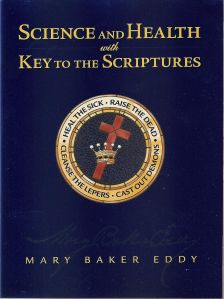 Mary Baker Eddy’s groundbreaking book, Science and Health with Key to the Scriptures, was first published over 135 years ago. For more than a century, this book has met humanity’s increasing demand for a more spiritual understanding of health, a better basis for lasting relationships, and a greater sense of security and peace. Around the globe, people are finding answers in Science and Health, and their lives are being enriched, transformed, and healed by its message of practical spirituality. The value they place in this book is seen in the outpouring of love and gratitude that impels them to share Science and Health with others.
Science and Health is Mary Baker Eddy’s primary work and the definitive textbook on Christian Science. It explains the scientific laws behind the teachings and healings of Christ Jesus. From the first chapter, “Prayer,” to her exegeses of Genesis and Revelation, the author invites readers to deeply consider the allness of God, the perfection of man as God’s spiritual creation, and how an understanding of these facts brings healing—just as it did in biblical times. For over 135 years, readers have testified that reading and studying this book has given them a spiritual sense of the Bible and their permanent relationship to God, and has also resulted in physical healing and spiritual uplift.
Since the first publication of Science and Health in 1875, its readers have testified that reading and studying this book has not only given them a spiritual sense of the Bible and a clearer recognition of their permanent relationship to God, but has also resulted in physical, mental, and emotional healing. Letters from readers that testify to healing from simply reading the book can be found in the last chapter of Science and Health. Available in multiple editions and formats, as well as in 17 languages and English Braille, the book is dedicated to thinkers and “honest seekers for Truth” (Science and Health, p. xii).
Published testimonials in Christian Science publications illustrate the life-changing power of the book’s ideas. These include emotional, physical, and mental healings. Testimonies of healing can be found at christianscience.com and in magazines such as The Christian Science Journal and Christian Science Sentinel available at Christian Science Reading Rooms worldwide.
Science and Health is available on line from christianscience.com and in Canberra from the Christian Science Reading Room and Bookshop on the corner of Macquarie & Bligh Streets, Barton, and from local libraries.
 A research on Google reveals a multitude of studies that make links between student academic success and the development of spirituality in a religious context.
“Studies have found those with gratitude are more likely to have a high grade point average.”
Children who are encouraged to know their spiritual identity find a valuable poise reflected in both academic and secular activities. In general, students are found to be more successful, resilient and happy.
There have also been studies by psychologists and sociologists on gratitude. According to the Christian Science Monitor, if you’re grateful, you are more likely to be happy.
It stated that grateful people are more helpful, more satisfied with life and have better friendships. It said studies have found those with gratitude are more likely to have a higher grade point average. They tend to be healthier both physically and mentally.
At the Christian Science Sunday School, gratitude for good is fostered along with deep reflection on the nature of God as a law of eternal truth, as well as an all-encompassing divine love.
The Sunday School operates around small discussion groups with students, up to the age of 20, who are encouraged to discover and demonstrate more of their spiritual self as described in the Bible.
Choosing a religious educational context for children is important. It can encourage the life of the child and the community. To find out more about the Christians Science Sunday School in Canberra visit the Christian Science Canberra website.
 Recently, thousands of people attended the Mind Body Spirit Festival in Brisbane. I made my way there through the gloomy weather on Sunday, to find a really ‘happening’ event, a lot like the Health Harmony and Soul Expo held on the Gold Coast earlier in the year.
There were a surprising number of Millennials and Gen Ys amongst the Baby Boomers and Gen Xs in attendance, as ready to explore the ideas of philosophy and religion, as they were to try out the organic tea or get their ‘reading’.
I got the impression that there was general agreement between those on stands and within their vibrant audience that health is about very much more than treating a body.
Quite a few I spoke to had pondered the mental nature of health, had heard about the medical research into the effects of spiritual and religious sentiments such as forgiveness and gratitude.
Dozens were eager to add their contribution to the ‘gratitude tree’ by writing down what they were grateful for … and pinning it on the murraya bush in the Christian Science Reading Room stand.
Don’t get me wrong. The majority of these people harboured a healthy scepticism of anything nonsensical or obviously geared to a purely money-making concern.
The astounding thing is that these were your average Aussie ‘blokes’ and ‘sheilas’. Just like the lady I met today. While her job was in real estate, she confided when I mentioned that I was a health blogger, that she’d investigated kinesiology and other alternative therapies and knew how important her thoughts were to her wellbeing.
It’s not surprising to learn that two-thirds of Australians use complementary and alternative medicine (CAM), and many of these recognise the interconnectedness of our thoughts with our health.
Suddenly results from thought-based treatments such as placebos, epigenetics, psychotherapy and meditation are big news.
A medico who turned from Western medical treatments when they failed to help her, took matters into her own hands. Through her research, Dr Lissa Rankin discovered that traditional health care was missing a couple of crucial insights:
taking responsibility for your own wellbeing is essential; and that we need to care for the whole package – our mind, heart and soul.
Rankin’s book, Mind Over Medicine, advances understanding of the great conundrum of the past 150 years – how our mind, bodies and spirit interconnect.
She found that thoughts, feelings and beliefs can alter the body’s physiology, discerned that loneliness, pessimism, depression, fear and anxiety damage the body, while intimate relationships, gratitude, meditation and creativity turn on the body’s self-healing processes.
Theologian, author, and founder of Christian Science, Mary Baker Eddy wrote and taught about the mental nature of disease way back in the 19th century.
She proved that a Mind-based (or God-based) view of health and life leads to cures in both mind and body.
Eddy described some of the states of thought that might generate disease in her book, Science and Health with Key to the Scriptures, which endorses what many people like Rankin recognise as harmful to health today.
She wrote, “Hatred, envy, dishonesty, fear, and so forth, make a man sick, and neither material medicine nor Mind can help him permanently, even in body, unless it makes him better mentally, and so delivers him from his destroyers.”
For me, it’s imperative to recognise my spiritual identity, which Jesus exemplified and explained so well, and can be nurtured and discovered through daily prayer and meditation. I find that this also keeps the body healthy, as well as repairing and healing.
It looks like many are now ‘on the same page’, sharing the profound knowledge that happiness and health are dependent on a healthy mind, body and spirit.
This article by Kay Stroud, a health blogger who is interested in the mind-body connection, was originally published on her blog, Spotlight on Spirituality and Health. It was also published on these media websites: Toowoomba Chronicle, Wanganui Chronicle, The Aucklander, Grafton Daily Examiner, Coffs Coast Advocate, Bay of Plenty Times.

 Eliminating fear is good for your health say experts.






 Christian Science Canberra