
Gratitude for Healing and God’s Abundance Leave a comment

Arise, Shine For Thy Light Has Come Leave a comment

The Essential Ingredient for Youth Mental Health Leave a comment
 The years between 15-25 are frequently a time of questioning and great discovery, but like many others I found them difficult. I had to deal with chronic disease, failure in my chosen career, a persistent lack of self-worth along with indecision about an alternative career path, and loneliness.
Although never diagnosed, a psychologist would probably have called me depressed.
However, along the rugged path to recovering my childhood inner contentment I found that spiritual activities like prayer, research into some of the world’s most meaningful spiritual writings and participating in church were keeping me sane, mentally motivated, and connected to others in a nurturing environment.
The refocus on unselfish activities gave me a feeling of self-worth again and also contributed to a hopefulness that things would get better. In time, it opened up previously unknown pathways to fulfillment.
Rather than restricting me or quashing my critical thinking, my adolescent research into the spiritual nature of mental and physical health made me realise that what I needed all along was to put into daily practice a growing understanding of my radically awesome relationship to the Divine Being.
To the degree that I acknowledged it, I found that I could actually experience divine Love expressing kindness and unselfishness in me; the divine Mind reflecting intelligence and wisdom in me; the divine Life demonstrating health and wellbeing in me; and so on (ideas from Science and Health by Mary Baker Eddy).
Things started to go right for me again. You could say that I saw “the wilderness and desert begin to blossom as the rose”, an image so beautifully depicted in the Bible.
Perhaps not surprisingly, I ended up more consistently in the right head space with a much better view of myself – and was probably a lot more likeable, as well!
A 2008 study published in Australian Family Physician and written by Dr Craig Hassed, Faculty of Medicine at Monash University in Melbourne, reported that “Spirituality is an important determinant of physical, emotional and social health…”
When commenting on escalating trends in youth mental illness his study suggests that “there may be too little attention being given to the ‘protective factors’ against mental illness, of which, particularly for adolescents, are connectedness and having a spiritual or religious dimension to one’s life” (Hassed, The role of spirituality in medicine, 2008).
It’s heartening to learn that spirituality is acknowledged as central to youth mental health by a growing number of psychologists.
It seems to me that clinicians need to speak to the community more about the benefits of spirituality in the treatment of anxiety and depression, and not just in young people, but for everyone.
A spiritual dimension to life will undoubtedly assist you, whether you’re young or old, as you seek (and find) a better, healthier and happier you. That would be the real you!
This article, by Kay Stroud, has been published in the Sunshine Coast Daily, Lismore Northern Star and Bundaberg News Mail. Kay is a freelance writer focussing on the undeniable connection between our thinking and our health.
Feed the Hungry Leave a comment

A Timeless Beauty 1 comment
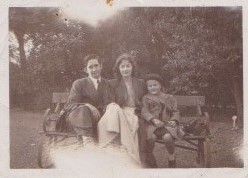 I was looking at an old black and white photo of my mum the other day. I guess she would have been in her early twenties so it was probably taken about 70 years ago. My mum was quite a beautiful lady and as a young woman she was very lovely. She had a special grace about her that made you want to look longer.
I began to think, if she was around today looking like that you would still have to say she was beautiful, but she wouldn’t fit today’s standards of beauty. Her skin was whiter, her body fleshier, her hair contrived into curls and she wore a pretty frock. This set me to thinking about what beauty really is. In each era fashion seems to give us strict dictates as to what the ideal look is – how tanned our skin should be, how lean our body, even the shape of our eye-brows. If we are not careful this can lead to a sense of striving for the impossible – not many of us fit that ideal model. So does this mean that we are not beautiful?
The qualities people saw in my mother – intelligence, calmness and strength in the face of trouble, joy at the little things, devotion to family and friends, innocence, resilience, energy – these qualities shone out of her right to the last. They were the qualities that people mentioned when they commented on how lovely my mother was. They didn’t mention her physical appearance. They mentioned qualities they saw. Mary Baker Eddy, one of the first women to investigate thoroughly the connection between consciousness and experience, writes in her textbook, Science and Health: Beauty, as well as truth, is eternal; but the beauty of material things passes away, fading and fleeting as mortal belief. … Comeliness and grace are independent of matter (p247).
She goes on to say:
All beauty and goodness are in and of Mind, emanating from God; but when we change the nature of beauty and goodness from Mind to matter, the beauty is marred, through a false conception, and, to the material senses, evil takes the place of good (Rudimental Divine Science p6).
Perhaps if we put as much thought and effort into developing these beautiful qualities of Mind as we do our outward appearance our beauty would be less ephemeral and grow and blossom with the passing years.
This post was submitted by Deborah Packer of Canberra.
Not Limiting God Leave a comment

Never Alone Leave a comment
 Never Alone – Readings from the Bible and the textbook of Christian Science, Science and Health with Key to the Scriptures by Mary Baker Eddy.
Whither shall I go from thy spirit? or whither shall I flee from thy presence? If I ascend up into heaven, thou art there: if I make my bed in hell, behold, thou art there. If I take the wings of the morning, and dwell in the uttermost parts of the sea; Even there shall thy hand lead me, and thy right hand shall hold me.
(Psalms 139: 7-10)
Every Wednesday at 6.15 pm a Testimony Meeting is held at the Christian Science Church in Canberra. Each meeting begins with readings selected from the two books designated as the Pastor of Christian Science: The Bible and Science and Health with Key to the Scriptures by Mary Baker Eddy. A new topic for the readings is selected each week.
At the conclusion of the short readings the congregation is invited to share thoughts on this topic and relate how they have used the principles of Christian Science to solve life’s problems and bring physical healing.
If you are in Canberra on any Wednesday please join us. Everyone is welcome.
This recording represents the readings on the topic: Never Alone.
Beating the Winter Blues Leave a comment
 Here in Canberra winter is now upon us. The yellow and gold trees have given way to bare branches and we have already had our first frosty mornings.

Many of us who have lived in Canberra for a while have come to love this climate and its four distinct seasons. With each there are certain expectations: the regenerating bloom of the spring heralded by the brilliance of the wattle; the long dry heat of the summer and trips to the coast; the vivid colours of the autumn and the swirling brown leaves.
The crispness of winter, the clear blue skies and trips to the snow are often accompanied by calls to be wary of colds and flu. TV commercials remind us of the available remedies and we are sometimes tempted to wonder whether we will ‘go down’ with something this year, or will we be lucky?
Nowadays there is a strong body of evidence that attests to the influence of one’s thought on health. For over 100 years now we have been aware of the placebo effect: the apparent strong positive effect of sugar pills and non-medicated treatments on patients who believed them to be remedial agents. These experiments alone must ask us to question the nature of the effect of thought on the body. To question how the quality of our consciousness and our belief systems can affect our wellbeing? There is also growing evidence to suggest that spirituality, our natural attraction to the good and the true, has a positive impact on physical resilience and recuperation.
About 150 years ago Mary Baker Eddy investigated this link between spirituality and health. Her experiments and study culminated in her textbook: Science and Health with Key to the Scriptures. In it she states (p208): Mind, not matter, is causation. A material body only expresses a material and mortal mind. … You embrace your body in your thought, and you should delineate upon it thoughts of health, not of sickness.
 She goes on to say (p392): The physical affirmation of disease should always be met with the mental negation. Whatever benefit is produced on the body, must be expressed mentally, and thought should be held fast to this ideal. If you believe in inflamed and weak nerves, you are liable to an attack from that source. … If you decide that climate or atmosphere is unhealthy, it will be so to you. Your decisions will master you, whichever direction they take.

Reverse the case. Stand porter at the door of thought. Admitting only such conclusions as you wish realized in bodily results, you will control yourself harmoniously. When the condition is present which you say induces disease, whether it be air, exercise, heredity, contagion, or accident, then perform your office as porter and shut out these unhealthy thoughts and fears. Exclude from mortal mind the offending errors; then the body cannot suffer from them. The issues of pain or pleasure must come through mind, and like a watchman forsaking his post, we admit the intruding belief, forgetting that through divine help we can forbid this entrance.
Let’s determine this winter to hold thought to the higher qualities of Truth and Love, of wholeness and harmony and turn away from contemplation of disease, and so build our spiritual immunity.
This article was contributed by Deborah Packer of Canberra.
To purchase a copy of Science and Health with Key to the Scriptures by Mary Baker Eddy click here.
Can We Heal the Culture of Violence? Leave a comment
 The issue of violence is prominent in our community conversations at the moment. Terrorism, drug-related violence, domestic and institutional abuse, and even road rage are insistently crying out for our attention and solutions.
Despite serious efforts over many years to prevent violence, to deal with its effects and to punish the perpetrators, there’s now general agreement that violence will continue to escalate and to propagate fear in the community until we find and treat the real causes.
Fundamental beliefs that underlie and perpetuate all kinds of violence are: that humans have an animal nature prone to competition, self-preservation and aggression; that certain brain-based dysfunctions may be the root of addiction and violence, aggravated by abuse or neglect during childhood; and that there are deeply rooted social and cultural patterns, leading to a distorted sense of manhood and womanhood, that may take generations to change.
However, there’s evidence that these beliefs may be just that …. either long-held or fairly recent beliefs that need to be revised.
Drugs and alcohol are often associated with violence. People working in the police and community services speak of how addiction and abuse reoccur from generation to generation, and there is now general realisation that special attention needs to be given to the families involved.
However, there is some progress as communities work together to fight apathy and educate each other that this cycle can indeed be broken.
A retired commanding officer in the police force shared one such approach: “…anytime I knew I was going to a call related to domestic conflict or violence I would pick up the local pastor.” Often they were able to provide a spiritual viewpoint and connection that would later solve the problem.
It is often acknowledged that recognising a man’s spiritual nature has a healing effect.
Significant psychological research studies find that spirituality is not only helpful to, but integral to mental health. This is an important point in considering individual and whole-society wellbeing.
We may need to adjust our thinking about our real nature.
Another long-held false belief will be overturned by realising that the spiritual qualities generally attributed to women – such as care for others, gentleness, forgiveness and patience – and those qualities attributed to men – such as wisdom, truthfulness, tenaciousness and strength – are innate in both men and women.
Jesus’ ability to express both the fatherhood and motherhood of the divine set the benchmark for us. And like him, we’re actually “tuned in” to hear spiritual intuitions that will prompt, direct and uplift thought, although we may choose not to listen.
Knowing that no-one can be excluded from hearing and acting on divine thoughts can help to overcome violent impulses and begin to heal the culture of violence.
A pioneer in investigating the effects of our thoughts on our health, Mary Baker Eddy, recognised this voice as the ever-appearing of “the divine message from God to men speaking to the human consciousness.” (Science and Health with Key to the Scriptures)
When Susannah (not her real name) moved out of home and obtained a copy of that book, she just loved the way the author described the divine power that governs the universe as Father-Mother.
Her family had suffered violence at the hand of her father for many years. To think her father could be capable of reflecting the gentle motherhood of God seemed absolutely impossible. However, she decided to stop wrestling with this idea and worked hard to try to see him as reflecting this tender divine nature; learning that he was meant to be nurturing, gentle, tender.
Susannah was listening for the divine message, which replaced the macho view of her father and other men, with this new view of men. Her thought and experiences gradually began to change.
As the weeks went by, she learned that her parents had not had a fight in months and her father was treating her mother and sister with new tenderness. Eight years on, this is still the case.
A scientific approach to thought and prayer in this way does not whitewash evil deeds; rather it exposes the mistaken beliefs and causes them to be discarded.
Further changes in thinking about her own spiritual nature, meant that Susannah no longer saw herself or her mother as survivors of mental, verbal or physical intimidation, but as well-adjusted and balanced individuals.
She had no lingering emotional scars, but had learned truly to love and see the undamageable good in herself and her mother.
As Australian of the Year and domestic violence survivor, Rosie Batty, advocates, Susannah truly took responsibility for her own life, bringing vital change to those around her in the process.
Such approaches hint at the possibilities for healing the culture of violence in ourselves and in the community.
This article was contributed by Kay Stroud, of Queensland. Kay writes on the connection between spirituality and health. This article has been published on 40 APN news sites, including: Sunshine Coast Daily, Toowoomba Chronicle, Lismore Northern Star, Rockhampton Morning Bulletin, Mackay Daily Mercury,Tweed Daily News, Bundaberg News Mail, Coffs Coast Advocate, Grafton Daily Examiner,Gladstone Observer, Fraser Coast Chronicle, Gympie Times, Caboolture News, Stanthorpe Border Post.

 Christian Science Canberra