…. prove me now herewith, saith the Lord of hosts, if I will not open you the windows of heaven, and pour you out a blessing, that there shall not be room enough to receive it.
Hate no one; for hatred is a plague-spot that spreads its virus and kills at last. If indulged, it masters us; brings suffering upon suffering to its possessor, through‐out time and beyond the grave. If you have been badly wronged, forgive and forget: God will recompense this wrong, and punish, more severely than you could, him who has striven to injure you. Never return evil for evil; and, above all, do not fancy that you have been wronged when you have not been.
(Miscellaneous Writings – Love Your Enemies p12 by Mary Baker Eddy)
Who is a wise man and endued with knowledge among you? let him shew out of a good conversation his works with meekness of wisdom.
But if ye have bitter envying and strife in your hearts, glory not, and lie not against the truth.
This wisdom descendeth not from above, but is earthly, sensual, devilish.
For where envying and strife is, there is confusion and every evil work.
But the wisdom that is from above is first pure, then peaceable, gentle, and easy to be entreated, full of mercy and good fruits, without partiality, and without hypocrisy.
And the fruit of righteousness is sown in peace of them that make peace.
Spiritual living and blessedness are the only evidences, by which we can recognize true existence and feel the unspeakable peace which comes from an all-absorbing spiritual love.
Spirit, God, gathers unformed thoughts into their proper channels, and unfolds these thoughts, even as He opens the petals of a holy purpose in order that the purpose may appear.
Hymn 148 in the Christian Science Hymnal – words by Ann L Waring
In heavenly Love abiding, No change my heart shall fear; And safe is such confiding, For nothing changes here. The storm may roar without me, My heart may low be laid; But God is round about me, And can I be dismayed?
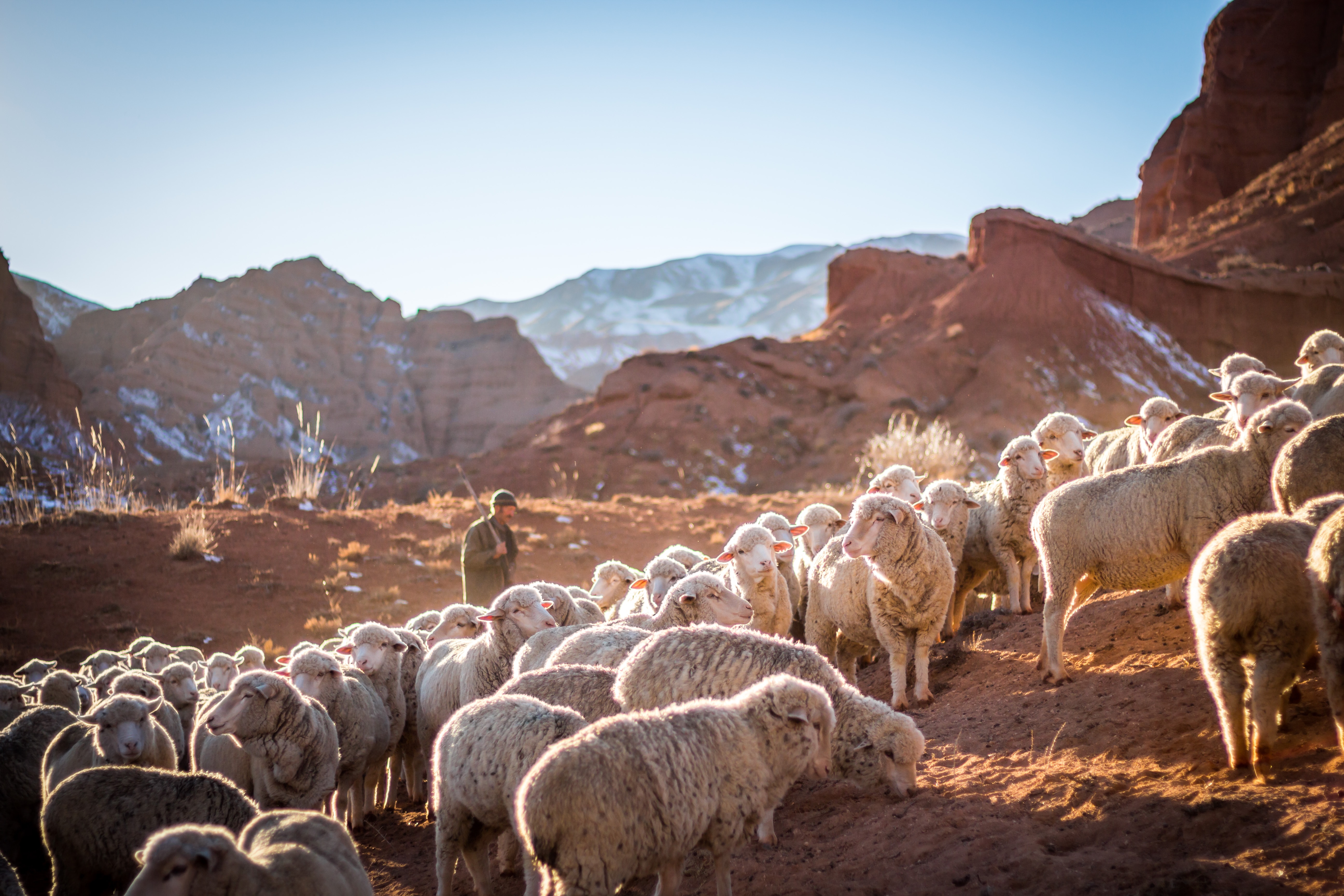
Wherever He may guide me, No want shall turn me back; My Shepherd is beside me, And nothing can I lack. His wisdom ever waketh, His sight is never dim; He knows the way He taketh, And I will walk with Him.
Green pastures are before me, Which yet I have not seen; Bright skies will soon be o’er me, Where darkest clouds have been. My hope I cannot measure, My path in life is free; My Father has my treasure, And He will walk with me.
This recording is of the readings on the topic:Thou Dost Give Me Peace
.
The inspiration for these readings came from Violet Hay who wrote the words of hymn 136 in the Christian Science Hymnal (verse 2).
Though storm or discord cross my path Thy power is still my stay, Though human will and woe would check My upward-soaring way; All unafraid I wait, the while Thy angels bring release, For still Thy presence is with me, And Thou dost give me peace.
O tender, loving Shepherd, We long to follow thee, To follow where thou leadest, Though rough the path may be; Though dark and heavy shadows Enshroud the way with gloom, We know that Love will guide us, And safely lead us home.
.
.
We know, beloved Shepherd, The path that thou hast trod Leads ever out of darkness, And on and up to God. If from that path we wander, And far astray we roam, O, call us, faithful Shepherd, And bring us safely home.
.
.
.
Throughout the way, dear Shepherd, Thy strong hand doth uphold; The weary ones, at nightfall, Thou gently dost enfold. And when to Truth’s green pastures With joy at length we come, There shall we find, O Shepherd, Our blest, eternal home.
When asked how she was praying about the war in the Middle East Bethany Taylor responded by penning this letter to a young mother:
I was watching the news about Israel and Hamas. You came on talking about trying to keep your baby quiet so you wouldn’t be detected by the attackers and how your husband had been taken as a hostage. My heart went out to you, and in a sincere desire to help, I humbly reached out to God and asked how I could help, how I could pray right then. The answer came in the form of a hymn written by the Discoverer and Founder of Christian Science, Mary Baker Eddy.
I began singing and praying the words: “O gentle presence, peace and joy and power; / O Life divine, that owns each waiting hour” (Christian Science Hymnal, No. 207). I felt assured of God’s ever-present peace, joy, and omnipotent power right then and there for you and all who are feeling alone and afraid, even when in the midst of terror and war.
As a young mother, I was widowed and found myself raising my three-year-old son on my own. I leaned on God’s mothering and fathering my son and me, and I know we can confidently rely on that same love here and now. As a recent Sentinel Watch podcast put it, “Love hasn’t left this home” (Tony Lobl, “Love hasn’t left this home,” cssentinel.com, September 11, 2023).
Love hasn’t left Israel, or Gaza, or Ukraine, or any other area experiencing war and conflict. Even though I am just one individual in a country far removed from these places, I actively pray to know that God’s love is always present, dependable, steadfast, all-powerful. “Thou Love that guards the nestling’s faltering flight! / Keep Thou my child on upward wing tonight,” that hymn says. We are each God’s nestlings, whether struggling with a small problem or the horror of war. We can feel and reflect God’s mothering love here and now.
Another line in this hymn, which I have known and loved for decades, is “Love is our refuge; only with mine eye / Can I behold the snare, the pit, the fall.” But as long as I have been singing this hymn, this was the first time I understood that Mrs. Eddy was saying that we can stay conscious of the spiritual fact that divine Love, God, is our—and everyone’s—ever-present refuge. When, instead, we begin to examine the snares, pits, falls, or material circumstances, that is when we feel immobilized by fear, and illness, conflict, hatred, and evil seem so much larger than Love’s ability to handle them. But that isn’t so. As we learn in Christian Science, God is All-in-all.
“His habitation high is here, and nigh, / His arm encircles me, and mine, and all,” the hymn assures. And I am thinking, in quiet prayer, just how it embraces you and all the mothers in the region.
Love, Bethany Taylor
This response to the war was originally published in the October 19, 2023 issue of the Christian Science Sentinel.










 Christian Science Canberra