
Archive for the ‘Thought’ Category
Beating the Winter Blues Leave a comment


Prayer for the Neighbour’s Dogs Brings a Harmonious Solution Leave a comment
 About three years ago a young mum moved into the house next door to us. She had a couple of children, a cat and a dog. Soon her friend moved in too and he brought with him a tiny pup. These were both outside dogs but they had provided no shelter for them. They lived largely without human interaction in the bare backyard and it was the middle of a fierce and wet Canberra winter. In the mornings this tiny short-haired puppy could be seen sleeping curled and shivering in the long frosty grass. During the blustery winter days he cried and cried. When it rained he tried to stand under the larger dog for shelter and together they looked soaked and miserable.

I found this very difficult to witness day after day and I became incensed with indignation.
I succumbed to the error of believing that evil existed – in the form of my neighbours and that there were places where Love – another name for God – did not exist. If I believed that the neighbours were cruel and unloving then I was believing that God wasn’t all. I had to choose which idea I believed.
But, I didn’t want to let go of that indignation – I found it very difficult. But Mary Baker Eddy, the discoverer and founder of Christian Science, tells us in her textbook, Science and Health with Key to the Scriptures:
Rise in the strength of Spirit to resist all that is unlike good (p393).
It was Spirit, God, who gave me the strength to resist this faulty thinking. I knew that there was no place where God was not. The Bible tells us that man is made in the image and likeness of God … of Love. The real man could not be unloving. So I held to this truth about man and acknowledged God’s love for all His creation. This dissolved the indignation. Within a day of this turn around in thinking the dogs were being invited inside and for the rest of the winter they were given shelter and companionship.
I have learned never to underestimate the power of practical applied scientific prayer!
This post was submitted by Deborah Packer of Canberra, Australia.
Help to heal our world; conquer fanaticism 1 comment
 What I most love about my country is our general lack of fanaticism – a startling contrast to recent high-profile instances of it here and elsewhere. I started thinking about this subject before the terrorism events in Paris, but those events have made dealing with fanatical thinking seem even more imperative.
A fanatic expresses excessive, irrational zeal. Far from taking an intelligent and well-informed stance on an issue, their passion and manic obsession with a cause or way of doing things colour their decision-making ability negatively.
Fanaticism about a political or religious philosophy that makes us feel superior; holding obsessively to a non-proven hypothesis; belief that there is only one way to play football and there’s a single worthy team; prejudice about what foods we should eat and the best way to cultivate them; or uncompromising belief that we only need to attend to the physical body to be healthy, are all too common habits that lead us down a slippery slope of intolerance. Fanatical beliefs are nearly always built on fear.
A red flag should go up if we find ourselves extremely sensitive about our viewpoint or hating anyone who opposes it.
Alternatively, common sense based on a positive stance, sure of a solution becoming apparent that will be good for everyone, is a better viewpoint. This demeanour is not just a good-old Aussie “she’ll be right” attitude, but grows out of a well-informed and caring approach to the world.
This is a spiritual approach that begins with ourselves – that is, feeling and accepting the love that comes from our divine source. It’s so much easier to love, when we’re feeling loved.
What will help the world through this current fermentation is our individual commitment to choosing love and understanding over hate and apathy.
I find it’s useful to ask myself: could I be a little more thoughtful and kinder with my comments? I’d have to confess that the answer is usually, “well, maybe.”
Try this scenario. If you could go back in time, would you choose to continually belittle our ancestors’ beliefs about a flat earth? Wouldn’t you instead gently nurture and point out bridges of understanding to help them comprehend the reality?
American Imad-ad-Dean Ahmad, president of the Minaret of Freedom Institute was interviewed about possible motives for the killings at the French satirical magazine Charlie Hebdo.
Married to a Christian, Mr Ahmad holds a unique perspective on cross-cultural understanding (or misunderstandings) between Muslims and non-Muslims. He pointed out, “…it is one thing to make a joke about a rich man or a powerful man who slips and falls. It is something entirely different and not funny to make a joke about your poor old grandmother slipping and falling. To the Muslim people, jokes and cartoons about the faith of an oppressed people are not funny. They hurt.”
We all know how humiliation hurts, and most of us at some time have been down the road of wanting to lash out at a perceived enemy.
So, if we can empathise, we can forgive and work towards healing our world.
Academics and experienced change-managers in the field of terrorism psychology are stepping forward this week to share with the world some common patterns for success in de-radicalising regimes and terrorists. (http://www.csmonitor.com/World/Middle-East/2012/0525/Are-terrorists-beyond-redemption)
Surprisingly, these don’t include retribution but active, solution-based change-management, such as recognizing the needs of jihadists; finding them vocational education, jobs and even wives; and, recognizing the importance of their social network (http://blogs.reuters.com/great-debate/2014/11/05/the-3-step-guide-to-de-radicalizing-jihadists/)
Whether or not you have a direct hand in these compassionate measures, you can begin to make a difference in the health of our wonderfully promising world by de-radicalising your own thinking.
Utilise this good advice to start the healing movement within your own circle:
• “Hate no one; for hatred is a plague-spot that spreads its virus and kills at last…
• If you have been badly wronged, forgive and forget…
• Never return evil for evil;
• and, above all, do not fancy that you have been wronged when you have not been.” (Mary Baker Eddy)
None of us have all the answers to the world’s problems right now, but today you can at least be a law to yourself to give up any fanatical beliefs you may be harbouring. This self-regulating action is also good for your stress levels, heart, immune system and much more.
This article is by Kay Stroud. Her articles on the link between consciousness, spirituality and health appear regularly in APN print and online publications. For more information on these trends or answers to questions about Christian Science visit www.health4thinkers.com
Make a Game-Changing New Year’s Resolution Leave a comment
 While some of us are still dealing with the influx of visitors, festivities and sun-soaked holidays, in the back of our minds is the niggling thought that 2015 has already begun and now is the time to make our New Year’s resolutions, before it’s too late.
Some are choosing to eat healthier and exercise more. That certainly can make us feel better.
Two other resolutions that go hand-in-hand will not only increase your health but be game-changers in your life: always opt for the positive viewpoint over the negative and choose to be kinder to others.
A friend related how his acquaintance was in hospital recently, suffering from a life-threatening illness.
Things were looking pretty grim and it seemed that he was hanging on by a thread. Then his heart stopped and he ceased breathing.
At that moment, the medical staff on duty in that area of the hospital noticed that he was passing on and began to congregate around his bed …. not rushing to him with defibrillator or drip, but unexpectedly telling jokes, laughing and talking loudly and animatedly about everyday things.
They continued by his bedside including everyone in the ward in the jovial conversation until he began to regain consciousness. The man made a full recovery.
What happened? Did the nurses and doctors know that their confident and caring presence was more effective than apparatus or medication? Yes.
Something similar is at play when a teacher disregards the negative ‘label’ attached to the child and responds with love and recognition of that child’s higher nature and abilities, bringing a turnaround in attitude at school.
Or when a brick wall tumbles down between two people who haven’t spoken to each other for years as one reaches out with forgiveness.
The reasons for such changes for the better spring from (1) choosing a positive, solution-based approach, and (2) trusting our instinct to be warm and caring, despite a temptation to take an impersonal, defeatist or hard-line approach.
Lissa Rankin MD, sought-after TEDx presenter and one of the keynote speakers at the Byron Bay Uplift Festival a few weeks ago, urges us to strip back everything that isn’t really us that we’ve learned in the world of hard knocks, to find that inner pilot light or divine spark of love within.
Research results from studies on cancer recovery and remission support her claim to the beneficial effects of this practice.
Rankin also cites conclusive evidence that an essential part of any successful treatment is engaging a health practitioner who is reassuring, gentle and kind, and treats patients with compassion.
Did Jesus mean in his well-known parable, that the warmth and care that the Good Samaritan showed had as much to do with the traveller’s recovery (who was robbed and beaten by thieves) as the bandages, oil and wine provided?
Mary Baker Eddy believed so and based her scientific, healing method on this premise. An important researcher into how consciousness affects health, she discovered in her investigations and successful treatments through prayer that…
“Whatever holds human thought in line with unselfed love, receives directly the divine power” (Science and Health with Key to the Scriptures)
Forgetting ourselves and putting others first really FEELS divine and invariably makes us glow with happiness.
I hope your 2015 takes wings. Seems it’s sure to do so if you choose to take this two-pronged approach to a happier, healthier year ahead – adopting a positive, solution-based viewpoint, and actively and warmly caring for yourself and others.
This article by Kay Stroud was published on 32 APN news sites, including these dailies: Rockhampton Morning Bulletin, Sunshine Coast Daily, Bundaberg News Mail, Tweed Daily News, Toowoomba Chronicle, Mackay Daily Mercury, Fraser Coast Chronicle, Coffs Coast Advocate, Clarence Valley Examiner, Lismore Northern Star, Gladstone Observer, Gympie Times, Ipswich Queensland Times, Warwick Daily News.
Kay is a freelance writer focussing on the undeniable connection between our thinking and our health. She writes for metropolitan and regional news media throughout Australia and beyond, and is a regular contributor to Australia’s national forum, Online Opinion.
The Psalm of Love … Psalm 23 1 comment
 The Psalm of Love … Psalm 23 – Readings from the Bible and the textbook of Christian Science, Science and Health with Key to the Scriptures by Mary Baker Eddy that were inspired by the 23rd Psalm.
Every Wednesday at 6.15 pm a Testimony Meeting is held at the Christian Science Church in Canberra. Each meeting begins with readings selected from the two books designated as the Pastor of Christian Science: The Bible and Science and Health with Key to the Scriptures by Mary Baker Eddy A new topic for the readings is selected each week.
At the conclusion of the short readings the congregation is invited to share thoughts on this topic and relate how they have used the principles of Christian Science to solve life’s problems and bring physical healing.
If you are in Canberra on any Wednesday please join us. Everyone is welcome.
This recording represents the readings on the topic: The Psalm of Love … Psalm 23.
Psalm 23
The Lord is my shepherd; I shall not want.
He maketh me to lie down in green pastures: he leadeth me beside the still waters.
He restoreth my soul: he leadeth me in the paths of righteousness for his name’s sake.
Yea, though I walk through the valley of the shadow of death, I will fear no evil: for thou art with me; thy rod and thy staff they comfort me.
Thou preparest a table before me in the presence of mine enemies: thou anointest my head with oil; my cup runneth over.
Surely goodness and mercy shall follow me all the days of my life: and I will dwell in the house of the Lord for ever.
Click here to read the full text of the readings: The Psalm of Love – Ps 23 full text citations
The Prayer That Heals 1 comment

Fearless Living is Healthy Living 1 comment
 Eliminating fear is good for your health say experts.
Mind-Body Interventions such as patient support groups, prayer, spiritual healing and a state of calmness produced through meditation, can all help reduce bodily stress.
Fear is like luggage you carry around with you. It comes in all shapes and sizes. Some fears you can put down and walk away from. Others seem to be firmly attached to you. You know the kind I’m talking about. It can be a fear of going to the dentist, speaking in public, personal safety, not being able to pay the bills, fear of getting sick, and yes, even a fear of dying.
You often know when you feel nervous or afraid, through certain bodily sensations. For example, you get butterflies in the stomach, sweaty palms, dry mouth, shortness of breath, or rapid heartbeats. On such occasions, fear itself seems to be quite tangible, even physically concrete.
While fear appears to be expressed in a bodily way, it actually starts in thought. This may appear obvious, but it’s a point that often gets overlooked when we’re caught up in an anxious moment, or feeling ill. Being aware of this mind-body connection, provides a starting point for working beyond fear. It leads to finding a pathway for resolving a fearful situation, and to achieving better health.
One way to achieve fearless living, is to practice calm thinking whenever those internal alarm bells are sounding. According to Herbert Benson, M.D. Associate Professor of Medicine at Harvard Medical School and founder of the Mind Body Medical Institute, this can be accomplished by “prescribing meditation – not just medication”. As the author or co-author of more than 170 scientific publications and seven books, Benson encourages a state of calmness through meditation as a means of reducing the bodily stress which is often engendered by fear.
While there are various ways to meditate, one method that many people have found to be effective involves spiritual thinking, or prayer. Thoughts of divine protection, as I’ve discovered, can help dissolve fearful concerns about health and personal wellbeing. This can calm thought, prevent fear from governing the body, and correct health problems engendered by fear. And why not? Evidence of the effect of spiritual thinking on the body are not new. One pioneer and writer on health and spirituality, Mary Baker Eddy, documented them during the last century.
Today modern health campaigner Deepak Chopra, MD, is exploring paths beyond western medicine and surgery. Although a board-certified endocrinologist, he believes that “The experiences of joy, compassion, and meditative quiescence (calmness) could be powerful tools to restore homeostasis (a state of equilibrium) and strengthen our self-repair mechanisms.”
Chopra is not alone in his views. In August 2012, I attended the Australasian Integrative Medicine Association conference in Melbourne. Doctors, nurses and other health care professionals who were present, discussed ways an integrative medicine practice could help patients achieve “optimal health and healing.” This included making use of “all appropriate therapeutic approaches, health care professionals and disciplines”, as well as “Mind-Body Interventions such as patient support groups, meditation, prayer, spiritual healing, …”
Those in the medical fraternity who seek the healing of fear and of fear-related illness through complementary practices, are to be commended. As Chopra says, “The mystery of healing remains unsolved. If we combine wisdom and science, tradition and research, mind and body, there is every hope that the mystery will reveal its secrets more and more fully.” Such unbiased inquiry as he proposes, could lead us to understand how to live a fear-free, healthy life and to the role that spiritual thinking can play in the healing that follows.
This article, Fearless Living is Healthy Living, by Beverly Goldsmith was originally published on her blog site, Spirituality and Health Connect. Beverly is a Melbourne-based health writer who provides a diversity of health content on how spirituality and thought affect health.
Your Age Doesn’t Define You 6 comments
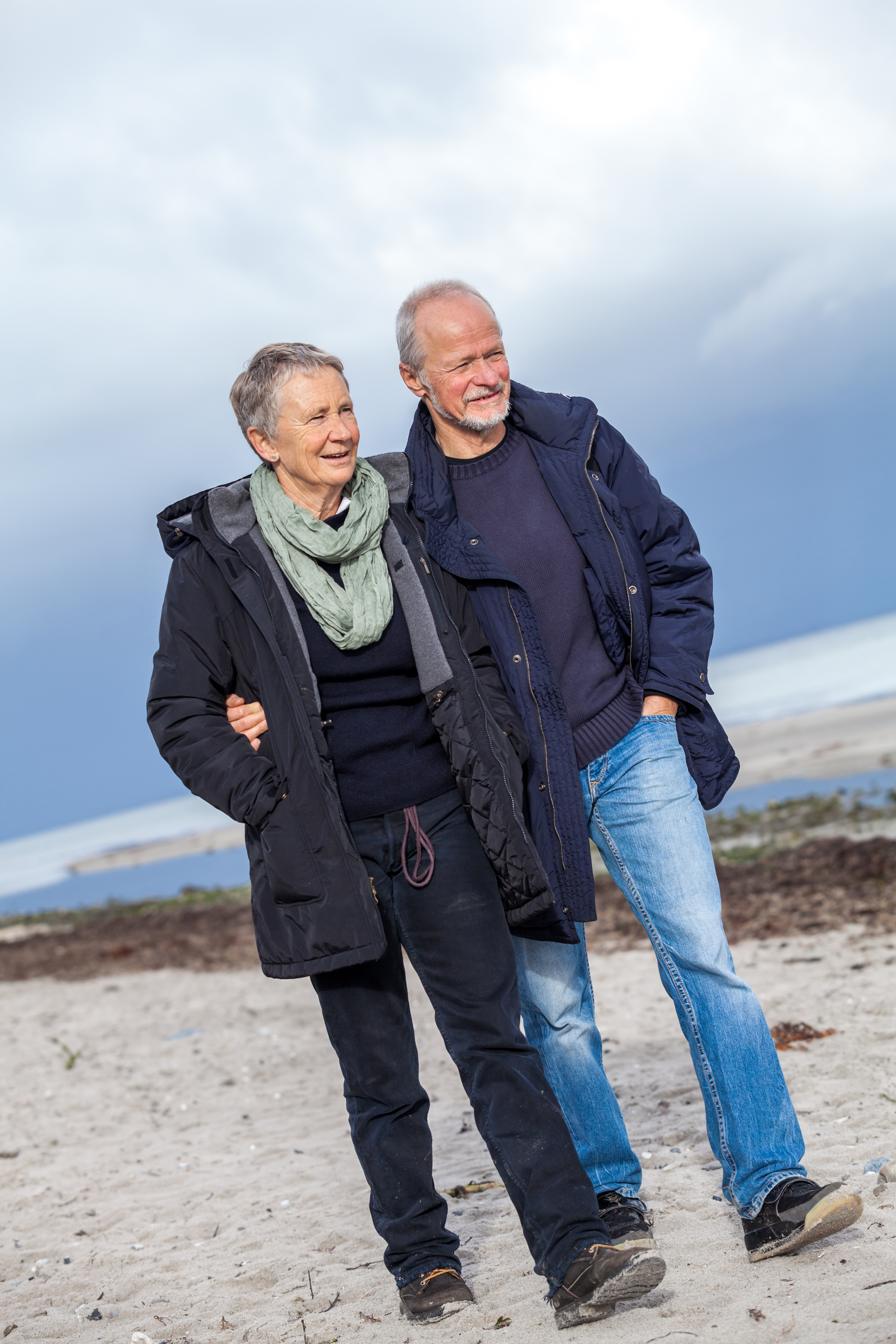 Do you believe that you are you are ‘as young as you feel’? That you’re free to take charge of your own health, happiness and wellbeing, no matter what your age?
In frustration at some of the ingrained beliefs about aging that he saw shackling his colleagues and friends as they grew older, an American baseball legend asked, “How old would you be if you didn’t know how old you were?” implying that you need to break out of the mental conditioning that makes you think you are defined by your age.
The calendar is a useful way to let you know the date, but if you let yourself be hemmed in by your chronological age, you may lock yourself out of potentially valuable opportunities.
Nextgen population researchers have recognised the greater import of health, cognitive function and life expectancy rather than age data as they plan for future populations. “We should not consider someone who is 60 or 65 to be an older person,” said researcher Sergei Scherbov. “Saying that ‘40 is the new 30’ .. is truer than people know.”
We’ve heard how our health age can be years younger than our calendar age, if we’re active and eat sensibly. Now, research into the mind/body/spirit connection in several fields, including neuroscience and meditation, adds evidence to the claim that it is our mindset, more than the food we eat or the exercise we do, that affects our physical body.
Excited by the health implications of the mind sciences, a Cleveland Clinic Foundation exercise psychologist compared individuals who worked out at a gym against another cohort who just visualized working out. Not surprisingly, the gym-goers experienced a 30 percent increase in muscle. However, the ones who only thought about working out also experienced a 13% increase in muscle strength, urging us to think beyond the physical to mental attitudes and capacities.
Many integrative health practitioners take this a step further, asserting that it is spiritual thoughts and practices that make a significant difference to better health and longevity. Mary Baker Eddy, an early researcher into this connection in her book, Science and Health, suggests that we “…. shape our views of existence into loveliness, freshness, and continuity, rather than into age and blight” for a longer, healthier and happier life.
She also suggests that it’s time to stop focussing on the body so much, and be aware of the myths about aging that are constantly influencing us. Be aware that “timetables of birth and death are so many conspiracies against manhood and womanhood”, and stop keeping a record of ours or others ages; or at least dispute the assumptions of debility and aging every time you buy a birthday card.
Healthwise, it’s worth acknowledging that spiritual, mindful or positive thoughts bring vitality, freshness and promise to each day.
Some have broken free from the belief that they’re ruled by an aging body. You too can adopt a mental attitude of ageless being, and look forward to experiencing the health benefits.
This article, Your Age Doesn’t Define You, is by Kay Stroud. Kay is a health writer focussing on the leading edge of consciousness, spirituality and health. Her articles can be found on Health4Thinkers.
Why being young at heart works. Is there a science behind it? 1 comment
 Thank you to Sarah Marinos of body+soul at the Courier-Mail, for writing an article recently on the health benefits of thinking and acting younger – “Why being young at heart works“. Amongst the myriad of ads by the pharmaceutical companies, this article was unexpectedly thought-provoking and brought to my attention the work of Dr Ellen Langer, Harvard University psychologist and scientific investigator who conducted a landmark experiment 30 years ago where she had seniors live in a secluded monastery as though it were 1959. The results were surprising. After a week of living as though they were younger men, the pensioners were more flexible, had better hearing and memory and felt stronger. And they also looked younger.
This experiment was the forerunner of the British ABC’s TV program, the Young Ones that I recommended in a previous blog post, “Could it be that we all have the power to think ourselves young again?”
Langer has studied the way our mind influences our body and appearance and is the person who coined the word ‘mindfulness’. “When people are taught to be mindful in a fashion very different from meditation, they become more creative, healthier, and happier”, she wrote.
In Langer’s book, counterclockwise: Mindful Health and the Power of Possibility, she reminds readers that many definitive-sounding medical diagnoses are in fact best guesses. In a sense, this is a book about the limits of empirical knowledge. But as Langer sees it, the ambiguity that inevitably accompanies medical research can be profoundly liberating. If we can’t be sure that a diagnosis — or a widely accepted truism such as “memory loss is inevitable with age” — is true, we’re less likely to apply a self-limiting label to ourselves.
So what does this mean for you and me? Are these experiments miracles or is there a law in place?
I put the question another way. What if society’s current standards and expectations were the aberration and health and eternal life the reality?
The consistent findings from these experiments point to a law or science in place. I understand it to be a divine Science. Towards the end of the 19th Century the author of the first and complete book about the laws of reality, Mary Baker Eddy wrote, “Because of human ignorance of the divine Principle, Love, the Father of all is represented as a corporeal creator; hence men recognize themselves as merely physical, and are ignorant of man as God’s image or reflection and of man’s eternal incorporeal existence.” (Science and Health with Key to the Scriptures)
Christian Science makes it clear that mankind’s misunderstanding of the reality of being, of what God is and of what man really is, handicaps our life experience thus far.
This article by Kay Stroud was orginially published on her blog site. Kay is a health writer focussing on the leading edge of consciousness, spirituality and health. Contact her to learn more about it, including Christian Science, via www.health4thinkers.com.
Women opt to take a different sort of health pledge 1 comment
 Picture this. A young mum powering around the front lawn behind a lawn mower, baby in the pouch on her chest screaming his head off.
Reserve your judgement, because in a very short time he has calmed down owing to the monotonous noise and rhythm. The mother has used her wisdom, love and creativity to avert several hours of frustration for them both.
That mum was me over 30 years ago, and I found that parenting took the most energy, intelligence, selflessness, generosity, kindness, forgiveness, decisiveness, endurance, perseverance, enthusiasm, commitment, organisation and wisdom that I have ever needed to muster.
You’d have to agree that we need to be both mentally and physically fit and healthy to manage the complexities of raising a family.
Recently it was the inaugural, national Women’s Health Week, dedicated to improving the physical and emotional health and wellbeing of all Australian women right across the life span and addressing a range of women’s health issues holistically and to keep women well.
Taking time out for themselves, getting active, eating well and reaching out to family and friends are some of the pledges we’re being encouraged to make during this week.
Have a look at their website. There are the usual pledges to exercise more and eat a balanced diet, but it’s interesting to note that there are also a surprising number of pledges that acknowledge the importance of the quality of our thoughts to our health and wellbeing. For instance, “I pledge to be more grateful on a daily basis”, “I pledge to take better care of myself both physically and spirituality”, “I pledge to practise controlling my thoughts and focusing on the here and now”, “I pledge to love myself”.
All well and good you may say, but how can a spiritual viewpoint help with some of the critical mental challenges we experience when we become parents?
Experiencing post-natal depression after the birth of her eldest daughter well-known news presenter, author and columnist Jessica Rowe struggled with feelings of inadequacy, resentment, fear and shame. It was only when she summoned the courage to ask for help that the psychiatrist helped her to overcome these feelings.
I sought a similar, though different, sort of help as I dealt with the issues of isolation and uncertainty during the early years of child-rearing. I can truly say that it was my daily spiritual practice that developed a growing understanding of the divine Mind and maintained my mental health during this time. When I was ‘tuned in’, it brought moment-by-moment inspiration and answers about the how to, what, when, who and why of child rearing.
Explaining the benefits of ‘tuning in’ to the Divine, 19th century mind/body researcher and religious reformer Mary Baker Eddy, identified Moses’ unwilling acceptance of leadership and subsequent courageous nation-changing actions as such ‘tuning in’, “illustrat(ing) the grand human capacities of being bestowed by immortal Mind.”
“Australia has become increasingly secular over the years. Despite this, however, it is interesting to see a significant relationship between spiritual experiences and better mental health (lower depressive and anxiety symptoms)”, the conclusions of a recent study conducted by the School of Psychiatry and Clinical Neurosciences at the University of Western Australia found.
As healthcare continues to evolve and provide more complete, holistic care for patients, the importance of religion and spirituality is increasingly being emphasised as a central determinant of quality of life and conferring positive benefits to mental health, even to coping with the distress of early motherhood.
Psychologists are now developing and evaluating a variety of spiritually integrated approaches to treatment, including: forgiveness programs to help divorced people come to terms with bitterness and anger; programs to help survivors of sexual abuse deal with their spiritual struggles; treatments for women with eating disorders that draw on their spiritual resources; and programs that help drug abusers re-connect to their higher selves”.
Pledges to develop our spirituality, by taking the time to be more grateful, love ourselves and others more, to be kind when someone is mean or thoughtless, to do a good deed each day and to forgive (even drivers who hog the inside lane) will bring not only increased mental health, but can also benefit us physically.
Along with women’s health, September offers many opportunities to consider a spiritual approach to dealing with mental health issues: RU OK Day, Exercise Your Mood Month and World Suicide Prevention Day.
Ladies, this week join the growing numbers of women choosing to adopt and benefit from a spiritual practice for all round wellbeing.
This article by Kay Stroud, a health blogger who is interested in the mind-body connection, was originally published on her blog, Spotlight on Spirituality and Health. It was also published at The Toowoomba Chronicle, and on these other APN news sites: the Sunshine Coast Daily, the NSW Northern Star and the Mackay Daily Mercury.
 Christian Science Canberra