… look not at the things which are seen, but at the things which are not seen; for the things which are seen are temporal, but the things which are not seen are eternal.
The members of the Christian Science community in Canberra share their experiences and thoughts on Christian Science:
When my son was growing up we had a friend who often went on camping and hiking holidays with a group of long-time friends. Once or twice a year he would invite my son and me to join the group. I’ve never been a sporty person and being really physically fit has never been a priority for me but I do love the outdoors and these trips offered a welcome break. I had a very busy job working 50-60 hours a week in a largely sedentary occupation. When I wasn’t working, my life was filled with chores. In fact the only regular exercise I had was doing the vacuuming.
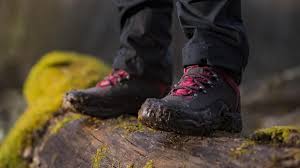
On one occasion, when my son was eleven, our trip took us to a beautiful gorge in Queensland. The first day out walking was to be a warm-up day of about 10 kilometres. The track was rough in some places and there was a lot of climbing over rocks and obstacles. My little ‘girly’ walking boots lasted about half an hour before the sole detached from the body of one shoe and this made the rest of the walk that day somewhat difficult. However, I was determined to enjoy the day and I did. I hadn’t brought a spare pair of walking shoes with me, but my son had and he was happy for me to borrow them. Even at that age his foot was huge and his boots were about three sizes too big. Still I was determined to make the most of things and I developed a new style of walking that accommodated the oversized shoes.
The next day the group had planned a 22 kilometre round trip up the gorge to some Aboriginal caves. This route, they told me, was rougher than the first day – it involved much climbing over huge boulders and up inclines. These other people were experienced walkers and they set a very brisk pace. At first I was concerned about how I would go. Would I be able to keep up with my oversized shoes and my lack of fitness? I quickly stopped these negative thoughts. I may not be physically fit in the usual way but I was spiritually fit. Despite my busy life, I did always find time for prayer, for drawing close to God. I knew that my true identity was spiritual and a spiritual being doesn’t suffer from muscle fatigue. The Bible tells me that I am the image and likeness of God (Genesis 1: 26, 27) and as God is never worn out, nor could I be. I trusted these thoughts and felt buoyed by them. The day flew by and I kept up without any difficulty.
When we got back to camp that day my son and another boy, who was a few years older, asked if they could go down and cool off in the little creek nearby. We agreed so long as they stayed together. The rest of the group talked about how exhausted they were and sat with their feet in buckets of cool water saying they didn’t think they could walk another step. I didn’t feel the need for a bucket of water but I was happy to sit and chat. Shortly the older boy came back without my son. Apparently the little creek wasn’t very exciting but some other children had told them about a place down river where there was a high rock that you could jump off into a deep pool. My son had gone to investigate. The older boy didn’t go because the pool was another two kilometres away and he didn’t want to go that far. I set off to find my son. I found him at the pool and he was happy to return with me. We walked the two kilometres back chatting happily about the day. When we returned the others were still recovering. They decided that the next day would be a very short walk.
I can honestly say I felt no ill-effects at all from any of our walks that week. I enjoyed every minute of it. I proved to be as fit as the others who led much more active lives than me. I totally put this down to my spiritual approach to activity. Whatever it is right for me to do I can do when I claim my spiritual identity.
Science and Health with Key to the Scriptures by Mary Baker Eddy is the textbook of Christian Science. In it Eddy states: A mortal man possesses this body, and he makes it harmonious or discordant according to the images of thought impressed upon it (p208). Holding in thought only images of health – images of myself as a perfect child of God – allowed me to experience the full enjoyment of this wonderful opportunity.
Unselfish ambition, noble life-motives, and purity, — these constituents of thought, mingling, constitute individually and collectively true happiness, strength, and permanence. (Science and Health with Key to the Scriptures by Mary Baker Eddy p58: 7)
Finally, brethren, whatsoever things are true, whatsoever things are honest, whatsoever things are just, whatsoever things are pure, whatsoever things are lovely, whatsoever things are of good report; if there be any virtue, and if there be any praise, think on these things. … and the God of peace shall be with you. (The Bible – Philippians 4: 8, 9)
The four-hourly doses of morphine were such a welcome relief to the intense pain I was experiencing following major surgery. What could possibly make me give them up?
I found there was something that could persuade me to do so. And that’s why, I want to share my experience with sufferers of chronic pain.
In Australia, one in five people live with chronic pain, including adolescents and children. This prevalence rises to one in three people over the age of 65. Chronic pain is linked to depression and suicide and is Australia’s third most costly health condition.
To manage it, a range of treatments such physio and physical therapy, medical acupuncture, thinking strategies, lifestyle changes, nutrition and traditional prescription opioids, are employed.
Despite this, pain is often long-lasting and continues for years with no foreseeable end.
However, I’ve joined a groundswell of people that believe it’s time to do more than simply manage pain. We are convinced it can be reduced, and even healed.
According to a 2011 report, “one reason pain is so hard to treat is that it isn’t just physical.” Our thinking can actually have an impact on the amount of pain we feel.
The power of our expectations is illustrated in a series of trials into the relationship between pain and the placebo effect. Hundreds of patients treating irritable bowel syndrome, migraine and back pain experienced similar or better results from placebos than from strong pain killers.
While it’s agreed that placebos are not a universal panacea, placebo research leads us to think about how much influence thought actually has on our health.
Reasoning from a more spiritual perspective, author Mary Baker Eddy, reached a similar conclusion, explaining that pain is always a mental image or state.
But can pain really be relieved just by thinking differently?
Yes, but in my experience I have found that it needs more than just positive thinking to free us from pain.
So, back to my stay in hospital. In my late-teens I was “on fire” with enthusiasm about a couple of unique books which I had recently revisited. They answered so many of the questions I had about why we are here and whether what our senses perceive is all there is to existence.
The Bible, so comforting to so many people, didn’t seem all that relevant to me until I started reading Science and Health, which brings out its spiritual meaning and explains how and why not only Jesus, but also his early disciples and many of the Old Testament prophets, were able to heal all kinds of physical needs.
I learned that there was a spiritual science in place based on a divine consciousness of being.
My studies had shown the importance of addressing the spiritual need as an aid to recovery, a standpoint now supported by medical research.
I started reading the thought-changing book again right there in hospital, and called a Christian Science practitioner to pray with me by helping me to understand more consistently my real, spiritual nature.
I can still remember the feeling of love and wholeness that engulfed me soon after. No more drugs were needed, and worrying digestive difficulties painlessly dissipated that day.
On this basis, many have been healed of acute and chronic pain, and demonstrated that such pain need not last forever. Peace and health are a present possibility for those willing to dig deeper into the understanding of their spiritual identity.
This article was contributed by Kay Stroud, a life-long Christian Scientist, who is a freelance writer focussing on the undeniable connection between our thinking and our experience including our health. She writes for metropolitan and regional news media throughout Australia and beyond, and is a regular contributor to Australia’s national forum, Online Opinion, and the APN regional network in Northern NSW and Queensland.
For some of us it’s a big jump to conceptualize that changes we want to make don’t start “out there” but in our own thought. This is clear to me as I listen to my diverse range of friends, many of them of retiree age, over catch-up coffees and lunches.
All of my friends are beautiful people but there are marked differences in their attitudes towards ageing, and in particular how they talk about themselves. For some the state of their body is front and centre of their thinking and their conversation is peppered with comments such as: “Oh well, what can you expect at our age.”
While other friends never mention health or age. They are full of the adventure of life – of the joys of retirement or the fulfilment and challenges of a long working career. Listening to these friends it’s clear they are less impressed with how their body is doing and more engaged with expressing the continuity of activity, progress, growth, energy, renewal, vigour, buoyancy.
These qualities start in our thought, and could be described as coming from a universal Mind. Mary Baker Eddy, one of my favourite authors on ageing, wrote in her primary text, Science and Health with Key to the Scriptures: You embrace your body in your thought, and you should delineate upon it thoughts of health, not of sickness (p208).
She goes on to say: Man is more than a material form with a mind inside, which must escape from its environments in order to be immortal. Man reflects infinity, and this reflection is the true idea of God.
God expresses in man the infinite idea forever developing itself, broadening and rising higher and higher from a boundless basis (p258).
Her premise is that our life reflects our thinking. In Science and Health again she writes: Your decisions will master you, whichever direction they take. … Stand porter at the door of thought. Admitting only such conclusions as you wish realized in bodily results, you will control yourself harmoniously (p392).
Choices are important in shaping our experience and so my personal challenge moment by moment is to choose these qualities of life, and then look for them in experience. It certainly makes for livelier catch-up coffees with friends!
This article was submitted by Deborah Packer of Canberra.
About three years ago a young mum moved into the house next door to us. She had a couple of children, a cat and a dog. Soon her friend moved in too and he brought with him a tiny pup. These were both outside dogs but they had provided no shelter for them. They lived largely without human interaction in the bare backyard and it was the middle of a fierce and wet Canberra winter. In the mornings this tiny short-haired puppy could be seen sleeping curled and shivering in the long frosty grass. During the blustery winter days he cried and cried. When it rained he tried to stand under the larger dog for shelter and together they looked soaked and miserable.
I found this very difficult to witness day after day and I became incensed with indignation.
I succumbed to the error of believing that evil existed – in the form of my neighbours and that there were places where Love – another name for God – did not exist. If I believed that the neighbours were cruel and unloving then I was believing that God wasn’t all. I had to choose which idea I believed.
Rise in the strength of Spirit to resist all that is unlike good (p393).
It was Spirit, God, who gave me the strength to resist this faulty thinking. I knew that there was no place where God was not. The Bible tells us that man is made in the image and likeness of God … of Love. The real man could not be unloving. So I held to this truth about man and acknowledged God’s love for all His creation. This dissolved the indignation. Within a day of this turn around in thinking the dogs were being invited inside and for the rest of the winter they were given shelter and companionship.
I have learned never to underestimate the power of practical applied scientific prayer!
This post was submitted by Deborah Packer of Canberra, Australia.
Who Am I Really– Readings from the Bible and the textbook of Christian Science, Science and Health with Key to the Scriptures by Mary Baker Eddy.
Every Wednesday at 6.15 pm a Testimony Meeting is held at the Christian Science Church in Canberra. Each meeting begins with readings selected from the two books designated as the Pastor of Christian Science: The Bible and Science and Health with Key to the Scripturesby Mary Baker Eddy. A new topic for the readings is selected each week.
At the conclusion of the short readings the congregation is invited to share thoughts on this topic and relate how they have used the principles of Christian Science to solve life’s problems and bring physical healing.
If you are in Canberra on any Wednesday please join us. Everyone is welcome.
This recording represents the readings on the topic: Who Am I Really?
While some of us are still dealing with the influx of visitors, festivities and sun-soaked holidays, in the back of our minds is the niggling thought that 2015 has already begun and now is the time to make our New Year’s resolutions, before it’s too late.
Some are choosing to eat healthier and exercise more. That certainly can make us feel better.
Two other resolutions that go hand-in-hand will not only increase your health but be game-changers in your life: always opt for the positive viewpoint over the negative and choose to be kinder to others.
A friend related how his acquaintance was in hospital recently, suffering from a life-threatening illness.
Things were looking pretty grim and it seemed that he was hanging on by a thread. Then his heart stopped and he ceased breathing.
At that moment, the medical staff on duty in that area of the hospital noticed that he was passing on and began to congregate around his bed …. not rushing to him with defibrillator or drip, but unexpectedly telling jokes, laughing and talking loudly and animatedly about everyday things.
They continued by his bedside including everyone in the ward in the jovial conversation until he began to regain consciousness. The man made a full recovery.
What happened? Did the nurses and doctors know that their confident and caring presence was more effective than apparatus or medication? Yes.
Something similar is at play when a teacher disregards the negative ‘label’ attached to the child and responds with love and recognition of that child’s higher nature and abilities, bringing a turnaround in attitude at school.
Or when a brick wall tumbles down between two people who haven’t spoken to each other for years as one reaches out with forgiveness.
The reasons for such changes for the better spring from (1) choosing a positive, solution-based approach, and (2) trusting our instinct to be warm and caring, despite a temptation to take an impersonal, defeatist or hard-line approach.
Lissa Rankin MD, sought-after TEDx presenter and one of the keynote speakers at the Byron Bay Uplift Festival a few weeks ago, urges us to strip back everything that isn’t really us that we’ve learned in the world of hard knocks, to find that inner pilot light or divine spark of love within.
Research results from studies on cancer recovery and remission support her claim to the beneficial effects of this practice.
Rankin also cites conclusive evidence that an essential part of any successful treatment is engaging a health practitioner who is reassuring, gentle and kind, and treats patients with compassion.
Did Jesus mean in his well-known parable, that the warmth and care that the Good Samaritan showed had as much to do with the traveller’s recovery (who was robbed and beaten by thieves) as the bandages, oil and wine provided?
Mary Baker Eddy believed so and based her scientific, healing method on this premise. An important researcher into how consciousness affects health, she discovered in her investigations and successful treatments through prayer that…
Forgetting ourselves and putting others first really FEELS divine and invariably makes us glow with happiness.
I hope your 2015 takes wings. Seems it’s sure to do so if you choose to take this two-pronged approach to a happier, healthier year ahead – adopting a positive, solution-based viewpoint, and actively and warmly caring for yourself and others.
Kay is a freelance writer focussing on the undeniable connection between our thinking and our health. She writes for metropolitan and regional news media throughout Australia and beyond, and is a regular contributor to Australia’s national forum, Online Opinion.
Eliminating fear is good for your health say experts.
Mind-Body Interventions such as patient support groups, prayer, spiritual healing and a state of calmness produced through meditation, can all help reduce bodily stress.
Fear is like luggage you carry around with you. It comes in all shapes and sizes. Some fears you can put down and walk away from. Others seem to be firmly attached to you. You know the kind I’m talking about. It can be a fear of going to the dentist, speaking in public, personal safety, not being able to pay the bills, fear of getting sick, and yes, even a fear of dying.
You often know when you feel nervous or afraid, through certain bodily sensations. For example, you get butterflies in the stomach, sweaty palms, dry mouth, shortness of breath, or rapid heartbeats. On such occasions, fear itself seems to be quite tangible, even physically concrete.
While fear appears to be expressed in a bodily way, it actually starts in thought. This may appear obvious, but it’s a point that often gets overlooked when we’re caught up in an anxious moment, or feeling ill. Being aware of this mind-body connection, provides a starting point for working beyond fear. It leads to finding a pathway for resolving a fearful situation, and to achieving better health.
One way to achieve fearless living, is to practice calm thinking whenever those internal alarm bells are sounding. According to Herbert Benson, M.D. Associate Professor of Medicine at Harvard Medical School and founder of the Mind Body Medical Institute, this can be accomplished by “prescribing meditation – not just medication”. As the author or co-author of more than 170 scientific publications and seven books, Benson encourages a state of calmness through meditation as a means of reducing the bodily stress which is often engendered by fear.
While there are various ways to meditate, one method that many people have found to be effective involves spiritual thinking, or prayer. Thoughts of divine protection, as I’ve discovered, can help dissolve fearful concerns about health and personal wellbeing. This can calm thought, prevent fear from governing the body, and correct health problems engendered by fear. And why not? Evidence of the effect of spiritual thinking on the body are not new. One pioneer and writer on health and spirituality, Mary Baker Eddy, documented them during the last century.
Today modern health campaigner Deepak Chopra, MD, is exploring paths beyond western medicine and surgery. Although a board-certified endocrinologist, he believes that “The experiences of joy, compassion, and meditative quiescence (calmness) could be powerful tools to restore homeostasis (a state of equilibrium) and strengthen our self-repair mechanisms.”
Chopra is not alone in his views. In August 2012, I attended the Australasian Integrative Medicine Association conference in Melbourne. Doctors, nurses and other health care professionals who were present, discussed ways an integrative medicine practice could help patients achieve “optimal health and healing.” This included making use of “all appropriate therapeutic approaches, health care professionals and disciplines”, as well as “Mind-Body Interventions such as patient support groups, meditation, prayer, spiritual healing, …”
Those in the medical fraternity who seek the healing of fear and of fear-related illness through complementary practices, are to be commended. As Chopra says, “The mystery of healing remains unsolved. If we combine wisdom and science, tradition and research, mind and body, there is every hope that the mystery will reveal its secrets more and more fully.” Such unbiased inquiry as he proposes, could lead us to understand how to live a fear-free, healthy life and to the role that spiritual thinking can play in the healing that follows.
This article, Fearless Living is Healthy Living, by Beverly Goldsmith was originally published on her blog site, Spirituality and Health Connect. Beverly is a Melbourne-based health writer who provides a diversity of health content on how spirituality and thought affect health.



 The four-hourly doses of morphine were such a welcome relief to the intense pain I was experiencing following major surgery. What could possibly make me give them up?
 For some of us it’s a big jump to conceptualize that changes we want to make don’t start “out there” but in our own thought. This is clear to me as I listen to my diverse range of friends, many of them of retiree age, over catch-up coffees and lunches.
 About three years ago a young mum moved into the house next door to us. She had a couple of children, a cat and a dog. Soon her friend moved in too and he brought with him a tiny pup. These were both outside dogs but they had provided no shelter for them. They lived largely without human interaction in the bare backyard and it was the middle of a fierce and wet Canberra winter. In the mornings this tiny short-haired puppy could be seen sleeping curled and shivering in the long frosty grass. During the blustery winter days he cried and cried. When it rained he tried to stand under the larger dog for shelter and together they looked soaked and miserable.
 Who Am I Really – Readings from the Bible and the textbook of Christian Science, Science and Health with Key to the Scriptures by Mary Baker Eddy.
 While some of us are still dealing with the influx of visitors, festivities and sun-soaked holidays, in the back of our minds is the niggling thought that 2015 has already begun and now is the time to make our New Year’s resolutions, before it’s too late.
 Eliminating fear is good for your health say experts.

 Christian Science Canberra