The issue of violence is prominent in our community conversations at the moment. Terrorism, drug-related violence, domestic and institutional abuse, and even road rage are insistently crying out for our attention and solutions.
Despite serious efforts over many years to prevent violence, to deal with its effects and to punish the perpetrators, there’s now general agreement that violence will continue to escalate and to propagate fear in the community until we find and treat the real causes.
Fundamental beliefs that underlie and perpetuate all kinds of violence are: that humans have an animal nature prone to competition, self-preservation and aggression; that certain brain-based dysfunctions may be the root of addiction and violence, aggravated by abuse or neglect during childhood; and that there are deeply rooted social and cultural patterns, leading to a distorted sense of manhood and womanhood, that may take generations to change.
However, there’s evidence that these beliefs may be just that …. either long-held or fairly recent beliefs that need to be revised.
Drugs and alcohol are often associated with violence. People working in the police and community services speak of how addiction and abuse reoccur from generation to generation, and there is now general realisation that special attention needs to be given to the families involved.
However, there is some progress as communities work together to fight apathy and educate each other that this cycle can indeed be broken.
A retired commanding officer in the police force shared one such approach: “…anytime I knew I was going to a call related to domestic conflict or violence I would pick up the local pastor.” Often they were able to provide a spiritual viewpoint and connection that would later solve the problem.
It is often acknowledged that recognising a man’s spiritual nature has a healing effect.
Significant psychological research studiesfind that spirituality is not only helpful to, but integral to mental health. This is an important point in considering individual and whole-society wellbeing.
We may need to adjust our thinking about our real nature.
Another long-held false belief will be overturned by realising that the spiritual qualities generally attributed to women – such as care for others, gentleness, forgiveness and patience – and those qualities attributed to men – such as wisdom, truthfulness, tenaciousness and strength – are innate in both men and women.
Jesus’ ability to express both the fatherhood and motherhood of the divine set the benchmark for us. And like him, we’re actually “tuned in” to hear spiritual intuitions that will prompt, direct and uplift thought, although we may choose not to listen.
Knowing that no-one can be excluded from hearing and acting on divine thoughts can help to overcome violent impulses and begin to heal the culture of violence.
A pioneer in investigating the effects of our thoughts on our health, Mary Baker Eddy, recognised this voice as the ever-appearing of “the divine message from God to men speaking to the human consciousness.”(Science and Health with Key to the Scriptures)
When Susannah (not her real name) moved out of home and obtained a copy of that book, she just loved the way the author described the divine power that governs the universe as Father-Mother.
Her family had suffered violence at the hand of her father for many years. To think her father could be capable of reflecting the gentle motherhood of God seemed absolutely impossible. However, she decided to stop wrestling with this idea and worked hard to try to see him as reflecting this tender divine nature; learning that he wasmeantto be nurturing, gentle, tender.
Susannah was listening for the divine message, which replaced the macho view of her father and other men, with this new view of men. Her thought and experiences gradually began to change.
As the weeks went by, she learned that her parents had not had a fight in months and her father was treating her mother and sister with new tenderness. Eight years on, this is still the case.
A scientific approach to thought and prayer in this way does not whitewash evil deeds; rather it exposes the mistaken beliefs and causes them to be discarded.
Further changes in thinking about her own spiritual nature, meant that Susannah no longer saw herself or her mother as survivors of mental, verbal or physical intimidation, but as well-adjusted and balanced individuals.
She had no lingering emotional scars, but had learned truly to love and see the undamageable good in herself and her mother.
As Australian of the Year and domestic violence survivor, Rosie Batty, advocates, Susannah truly took responsibility for her own life, bringing vital change to those around her in the process.
Such approaches hint at the possibilities for healing the culture of violence in ourselves and in the community.
Love – the Fulfilling of the Law– Readings from the Bible and the textbook of Christian Science, Science and Health with Key to the Scriptures by Mary Baker Eddy.
Love inspires, illumines, designates, and leads the way. Right motives give pinions to thought, and strength and freedom to speech and action.
(Science and Health with Key to the Scriptures by Mary Baker Eddy p454)
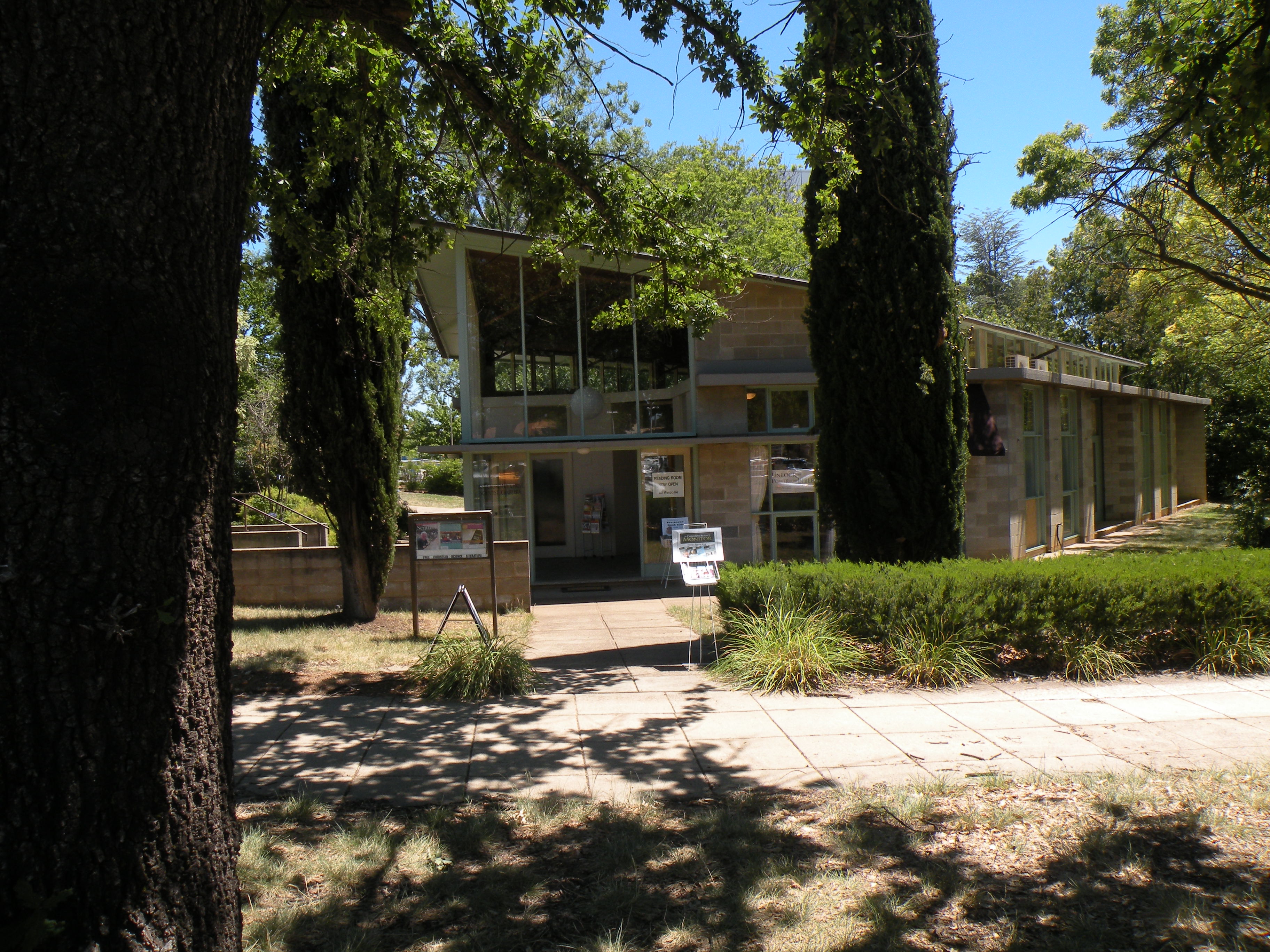
Every Wednesday at 6.15 pm a Testimony Meeting is held at the Christian Science Church in Canberra. Each meeting begins with readings selected from the two books designated as the Pastor of Christian Science: The Bible and Science and Health with Key to the Scripturesby Mary Baker Eddy. A new topic for the readings is selected each week.
At the conclusion of the short readings the congregation is invited to share thoughts on this topic and relate how they have used the principles of Christian Science to solve life’s problems and bring physical healing.
If you are in Canberra on any Wednesday please join us. Everyone is welcome.
This recording represents the readings on the topic: Love – the Fulfilling of the Law.
We have recently had a beautiful baby girl. Our whole pregnancy and birth was summed up by one of the midwives as being ‘refreshingly normal’; nothing unexpected, nothing out of the ordinary, nothing unpredicted just easy and simple and normal.
I was bought up in Christian Science. It is normal for me to pray whenever I feel scared, hurt or whelmed by a situation and having a baby definitely fell into the overwhelming category. I have never been maternal and have never really thought seriously about being a parent, but my husband was ready and if there was ever anyone I wanted to have a baby with, it’s him. So I started praying to know that Life isn’t a product of mortal interaction. Life is a synonym of God. Life is from God and as such I don’t have the power to do a bad job of parenting.
I can’t say I was completely comfortable yet with the idea of being parental, but the terror the idea initially filled me with had receded. When we found out we were pregnant the last residual fears left me. I’m deeply fortunate that my mum is a Christian Science Practitioner. Through prayer she helped shield me from all the insidious fears that try and bombard pregnant women; she reminded me constantly that my little baby was a reflection of God, a perfectly developed, complete reflection of Life and Love. I could suffer no ill effects from such a blessing – and the pregnancy was a blessing. All symptoms of morning sickness ceased almost as soon as they started, I didn’t feel exhausted, I wasn’t moody or emotional; at all my checkups the midwives found me and my baby to be healthy and growing at the perfect rate. I was fit enough to keep working, right up until the office closed for Christmas (I was due in early January), and my hair was extra shiny!
I was often told by friends how lucky I’d been with my pregnancy. It’s not lucky, it’s normal. It is normal to be happy, to be healthy, it’s normal to be blessed every day by God’s Love.
By the time I was 8 months pregnant my fears of being a bad mother, of being unable to raise my child well had dissipated. God is Father Mother, not me and my husband. The only fears that remained were my waters breaking in the supermarket and the pain of labour (and having to do it with no pants on). So I kept praying about these too. I found at the root of these seemingly superficial fears I was afraid of losing my dignity; that I would be overwhelmed by the physical process of giving birth. I reasoned that if my baby was a perfect reflection of God’s Love and Life, then so was I. After caring for me so long God would not abandon me at the final hurdle.
Labour was short, uncomplicated and I did not forgot my please and thank-yous once! My waters broke at the hospital (not at the supermarket) and I kept my pants on right until the end, and then I didn’t really care. Our little girl is perfect.
I’ve kept praying about what is normal since we came home too. Normal is peaceful, harmonious, and joyous. It is not distress, sleepless nights, or the baby blues. In those first few days where doctors and nurses tell you to expect exhaustion, unsettledness and hormonal tidal waves, I prayed fiercely, I would not accept these predictions of disharmony. The first few nights we were home I read the Mothers Evening Prayer by Mary Baker Eddy (from the Christian Science Hymnal 207), the second verse resonated strongly:
“Love is our refuge; only with mine eye / Can I behold the snare, the pit, the fall: / His habitation high is here, and nigh, / His arm encircles me, and mine and all.”
I read this over and over until I felt calm, and the fear of having a newborn subsided.
Our child has, from the start, been a good sleeper. Neither my husband nor I have suffered sleepless nights and she is a happy, tolerant, calm, peaceful baby. None of the scary predictions have lingered, because divine Love is omnipotent, a Father Mother’s Love could never allow their child to suffer distress or pain, and hasn’t.
Our home is a happy one, and we are so grateful for having Jacqueline come into it.
This article was shared by Alex Tabor who lives in Tasmania, Australia.
Four ‘trick or treaters’ knocked on our door on Halloween evening. Somewhat unprepared and surprised to experience this novelty in Australia I managed to locate a few sweet treats for each of them, and they left happily bubbling with excitement.
Was I frightened of their costumes or weird masks? Of course not. And I’m sure they didn’t believe for a moment that they’d suddenly morphed into ugly, wicked or ghoulish creatures, either.
Sometimes, though, people do put on an emotionally draining mask as they strive to feel accepted and loved. Over time they may come to accept the charade as part of themselves.
For instance, they may act out the role where they have to be the best … at everything. They can’t abide mistakes and feel it’s a badge of honour to say they’re a perfectionist. Ever in fear of failing, they may be chronic procrastinators. They don’t like themselves very much either, because they rarely live up to their own expectations.
They may be caught up in a warped view of the world that is commonly known as perfectionism.
Like many psychologists, Thomas Greenspon believes that perfectionism is more than pushing yourself to do your best to achieve a goal; it’s a reflection of an inner self mired in anxiety, where you constantly feel like an imposter. “Perfectionist people typically believe that they can never be good enough, that mistakes are signs of personal flaws, and that the only route to acceptability as a person is to be perfect,” he said.
Whatever the reason may be for that belief, at the heart of the often life-long anxiety to appear perfect is our adoption of the general belief that the human mind is full of good and bad emotions and beliefs, some of which are detrimental to mental and physical health.
However, what’s gaining wider acceptance in health research today is the degree to which the body is the servant of the mind.
Sometimes a simple shift in thought enables us to take off the imposter’s mask we may have been wearing and lift the mental weight.
Accepting a less human mind for a diviner nature that is more attuned to understanding, compassion and humility, brings with it greater confidence, better relationships and a selfless desire to contribute to the greater good.
It’s the daily diet of serene, spiritual thoughts that transforms our experience, gives us grace for each day and best feeds our famished affections, Mary Baker Eddy, the discoverer of Christian Science, explains in a very practical elucidation of the Lord’s Prayer.
It’s interesting that current treatments for perfectionism are also moving to thought-based approaches such as acceptance and commitment therapy, meditation and mindfulness, even in the treatment of serious eating disorders like anorexia nervosa and bulimia nervosa that develop alongside the obsessive quest for the perfect body.
Reports estimate that 15% of Australian women between 12 and 30 years of age suffer from eating disorders at some stage in their lives. These young women (and men) who are crying out for love, acceptance and a better view of themselves, often cause untold anguish for themselves and their families, and sometimes even end their lives in the quest for the perfect body.
Julie Bell reached the point where hospitalisation for malnutrition seemed the only answer when the application of a distinctive thought-based, prayer-based approach, founded on recognition of her flawless, spiritual nature, proved “a glorious turning point”.
She experienced a shift in thought. She realised that she could take control of her own thinking, that her body was the servant and that “food did not have power to govern (her) life or (her) sense of a physical body”.
Not only healed of the eating disorder, she found that other obsessive habits that she hadn’t realised were abnormal completely fell away, as did her fear of going forward in the world.
If you’re tiring of the relentless obsessive or perfectionistic thinking about your body or successes, you may also be more than ready to focus less attention on what you eat or on your limited achievements and more on thinking outside the sensory box. Instead, pondering ideas that tenderly reassure you of your intrinsic value.
The mask of a limited, biophysical viewpoint can be frightening, but its removal will enable you to replace a daily diet of fear and anxiety with a moment-by-moment health-giving intake of love and respect for your perfect, beautiful, spiritual self. The difference will be remarkable.
This post was written by Kay Stroud who is a freelance writer focussing on the undeniable connection between our thinking and our health. She writes for metropolitan and regional news media throughout Australia and beyond, and is a regular contributor to Australia’s national forum, Online Opinion.
While some of us are still dealing with the influx of visitors, festivities and sun-soaked holidays, in the back of our minds is the niggling thought that 2015 has already begun and now is the time to make our New Year’s resolutions, before it’s too late.
Some are choosing to eat healthier and exercise more. That certainly can make us feel better.
Two other resolutions that go hand-in-hand will not only increase your health but be game-changers in your life: always opt for the positive viewpoint over the negative and choose to be kinder to others.
A friend related how his acquaintance was in hospital recently, suffering from a life-threatening illness.
Things were looking pretty grim and it seemed that he was hanging on by a thread. Then his heart stopped and he ceased breathing.
At that moment, the medical staff on duty in that area of the hospital noticed that he was passing on and began to congregate around his bed …. not rushing to him with defibrillator or drip, but unexpectedly telling jokes, laughing and talking loudly and animatedly about everyday things.
They continued by his bedside including everyone in the ward in the jovial conversation until he began to regain consciousness. The man made a full recovery.
What happened? Did the nurses and doctors know that their confident and caring presence was more effective than apparatus or medication? Yes.
Something similar is at play when a teacher disregards the negative ‘label’ attached to the child and responds with love and recognition of that child’s higher nature and abilities, bringing a turnaround in attitude at school.
Or when a brick wall tumbles down between two people who haven’t spoken to each other for years as one reaches out with forgiveness.
The reasons for such changes for the better spring from (1) choosing a positive, solution-based approach, and (2) trusting our instinct to be warm and caring, despite a temptation to take an impersonal, defeatist or hard-line approach.
Lissa Rankin MD, sought-after TEDx presenter and one of the keynote speakers at the Byron Bay Uplift Festival a few weeks ago, urges us to strip back everything that isn’t really us that we’ve learned in the world of hard knocks, to find that inner pilot light or divine spark of love within.
Research results from studies on cancer recovery and remission support her claim to the beneficial effects of this practice.
Rankin also cites conclusive evidence that an essential part of any successful treatment is engaging a health practitioner who is reassuring, gentle and kind, and treats patients with compassion.
Did Jesus mean in his well-known parable, that the warmth and care that the Good Samaritan showed had as much to do with the traveller’s recovery (who was robbed and beaten by thieves) as the bandages, oil and wine provided?
Mary Baker Eddy believed so and based her scientific, healing method on this premise. An important researcher into how consciousness affects health, she discovered in her investigations and successful treatments through prayer that…
Forgetting ourselves and putting others first really FEELS divine and invariably makes us glow with happiness.
I hope your 2015 takes wings. Seems it’s sure to do so if you choose to take this two-pronged approach to a happier, healthier year ahead – adopting a positive, solution-based viewpoint, and actively and warmly caring for yourself and others.
Kay is a freelance writer focussing on the undeniable connection between our thinking and our health. She writes for metropolitan and regional news media throughout Australia and beyond, and is a regular contributor to Australia’s national forum, Online Opinion.
The Psalm of Love … Psalm 23 – Readings from the Bible and the textbook of Christian Science, Science and Health with Key to the Scriptures by Mary Baker Eddy that were inspired by the 23rd Psalm.
Every Wednesday at 6.15 pm a Testimony Meeting is held at the Christian Science Church in Canberra. Each meeting begins with readings selected from the two books designated as the Pastor of Christian Science: The Bible and Science and Health with Key to the Scripturesby Mary Baker Eddy A new topic for the readings is selected each week.
At the conclusion of the short readings the congregation is invited to share thoughts on this topic and relate how they have used the principles of Christian Science to solve life’s problems and bring physical healing.
If you are in Canberra on any Wednesday please join us. Everyone is welcome.
This recording represents the readings on the topic: The Psalm of Love … Psalm 23.
Psalm 23
The Lord is my shepherd; I shall not want.
He maketh me to lie down in green pastures: he leadeth me beside the still waters.
He restoreth my soul: he leadeth me in the paths of righteousness for his name’s sake.
Yea, though I walk through the valley of the shadow of death, I will fear no evil: for thou art with me; thy rod and thy staff they comfort me.
Thou preparest a table before me in the presence of mine enemies: thou anointest my head with oil; my cup runneth over.
Surely goodness and mercy shall follow me all the days of my life: and I will dwell in the house of the Lord for ever.
The Prayer That Heals– Readings from the Bible and the textbook of Christian Science, Science and Health with Key to the Scriptures by Mary Baker Eddy.
Every Wednesday at 6.15 pm a Testimony Meeting is held at the Christian Science Church in Canberra. Each meeting begins with readings selected from the two books designated as the Pastor of Christian Science: The Bible and Science and Health with Key to the Scripturesby Mary Baker Eddy. A new topic for the readings is selected each week.
At the conclusion of the short readings the congregation is invited to share thoughts on this topic and relate how they have used the principles of Christian Science to solve life’s problems and bring physical healing.
If you are in Canberra on any Wednesday please join us. Everyone is welcome.
This recording represents the readings on the topic: The Prayer that Heals.
Is This Body Me? – Readings from the Bible and the textbook of Christian Science, Science and Health with Key to the Scriptures by Mary Baker Eddy.
Every Wednesday at 6.15 pm a Testimony Meeting is held at the Christian Science Church in Canberra. Each meeting begins with readings selected from the two books designated as the Pastor of Christian Science: The Bible and Science and Health with Key to the Scripturesby Mary Baker Eddy. A new topic for the readings is selected each week.
At the conclusion of the short readings the congregation is invited to share thoughts on this topic and relate how they have used the principles of Christian Science to solve life’s problems and bring physical healing.
If you are in Canberra on any Wednesday please join us. Everyone is welcome.
This recording represents the readings on the topic: Is This Body Me?
Eliminating fear is good for your health say experts.
Mind-Body Interventions such as patient support groups, prayer, spiritual healing and a state of calmness produced through meditation, can all help reduce bodily stress.
Fear is like luggage you carry around with you. It comes in all shapes and sizes. Some fears you can put down and walk away from. Others seem to be firmly attached to you. You know the kind I’m talking about. It can be a fear of going to the dentist, speaking in public, personal safety, not being able to pay the bills, fear of getting sick, and yes, even a fear of dying.
You often know when you feel nervous or afraid, through certain bodily sensations. For example, you get butterflies in the stomach, sweaty palms, dry mouth, shortness of breath, or rapid heartbeats. On such occasions, fear itself seems to be quite tangible, even physically concrete.
While fear appears to be expressed in a bodily way, it actually starts in thought. This may appear obvious, but it’s a point that often gets overlooked when we’re caught up in an anxious moment, or feeling ill. Being aware of this mind-body connection, provides a starting point for working beyond fear. It leads to finding a pathway for resolving a fearful situation, and to achieving better health.
One way to achieve fearless living, is to practice calm thinking whenever those internal alarm bells are sounding. According to Herbert Benson, M.D. Associate Professor of Medicine at Harvard Medical School and founder of the Mind Body Medical Institute, this can be accomplished by “prescribing meditation – not just medication”. As the author or co-author of more than 170 scientific publications and seven books, Benson encourages a state of calmness through meditation as a means of reducing the bodily stress which is often engendered by fear.
While there are various ways to meditate, one method that many people have found to be effective involves spiritual thinking, or prayer. Thoughts of divine protection, as I’ve discovered, can help dissolve fearful concerns about health and personal wellbeing. This can calm thought, prevent fear from governing the body, and correct health problems engendered by fear. And why not? Evidence of the effect of spiritual thinking on the body are not new. One pioneer and writer on health and spirituality, Mary Baker Eddy, documented them during the last century.
Today modern health campaigner Deepak Chopra, MD, is exploring paths beyond western medicine and surgery. Although a board-certified endocrinologist, he believes that “The experiences of joy, compassion, and meditative quiescence (calmness) could be powerful tools to restore homeostasis (a state of equilibrium) and strengthen our self-repair mechanisms.”
Chopra is not alone in his views. In August 2012, I attended the Australasian Integrative Medicine Association conference in Melbourne. Doctors, nurses and other health care professionals who were present, discussed ways an integrative medicine practice could help patients achieve “optimal health and healing.” This included making use of “all appropriate therapeutic approaches, health care professionals and disciplines”, as well as “Mind-Body Interventions such as patient support groups, meditation, prayer, spiritual healing, …”
Those in the medical fraternity who seek the healing of fear and of fear-related illness through complementary practices, are to be commended. As Chopra says, “The mystery of healing remains unsolved. If we combine wisdom and science, tradition and research, mind and body, there is every hope that the mystery will reveal its secrets more and more fully.” Such unbiased inquiry as he proposes, could lead us to understand how to live a fear-free, healthy life and to the role that spiritual thinking can play in the healing that follows.
This article, Fearless Living is Healthy Living, by Beverly Goldsmith was originally published on her blog site, Spirituality and Health Connect. Beverly is a Melbourne-based health writer who provides a diversity of health content on how spirituality and thought affect health.
Picture this. A young mum powering around the front lawn behind a lawn mower, baby in the pouch on her chest screaming his head off.
Reserve your judgement, because in a very short time he has calmed down owing to the monotonous noise and rhythm. The mother has used her wisdom, love and creativity to avert several hours of frustration for them both.
That mum was me over 30 years ago, and I found that parenting took the most energy, intelligence, selflessness, generosity, kindness, forgiveness, decisiveness, endurance, perseverance, enthusiasm, commitment, organisation and wisdom that I have ever needed to muster.
You’d have to agree that we need to be both mentally and physically fit and healthy to manage the complexities of raising a family.
Recently it was the inaugural, national Women’s Health Week, dedicated to improving the physical and emotional health and wellbeing of all Australian women right across the life span and addressing a range of women’s health issues holistically and to keep women well.
Taking time out for themselves, getting active, eating well and reaching out to family and friends are some of the pledges we’re being encouraged to make during this week.
Have a look at their website. There are the usual pledges to exercise more and eat a balanced diet, but it’s interesting to note that there are also a surprising number of pledges that acknowledge the importance of the quality of our thoughts to our health and wellbeing. For instance, “I pledge to be more grateful on a daily basis”, “I pledge to take better care of myself both physically and spirituality”, “I pledge to practise controlling my thoughts and focusing on the here and now”, “I pledge to love myself”.
All well and good you may say, but how can a spiritual viewpoint help with some of the critical mental challenges we experience when we become parents?
Experiencing post-natal depression after the birth of her eldest daughter well-known news presenter, author and columnist Jessica Rowe struggled with feelings of inadequacy, resentment, fear and shame. It was only when she summoned the courage to ask for help that the psychiatrist helped her to overcome these feelings.
I sought a similar, though different, sort of help as I dealt with the issues of isolation and uncertainty during the early years of child-rearing. I can truly say that it was my daily spiritual practice that developed a growing understanding of the divine Mind and maintained my mental health during this time. When I was ‘tuned in’, it brought moment-by-moment inspiration and answers about the how to, what, when, who and why of child rearing.
Explaining the benefits of ‘tuning in’ to the Divine, 19th century mind/body researcher and religious reformer Mary Baker Eddy, identified Moses’ unwilling acceptance of leadership and subsequent courageous nation-changing actions as such ‘tuning in’, “illustrat(ing) the grand human capacities of being bestowed by immortal Mind.”
“Australia has become increasingly secular over the years. Despite this, however, it is interesting to see a significant relationship between spiritual experiences and better mental health (lower depressive and anxiety symptoms)”, the conclusions of a recent study conducted by the School of Psychiatry and Clinical Neurosciences at the University of Western Australia found.
As healthcare continues to evolve and provide more complete, holistic care for patients, the importance of religion and spirituality is increasingly being emphasised as a central determinant of quality of life and conferring positive benefits to mental health, even to coping with the distress of early motherhood.
Psychologists are now developing and evaluating a variety of spiritually integrated approaches to treatment, including: forgiveness programs to help divorced people come to terms with bitterness and anger; programs to help survivors of sexual abuse deal with their spiritual struggles; treatments for women with eating disorders that draw on their spiritual resources; and programs that help drug abusers re-connect to their higher selves”.
Pledges to develop our spirituality, by taking the time to be more grateful, love ourselves and others more, to be kind when someone is mean or thoughtless, to do a good deed each day and to forgive (even drivers who hog the inside lane) will bring not only increased mental health, but can also benefit us physically.
Along with women’s health, September offers many opportunities to consider a spiritual approach to dealing with mental health issues: RU OK Day, Exercise Your Mood Month and World Suicide Prevention Day.
Ladies, this week join the growing numbers of women choosing to adopt and benefit from a spiritual practice for all round wellbeing.

 The issue of violence is prominent in our community conversations at the moment. Terrorism, drug-related violence, domestic and institutional abuse, and even road rage are insistently crying out for our attention and solutions.
![10999095_10203698134286147_529720653179037855_n[1]](https://christiansciencecanberra.com/wp-content/uploads/2015/04/10999095_10203698134286147_529720653179037855_n1.jpg)

 While some of us are still dealing with the influx of visitors, festivities and sun-soaked holidays, in the back of our minds is the niggling thought that 2015 has already begun and now is the time to make our New Year’s resolutions, before it’s too late.



 Christian Science Canberra