A Sentinel Watch interview with Joan Bernard Bradley. Click here to listen.
.
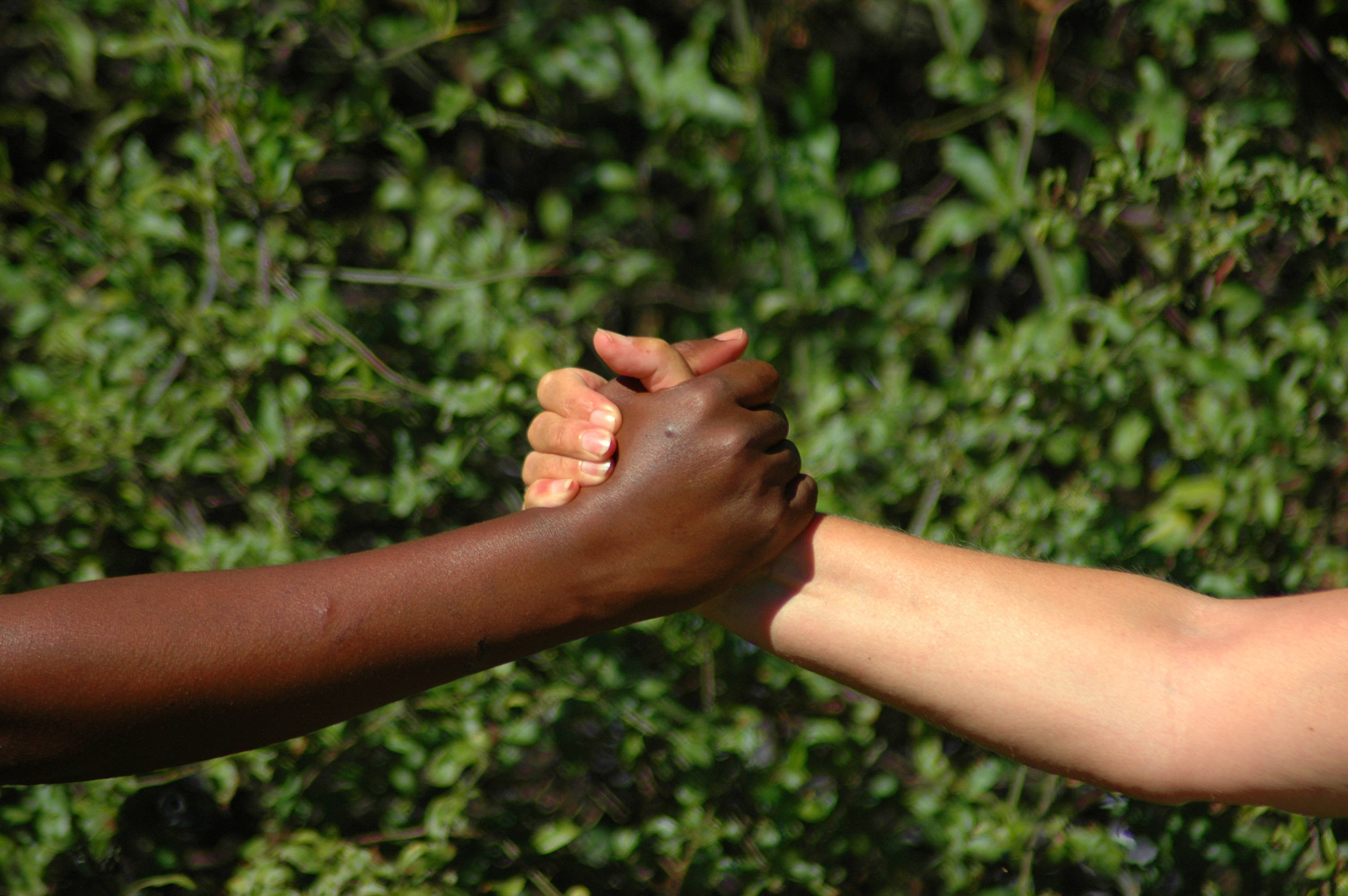
In this interview Joan talks about how she overcame resentment over incidents of racial abuse and discrimination. She goes on to tell how through prayer and effort she has been able build respectful relationships in racially diverse settings.
At the moment, it would seem that the world is politically quite polarised. In the media more attention is paid to the things that divide us than to the things that unit us. Sentiments are felt strongly resulting in divisions even within families. With US election fresh in thought and the expectation of an election in Australia early this year, this discussion is very timely. David and Mark share ideas on how we as individuals can support a genuine sense of unity and peace.
Already it’s 2025! Sometimes a new year will cause us to reflect on the year just gone and consider whether we made the most of the opportunities it presented; whether we learned from the challenges; whether we progressed in some way. More likely we will be thinking ahead. Will this be the year I lose weight, exercise more, find a better job? We may even set goals for ourselves.
If we are honest, we must admit that most of our goals are personal ones aren’t they? There is nothing wrong with wanting to be a better version of ourselves in some way, but what if our goals were larger? What would the world be like if we all decided to contribute to making the world a better, more peaceful place? Traditional Christmas carols express hope for ‘peace on earth, good will toward men’. What if this desire was not just a line in a song but our personal goal?
You might ask: How can I make a difference? The world is in such a difficult state – there is poverty, and there are wars, and terrible injustices. How can I help with that, you ask? Every thought and every action contribute to the mental atmosphere of our environment. Are we contributing to a more peaceful environment in our daily interactions? Are we patient and supportive when the person behind the counter is new at their job? Are we gracious in traffic when someone inadvertently cuts us off? Are we forgiving when a waiter makes an error in our order? Are we generous to those less fortunate than ourselves? Every one of these actions contributes to your own and others’ feeling of being loved and valued. Isn’t that what we all need? Isn’t this what really makes life work right?
The Golden Rule: ‘ Treat others as you would want to be treated’, isn’t just a Christian saying. A quick Google search reveals that it is a core demand of every major religion and school of thought. The world knows that it is love that makes things work right. This time next year when we look back on 2025, let’s hope we can all say that we contributed to the peace of the world. Starting right here with our everyday actions we can do our part in building peace.
This article was contributed by Deborah Packer, a member of the Canberra Christian Science community.
This article, by Suzanne Riedel, was first published in the December 16, 2024 issue of the Christian Science Sentinel
For ages, many have acknowledged that practicing peace and goodwill is fundamental to human life. A few examples of this come to mind, such as the 2023 Academy Award-winning short animated film The Boy, the Mole, the Fox and the Horse (based on a book by Charlie Mackesy). In the film, the mole asks the boy what he wants to be when he grows up. The boy’s immediate answer is “Kind.”
Human gravitation toward goodwill, or benevolence, is also explored in Charles Dickens’ iconic A Christmas Carol. In it, Ebenezer Scrooge’s hardened rejection of good is transformed as he eventually feels the true spirit of Christmas. In such tales, the takeaway is often that kindness and goodwill are innate to the human heart and prevail even when people’s opinions and beliefs are threatened. They are qualities that are basic to a peaceful, thriving society.
Click here to read (or listen) to the rest of this article where Suzanne proves that Love is not just a feeling but a divine force that heals both physical and relationship problemsat Christmas time and always.
Come, O fount of every vision, / Lift our eyes to what will come. / See the lion and the young lamb / Dwell together in Your home. / Hear the cries of war fall silent, / Feel our love glow like the sun, / When we all serve one another, / Then our heaven is begun.
For those who seek to know how to think and pray about conflict take comfort in these readings from the Bible (KJV) and Science and Health with Key to the Scriptures by Mary Baker Eddy on the topic: Love – the Only Response to Conflict.
Because everyone is God-created, it is possible to see that each individual is worthy of—and able to—love.
Burning, white-hot hatred. We know it when we see it—fueling wars, spawning deep political divisions. Most of us yearn to see hatred give way at least to tolerance—and certainly love would be the ideal. But how do we get there?
You might be thinking, “I don’t hate.” Or, “I don’t personally deal with hatred.” But as we take a closer look, we may recognize ways we do feel dislike, animosity, or even hostility. For example, are we neutral when it comes to politics? We might even find ourselves rationalizing these feelings because, after all, there seem to be reasons for them. …
Click here to continue reading, or to listen to, Deborah’s article. In it she describes how she managed to overcome a long-term hatred and how she now uses this understanding to help her bring a sense of peace to other areas of her life.
At the moment, it would seem that the world is politically quite polarised. In the media more attention is paid to the things that divide us than to the things that unit us. Sentiments are felt strongly resulting in divisions even within families. With US election fresh in thought and the expectation of an election in Australia early this year, this discussion is very timely. David and Mark share ideas on how we as individuals can support a genuine sense of unity and peace.
In times of conflict and division these words from Love: the Best Response of Allby Barsom Kashish published in the Christian Science Sentinel (May 19, 1986 issue) are a guide for our prayers and actions.
From the life of our Master, Christ Jesus, and from all Christian experience, we know that truly effective love has its source and gathers its power from divine Love—the Love that knows no opposite because it is the Love that is God. Living this Love in the face of obvious injustice isn’t easy. It requires wisdom, discernment, and even spiritual “toughness” at times. But the willingness to persist in loving brings into human experience a transforming factor that simply can’t be assimilated in the world’s terms.
The article quotes Mary Baker Eddy as saying: Each day I pray:God bless my enemies; make them Thy friends; give them to know the joy and the peace of love. (Miscellany 220: 21)
Fulful ye my joy, that ye be likeminded, having the same love, being of one accord, of one mind. Let nothing be done through strife or vainglory; but in lowliness of mind let each esteem other better than themselves. (The Bible – Philippians 2: 2,3)
When the media report a tragedy that has happened somewhere across the world, far from us, or even in a town nearby, we may yearn to help those involved, but we may also at times feel helpless. A few years ago Margaret Powell, a Christian Scientist, found herself propelled from being an “ordinary person” into the midst of a world news event. And what she learned of the power of prayer and of forgiveness offers a concrete answer to that question “What can I do?” The following is based on a talk she gave to the North Pomfret Congregational Church in Pomfret, Vermont. The church was presenting a series of sermons on forgiveness, and because of her experience the minister invited her to speak.







 Christian Science Canberra