
Archive for the ‘Ageing’ Category
Choosing Life Leave a comment
 For some of us it’s a big jump to conceptualize that changes we want to make don’t start “out there” but in our own thought. This is clear to me as I listen to my diverse range of friends, many of them of retiree age, over catch-up coffees and lunches.
Your Age Doesn’t Define You 6 comments
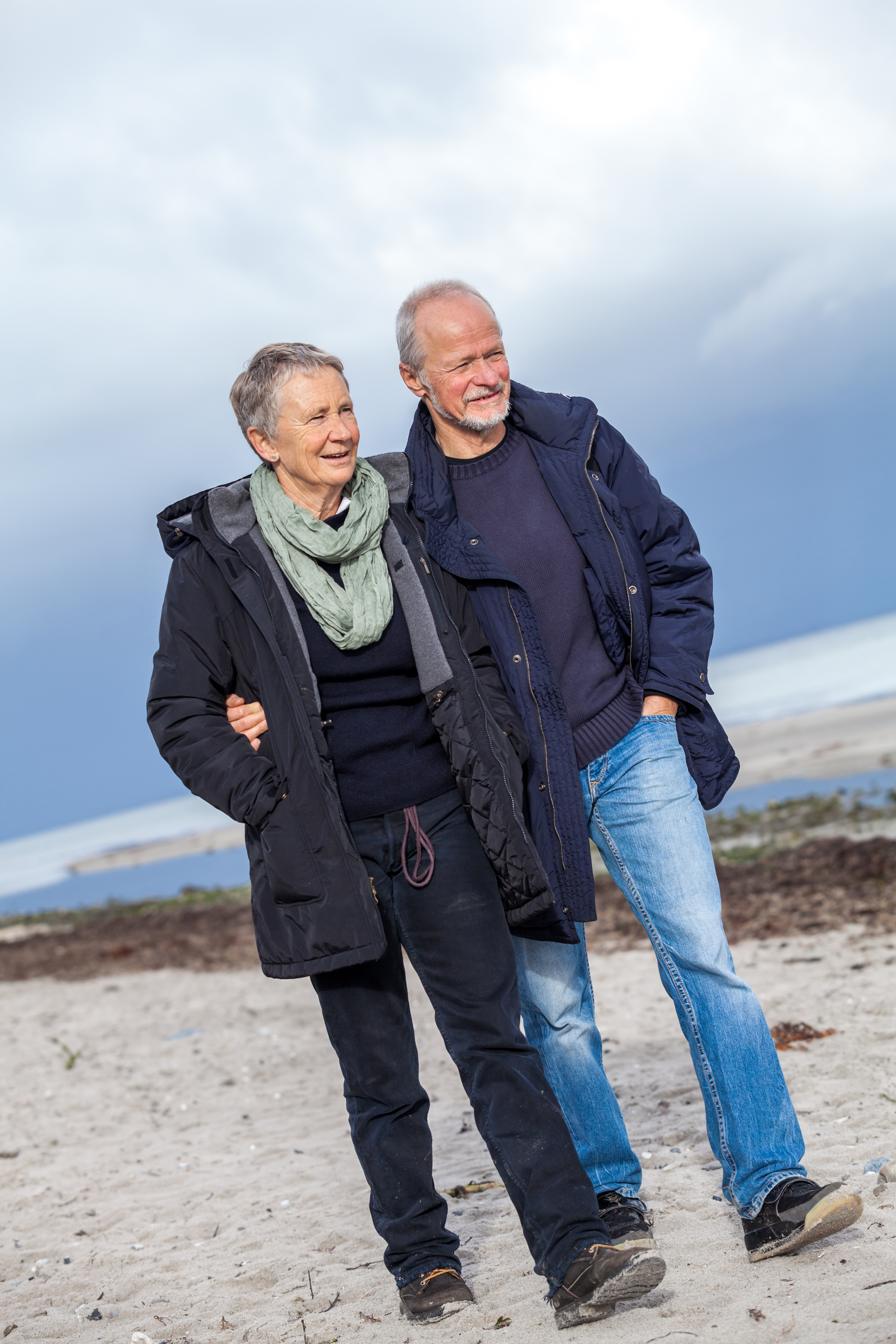 Do you believe that you are you are ‘as young as you feel’? That you’re free to take charge of your own health, happiness and wellbeing, no matter what your age?
In frustration at some of the ingrained beliefs about aging that he saw shackling his colleagues and friends as they grew older, an American baseball legend asked, “How old would you be if you didn’t know how old you were?” implying that you need to break out of the mental conditioning that makes you think you are defined by your age.
The calendar is a useful way to let you know the date, but if you let yourself be hemmed in by your chronological age, you may lock yourself out of potentially valuable opportunities.
Nextgen population researchers have recognised the greater import of health, cognitive function and life expectancy rather than age data as they plan for future populations. “We should not consider someone who is 60 or 65 to be an older person,” said researcher Sergei Scherbov. “Saying that ‘40 is the new 30’ .. is truer than people know.”
We’ve heard how our health age can be years younger than our calendar age, if we’re active and eat sensibly. Now, research into the mind/body/spirit connection in several fields, including neuroscience and meditation, adds evidence to the claim that it is our mindset, more than the food we eat or the exercise we do, that affects our physical body.
Excited by the health implications of the mind sciences, a Cleveland Clinic Foundation exercise psychologist compared individuals who worked out at a gym against another cohort who just visualized working out. Not surprisingly, the gym-goers experienced a 30 percent increase in muscle. However, the ones who only thought about working out also experienced a 13% increase in muscle strength, urging us to think beyond the physical to mental attitudes and capacities.
Many integrative health practitioners take this a step further, asserting that it is spiritual thoughts and practices that make a significant difference to better health and longevity. Mary Baker Eddy, an early researcher into this connection in her book, Science and Health, suggests that we “…. shape our views of existence into loveliness, freshness, and continuity, rather than into age and blight” for a longer, healthier and happier life.
She also suggests that it’s time to stop focussing on the body so much, and be aware of the myths about aging that are constantly influencing us. Be aware that “timetables of birth and death are so many conspiracies against manhood and womanhood”, and stop keeping a record of ours or others ages; or at least dispute the assumptions of debility and aging every time you buy a birthday card.
Healthwise, it’s worth acknowledging that spiritual, mindful or positive thoughts bring vitality, freshness and promise to each day.
Some have broken free from the belief that they’re ruled by an aging body. You too can adopt a mental attitude of ageless being, and look forward to experiencing the health benefits.
This article, Your Age Doesn’t Define You, is by Kay Stroud. Kay is a health writer focussing on the leading edge of consciousness, spirituality and health. Her articles can be found on Health4Thinkers.
Monty – A Demonstration of Ageless Joy Leave a comment
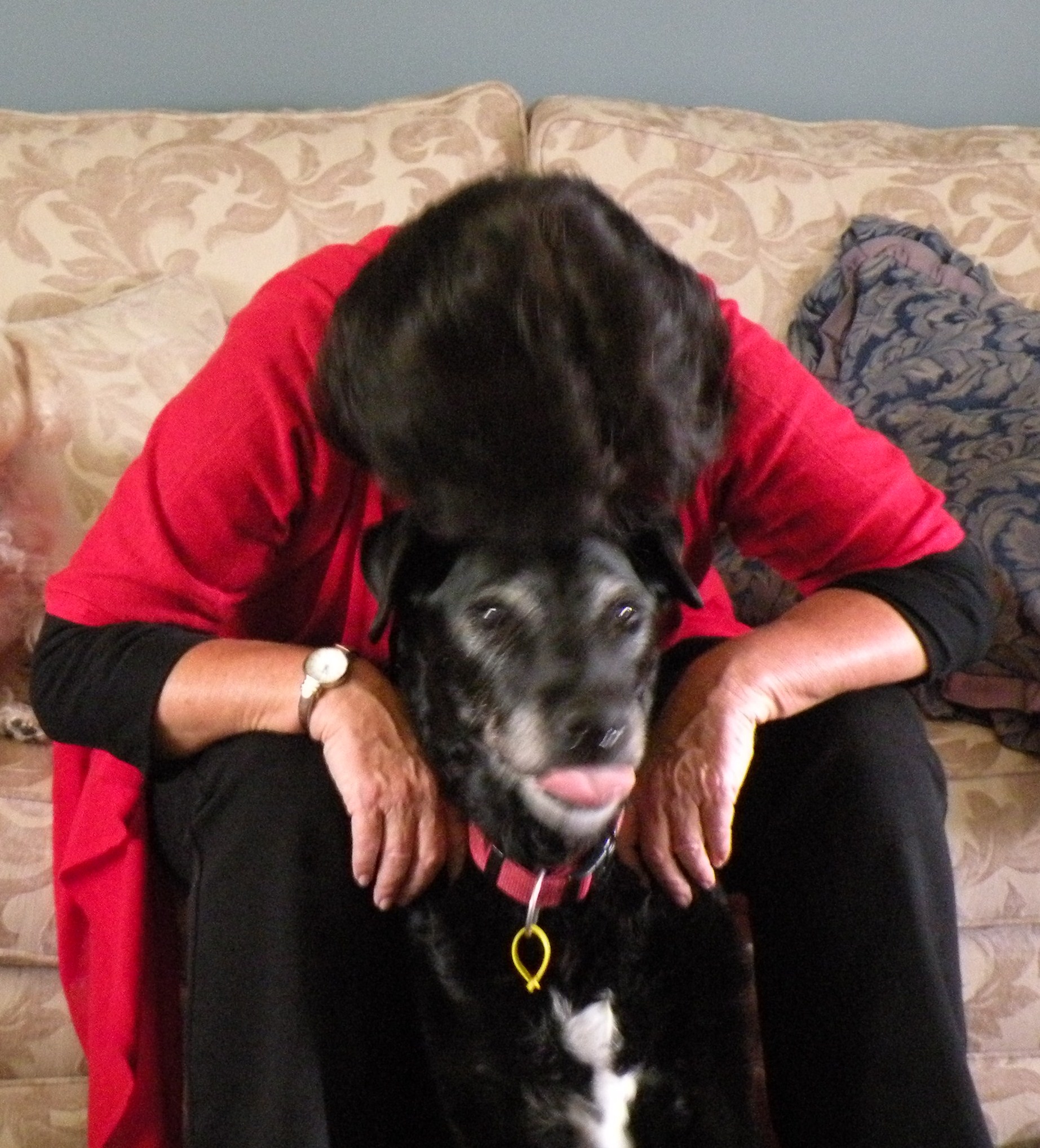
It’s been a year now since Monty left us. We guessed he was about four when he came to us. He had been trained as a bomb squad dog but his boundless energy and unstoppable joy for life rendered him unsuitable for such a delicate and serious career and he was adopted out. His new owners also found him a handful and he moved to a temporary home and then to another longer stay, but these owners too were unable to meet his needs.
When he came to our attention we were looking for a family dog and without even meeting him we somehow knew that he was the right dog for us. He proved to be perfect! He revelled in our long walks through the bush, the runs up our local Mt Taylor and just being one of the boys with our son and his friends.
When our son grew up and left home Monty prompted me from my somewhat sedentary life style and made sure that I had regular long walks. No matter what the weather he was always keen to be out. He brought joy to any activity. He adored us; he would put himself between me and any perceived danger. I have no doubt that he would lay down his life for any one of us. He fiercely protected our home and the variety of cats and chooks and guinea pigs that he saw come and go in our family.
Once a year he had a trip to the vet. When we had had him for about seven years the vet warned us that Monty may not be back next year. He cautioned that dogs of his type were not long lived and that Monty had ‘done well’. The following year we returned and gently the vet suggested that we prepare for Monty not being with us much longer. I was noticing that our walks were getting slower and shorter and most days now he would sleep a deep sleep much of the day. When he was awake he was happy and well, but he slept most of the time. It occurred to me that the vet was right and that he may just slide away.
This idea did not sit well with me and I prayed about it. Not a prayer asking God to make it right, but a prayer that seeks a better understanding of the truth of the situation; a prayer that confirms the good and denies the wrong. I could accept that animals come and go in our lives but I could not accept that life was a downhill slide into oblivion. The qualities we loved about Monty: love, affection, devotion, loyalty, energy, exuberance, joy, protection, selflessness, constancy – these were spiritual qualities and as such they were immortal. They could not be contained or curtailed by a material body. They were independent of matter.
Science and Health with Key to the Scriptures (along with the Bible) is my textbook for life and in it the author, Mary Baker Eddy, states (p246):
“Except for the error of measuring and limiting all that is good and beautiful, man would enjoy more than threescore years and ten and still maintain his vigor, freshness, and promise. Man, governed by immortal Mind, is always beautiful and grand. Each succeeding year unfolds wisdom, beauty, and holiness.”
I thought on these ideas for a few weeks applying them to Monty. Gradually over this time he became more wakeful and his old energy levels returned. We were back doing our brisk five kilometer walks and still he had energy. In fact one day my husband asked if I had been praying for Monty. ‘If so’, he said, ‘Could you stop now – he has more energy than I can cope with.’
Monty stayed with us for nearly five more years. His joy for life remained till the end. Even on his last morning he watched me eagerly to see whether I was putting on my walking shoes in case there was the chance of a walk.
I learned many lessons about life from living with Monty but most importantly I learned that we can say NO to suggestions of age.
Why being young at heart works. Is there a science behind it? 1 comment
 Thank you to Sarah Marinos of body+soul at the Courier-Mail, for writing an article recently on the health benefits of thinking and acting younger – “Why being young at heart works“. Amongst the myriad of ads by the pharmaceutical companies, this article was unexpectedly thought-provoking and brought to my attention the work of Dr Ellen Langer, Harvard University psychologist and scientific investigator who conducted a landmark experiment 30 years ago where she had seniors live in a secluded monastery as though it were 1959. The results were surprising. After a week of living as though they were younger men, the pensioners were more flexible, had better hearing and memory and felt stronger. And they also looked younger.
This experiment was the forerunner of the British ABC’s TV program, the Young Ones that I recommended in a previous blog post, “Could it be that we all have the power to think ourselves young again?”
Langer has studied the way our mind influences our body and appearance and is the person who coined the word ‘mindfulness’. “When people are taught to be mindful in a fashion very different from meditation, they become more creative, healthier, and happier”, she wrote.
In Langer’s book, counterclockwise: Mindful Health and the Power of Possibility, she reminds readers that many definitive-sounding medical diagnoses are in fact best guesses. In a sense, this is a book about the limits of empirical knowledge. But as Langer sees it, the ambiguity that inevitably accompanies medical research can be profoundly liberating. If we can’t be sure that a diagnosis — or a widely accepted truism such as “memory loss is inevitable with age” — is true, we’re less likely to apply a self-limiting label to ourselves.
So what does this mean for you and me? Are these experiments miracles or is there a law in place?
I put the question another way. What if society’s current standards and expectations were the aberration and health and eternal life the reality?
The consistent findings from these experiments point to a law or science in place. I understand it to be a divine Science. Towards the end of the 19th Century the author of the first and complete book about the laws of reality, Mary Baker Eddy wrote, “Because of human ignorance of the divine Principle, Love, the Father of all is represented as a corporeal creator; hence men recognize themselves as merely physical, and are ignorant of man as God’s image or reflection and of man’s eternal incorporeal existence.” (Science and Health with Key to the Scriptures)
Christian Science makes it clear that mankind’s misunderstanding of the reality of being, of what God is and of what man really is, handicaps our life experience thus far.
This article by Kay Stroud was orginially published on her blog site. Kay is a health writer focussing on the leading edge of consciousness, spirituality and health. Contact her to learn more about it, including Christian Science, via www.health4thinkers.com.
Ageing Gracefully or Ageless Grace? 1 comment
 This post by Kay Stroud was first published on her blog, Spotlight on Spirituality and Health, and these APN news sites: Sunshine Coast Daily, Bundaberg NewsMail and Tweed MyDaily News.
“Aging is not lost youth but a new stage of opportunity and strength.” ~ Betty Friedan
“Men do not quit playing because they grow old; they grow old because they quit playing.” ~ Oliver Wendell Holmes
“You are as young as your faith, as old as your doubt; as young as your self-confidence, as old as your fear; as young as your hope, as old as your despair.” ~ Douglas MacArthur
“We are not victims of aging, sickness, and death. These are part of scenery, not the seer, who is immune to any form of change. This seer is the spirit, the expression of eternal being.” ~ Deepak Chopra
Great thinkers throughout time reveal that being old is very much about your attitude or state of mind. I’ve seen people in their 20s who seem old and others in their 90s who appear youthful.
Older Aussies might be whingeing themselves into an early grave, according to new research linking life-expectancy with attitude. Apparently, approaching old age with negative expectations can directly affect how long you live (Aussie seniors suffering from serious case of self-loathing, The Morning Bulletin, 25 October 2012).
We all want to look and feel young. Some turn to drugs and supplements seeking the elixir of life. The latest is Resveratrol, a molecule found in red wine and now available as a dietary supplement; although, its benefits are probably more from the placebo effect than anything else (The Conversation).
Others are looking to something else; a spiritual viewpoint. This is decidedly positive, as Australian researchers suggest, “Although we are largely a secular society, spiritual care should not be seen as an ‘optional extra’ for older people”. The search for meaning in later life becomes more urgent. One important view of ageing is of a spiritual journey” (Spiritual care and ageing in a secular society, MacKinlay and Trevitt, 2007).
And just this month, an even more conclusive study published in the Journal of Gerontology stated that although it was clear that personal control declines with age, they discovered that it declines less in those with high religious commitment. And here’s the interesting thing. Those that relied on God to help them control their lives, knowing that ‘all things are possible when I work together with God’ – this God-mediated control not only increased with age but partially compensated for losses in personal control. Given the significant impact that declining personal control has on mental health (and possibly physical health as well) this has very positive health benefits (Trajectories of late-life change in God-mediated control, Hayward and Krause (2013) Journal of Gerontology (Psychol & Soc Sci, part B) 68 (1):49-58)
A thirst for fun, adventure, fresh achievements and new knowledge should be part of every life-stage. However, it seems that simply aiming to age gracefully or even dis-gracefully may be missing many of the benefits of gaining a more spiritual viewpoint.
Spiritual practices, religion and near death experiences such as Dr Eban Alexander’s affirm that we continue on after the death of the body.
This knowledge “… will master either a desire to die or a dread of the grave, and thus destroy the great fear that besets mortal existence,” explains Mary Baker Eddy, an early researcher into the connection between consciousness, spirituality and health.
This realisation brings an incomparable peace and shows in ageless grace in later years.
We can only benefit from medical science and religion concurring on the need to allay the fears associated with ageing and death. As they continue to work together, it seems fairly certain that ‘ageless grace’ will become more and more achievable for us all.
 Christian Science Canberra