Four ‘trick or treaters’ knocked on our door on Halloween evening. Somewhat unprepared and surprised to experience this novelty in Australia I managed to locate a few sweet treats for each of them, and they left happily bubbling with excitement.
Was I frightened of their costumes or weird masks? Of course not. And I’m sure they didn’t believe for a moment that they’d suddenly morphed into ugly, wicked or ghoulish creatures, either.
Sometimes, though, people do put on an emotionally draining mask as they strive to feel accepted and loved. Over time they may come to accept the charade as part of themselves.
For instance, they may act out the role where they have to be the best … at everything. They can’t abide mistakes and feel it’s a badge of honour to say they’re a perfectionist. Ever in fear of failing, they may be chronic procrastinators. They don’t like themselves very much either, because they rarely live up to their own expectations.
They may be caught up in a warped view of the world that is commonly known as perfectionism.
Like many psychologists, Thomas Greenspon believes that perfectionism is more than pushing yourself to do your best to achieve a goal; it’s a reflection of an inner self mired in anxiety, where you constantly feel like an imposter. “Perfectionist people typically believe that they can never be good enough, that mistakes are signs of personal flaws, and that the only route to acceptability as a person is to be perfect,” he said.
Whatever the reason may be for that belief, at the heart of the often life-long anxiety to appear perfect is our adoption of the general belief that the human mind is full of good and bad emotions and beliefs, some of which are detrimental to mental and physical health.
However, what’s gaining wider acceptance in health research today is the degree to which the body is the servant of the mind.
Sometimes a simple shift in thought enables us to take off the imposter’s mask we may have been wearing and lift the mental weight.
Accepting a less human mind for a diviner nature that is more attuned to understanding, compassion and humility, brings with it greater confidence, better relationships and a selfless desire to contribute to the greater good.
It’s the daily diet of serene, spiritual thoughts that transforms our experience, gives us grace for each day and best feeds our famished affections, Mary Baker Eddy, the discoverer of Christian Science, explains in a very practical elucidation of the Lord’s Prayer.
It’s interesting that current treatments for perfectionism are also moving to thought-based approaches such as acceptance and commitment therapy, meditation and mindfulness, even in the treatment of serious eating disorders like anorexia nervosa and bulimia nervosa that develop alongside the obsessive quest for the perfect body.
Reports estimate that 15% of Australian women between 12 and 30 years of age suffer from eating disorders at some stage in their lives. These young women (and men) who are crying out for love, acceptance and a better view of themselves, often cause untold anguish for themselves and their families, and sometimes even end their lives in the quest for the perfect body.
Julie Bell reached the point where hospitalisation for malnutrition seemed the only answer when the application of a distinctive thought-based, prayer-based approach, founded on recognition of her flawless, spiritual nature, proved “a glorious turning point”.
She experienced a shift in thought. She realised that she could take control of her own thinking, that her body was the servant and that “food did not have power to govern (her) life or (her) sense of a physical body”.
Not only healed of the eating disorder, she found that other obsessive habits that she hadn’t realised were abnormal completely fell away, as did her fear of going forward in the world.
If you’re tiring of the relentless obsessive or perfectionistic thinking about your body or successes, you may also be more than ready to focus less attention on what you eat or on your limited achievements and more on thinking outside the sensory box. Instead, pondering ideas that tenderly reassure you of your intrinsic value.
The mask of a limited, biophysical viewpoint can be frightening, but its removal will enable you to replace a daily diet of fear and anxiety with a moment-by-moment health-giving intake of love and respect for your perfect, beautiful, spiritual self. The difference will be remarkable.
This post was written by Kay Stroud who is a freelance writer focussing on the undeniable connection between our thinking and our health. She writes for metropolitan and regional news media throughout Australia and beyond, and is a regular contributor to Australia’s national forum, Online Opinion.
While some of us are still dealing with the influx of visitors, festivities and sun-soaked holidays, in the back of our minds is the niggling thought that 2015 has already begun and now is the time to make our New Year’s resolutions, before it’s too late.
Some are choosing to eat healthier and exercise more. That certainly can make us feel better.
Two other resolutions that go hand-in-hand will not only increase your health but be game-changers in your life: always opt for the positive viewpoint over the negative and choose to be kinder to others.
A friend related how his acquaintance was in hospital recently, suffering from a life-threatening illness.
Things were looking pretty grim and it seemed that he was hanging on by a thread. Then his heart stopped and he ceased breathing.
At that moment, the medical staff on duty in that area of the hospital noticed that he was passing on and began to congregate around his bed …. not rushing to him with defibrillator or drip, but unexpectedly telling jokes, laughing and talking loudly and animatedly about everyday things.
They continued by his bedside including everyone in the ward in the jovial conversation until he began to regain consciousness. The man made a full recovery.
What happened? Did the nurses and doctors know that their confident and caring presence was more effective than apparatus or medication? Yes.
Something similar is at play when a teacher disregards the negative ‘label’ attached to the child and responds with love and recognition of that child’s higher nature and abilities, bringing a turnaround in attitude at school.
Or when a brick wall tumbles down between two people who haven’t spoken to each other for years as one reaches out with forgiveness.
The reasons for such changes for the better spring from (1) choosing a positive, solution-based approach, and (2) trusting our instinct to be warm and caring, despite a temptation to take an impersonal, defeatist or hard-line approach.
Lissa Rankin MD, sought-after TEDx presenter and one of the keynote speakers at the Byron Bay Uplift Festival a few weeks ago, urges us to strip back everything that isn’t really us that we’ve learned in the world of hard knocks, to find that inner pilot light or divine spark of love within.
Research results from studies on cancer recovery and remission support her claim to the beneficial effects of this practice.
Rankin also cites conclusive evidence that an essential part of any successful treatment is engaging a health practitioner who is reassuring, gentle and kind, and treats patients with compassion.
Did Jesus mean in his well-known parable, that the warmth and care that the Good Samaritan showed had as much to do with the traveller’s recovery (who was robbed and beaten by thieves) as the bandages, oil and wine provided?
Mary Baker Eddy believed so and based her scientific, healing method on this premise. An important researcher into how consciousness affects health, she discovered in her investigations and successful treatments through prayer that…
Forgetting ourselves and putting others first really FEELS divine and invariably makes us glow with happiness.
I hope your 2015 takes wings. Seems it’s sure to do so if you choose to take this two-pronged approach to a happier, healthier year ahead – adopting a positive, solution-based viewpoint, and actively and warmly caring for yourself and others.
Kay is a freelance writer focussing on the undeniable connection between our thinking and our health. She writes for metropolitan and regional news media throughout Australia and beyond, and is a regular contributor to Australia’s national forum, Online Opinion.
The Psalm of Love … Psalm 23 – Readings from the Bible and the textbook of Christian Science, Science and Health with Key to the Scriptures by Mary Baker Eddy that were inspired by the 23rd Psalm.
Every Wednesday at 6.15 pm a Testimony Meeting is held at the Christian Science Church in Canberra. Each meeting begins with readings selected from the two books designated as the Pastor of Christian Science: The Bible and Science and Health with Key to the Scripturesby Mary Baker Eddy A new topic for the readings is selected each week.
At the conclusion of the short readings the congregation is invited to share thoughts on this topic and relate how they have used the principles of Christian Science to solve life’s problems and bring physical healing.
If you are in Canberra on any Wednesday please join us. Everyone is welcome.
This recording represents the readings on the topic: The Psalm of Love … Psalm 23.
Psalm 23
The Lord is my shepherd; I shall not want.
He maketh me to lie down in green pastures: he leadeth me beside the still waters.
He restoreth my soul: he leadeth me in the paths of righteousness for his name’s sake.
Yea, though I walk through the valley of the shadow of death, I will fear no evil: for thou art with me; thy rod and thy staff they comfort me.
Thou preparest a table before me in the presence of mine enemies: thou anointest my head with oil; my cup runneth over.
Surely goodness and mercy shall follow me all the days of my life: and I will dwell in the house of the Lord for ever.
The Prayer That Heals– Readings from the Bible and the textbook of Christian Science, Science and Health with Key to the Scriptures by Mary Baker Eddy.
Every Wednesday at 6.15 pm a Testimony Meeting is held at the Christian Science Church in Canberra. Each meeting begins with readings selected from the two books designated as the Pastor of Christian Science: The Bible and Science and Health with Key to the Scripturesby Mary Baker Eddy. A new topic for the readings is selected each week.
At the conclusion of the short readings the congregation is invited to share thoughts on this topic and relate how they have used the principles of Christian Science to solve life’s problems and bring physical healing.
If you are in Canberra on any Wednesday please join us. Everyone is welcome.
This recording represents the readings on the topic: The Prayer that Heals.
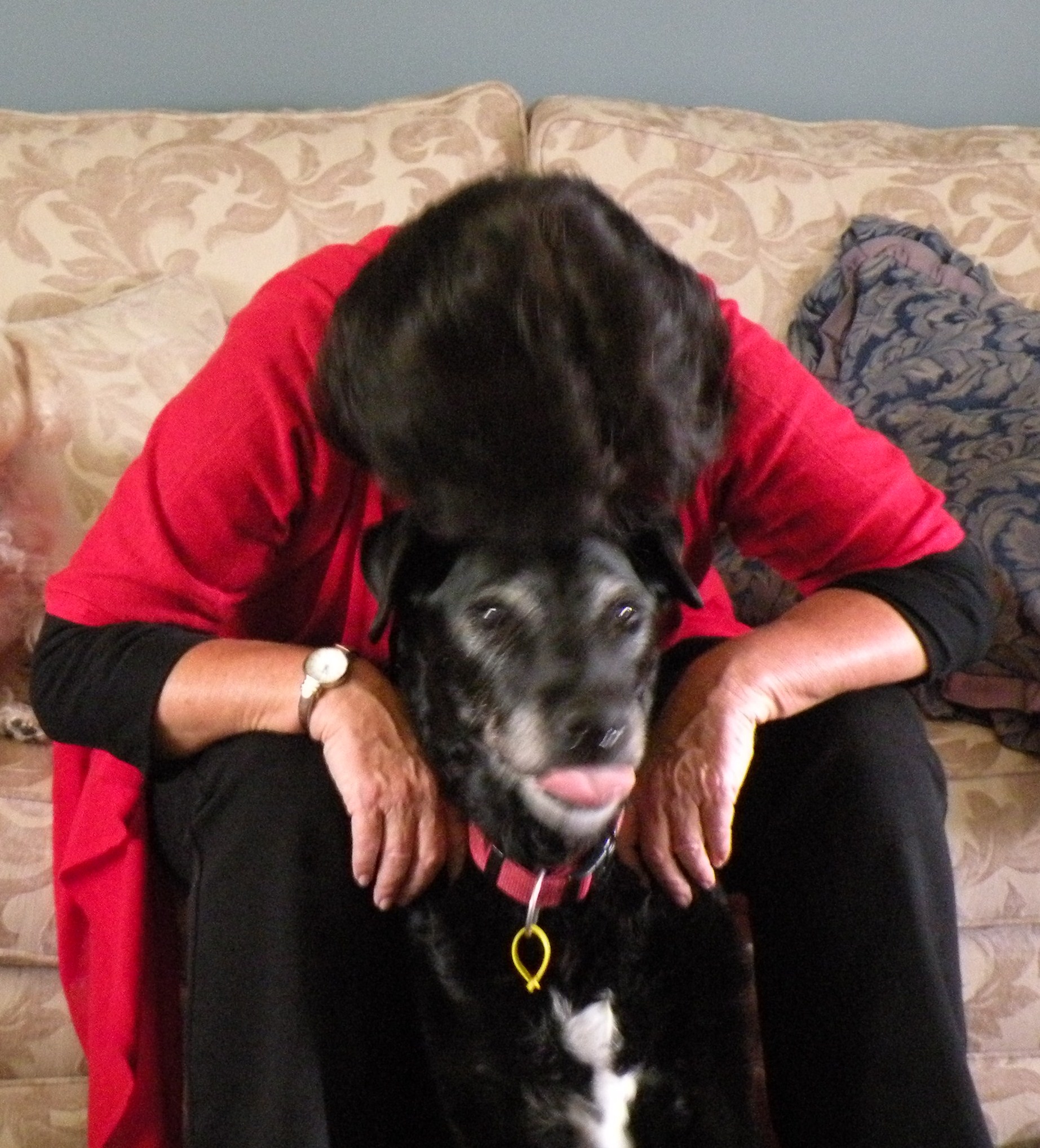
It’s been a year now since Monty left us. We guessed he was about four when he came to us. He had been trained as a bomb squad dog but his boundless energy and unstoppable joy for life rendered him unsuitable for such a delicate and serious career and he was adopted out. His new owners also found him a handful and he moved to a temporary home and then to another longer stay, but these owners too were unable to meet his needs.
When he came to our attention we were looking for a family dog and without even meeting him we somehow knew that he was the right dog for us. He proved to be perfect! He revelled in our long walks through the bush, the runs up our local Mt Taylor and just being one of the boys with our son and his friends.
When our son grew up and left home Monty prompted me from my somewhat sedentary life style and made sure that I had regular long walks. No matter what the weather he was always keen to be out. He brought joy to any activity. He adored us; he would put himself between me and any perceived danger. I have no doubt that he would lay down his life for any one of us. He fiercely protected our home and the variety of cats and chooks and guinea pigs that he saw come and go in our family.
Once a year he had a trip to the vet. When we had had him for about seven years the vet warned us that Monty may not be back next year. He cautioned that dogs of his type were not long lived and that Monty had ‘done well’. The following year we returned and gently the vet suggested that we prepare for Monty not being with us much longer. I was noticing that our walks were getting slower and shorter and most days now he would sleep a deep sleep much of the day. When he was awake he was happy and well, but he slept most of the time. It occurred to me that the vet was right and that he may just slide away.
This idea did not sit well with me and I prayed about it. Not a prayer asking God to make it right, but a prayer that seeks a better understanding of the truth of the situation; a prayer that confirms the good and denies the wrong. I could accept that animals come and go in our lives but I could not accept that life was a downhill slide into oblivion. The qualities we loved about Monty: love, affection, devotion, loyalty, energy, exuberance, joy, protection, selflessness, constancy – these were spiritual qualities and as such they were immortal. They could not be contained or curtailed by a material body. They were independent of matter.
“Except for the error of measuring and limiting all that is good and beautiful, man would enjoy more than threescore years and ten and still maintain his vigor, freshness, and promise. Man, governed by immortal Mind, is always beautiful and grand. Each succeeding year unfolds wisdom, beauty, and holiness.”
I thought on these ideas for a few weeks applying them to Monty. Gradually over this time he became more wakeful and his old energy levels returned. We were back doing our brisk five kilometer walks and still he had energy. In fact one day my husband asked if I had been praying for Monty. ‘If so’, he said, ‘Could you stop now – he has more energy than I can cope with.’
Monty stayed with us for nearly five more years. His joy for life remained till the end. Even on his last morning he watched me eagerly to see whether I was putting on my walking shoes in case there was the chance of a walk.
I learned many lessons about life from living with Monty but most importantly I learned that we can say NO to suggestions of age.
Mary Baker Eddy’s groundbreaking book, Science and Health with Key to the Scriptures, was first published over 135 years ago. For more than a century, this book has met humanity’s increasing demand for a more spiritual understanding of health, a better basis for lasting relationships, and a greater sense of security and peace. Around the globe, people are finding answers in Science and Health, and their lives are being enriched, transformed, and healed by its message of practical spirituality. The value they place in this book is seen in the outpouring of love and gratitude that impels them to share Science and Health with others.
Science and Health is Mary Baker Eddy’s primary work and the definitive textbook on Christian Science. It explains the scientific laws behind the teachings and healings of Christ Jesus. From the first chapter, “Prayer,” to her exegeses of Genesis and Revelation, the author invites readers to deeply consider the allness of God, the perfection of man as God’s spiritual creation, and how an understanding of these facts brings healing—just as it did in biblical times. For over 135 years, readers have testified that reading and studying this book has given them a spiritual sense of the Bible and their permanent relationship to God, and has also resulted in physical healing and spiritual uplift.
Since the first publication of Science and Health in 1875, its readers have testified that reading and studying this book has not only given them a spiritual sense of the Bible and a clearer recognition of their permanent relationship to God, but has also resulted in physical, mental, and emotional healing. Letters from readers that testify to healing from simply reading the book can be found in the last chapter of Science and Health. Available in multiple editions and formats, as well as in 17 languages and English Braille, the book is dedicated to thinkers and “honest seekers for Truth” (Science and Health, p. xii).
Published testimonials in Christian Science publications illustrate the life-changing power of the book’s ideas. These include emotional, physical, and mental healings. Testimonies of healing can be found at christianscience.com and in magazines such as The Christian Science Journaland Christian Science Sentinel available at Christian Science Reading Rooms worldwide.
Science and Health is available on line from christianscience.com and in Canberra from the Christian Science Reading Room and Bookshop on the corner of Macquarie & Bligh Streets, Barton, and from local libraries.
Recently, thousands of people attended the Mind Body Spirit Festival in Brisbane. I made my way there through the gloomy weather on Sunday, to find a really ‘happening’ event, a lot like the Health Harmony and Soul Expo held on the Gold Coast earlier in the year.
There were a surprising number of Millennials and Gen Ys amongst the Baby Boomers and Gen Xs in attendance, as ready to explore the ideas of philosophy and religion, as they were to try out the organic tea or get their ‘reading’.
I got the impression that there was general agreement between those on stands and within their vibrant audience that health is about very much more than treating a body.
Quite a few I spoke to had pondered the mental nature of health, had heard about the medical research into the effects of spiritual and religious sentiments such as forgiveness and gratitude.
Dozens were eager to add their contribution to the ‘gratitude tree’ by writing down what they were grateful for … and pinning it on the murraya bush in the Christian Science Reading Room stand.
Don’t get me wrong. The majority of these people harboured a healthy scepticism of anything nonsensical or obviously geared to a purely money-making concern.
The astounding thing is that these were your average Aussie ‘blokes’ and ‘sheilas’. Just like the lady I met today. While her job was in real estate, she confided when I mentioned that I was a health blogger, that she’d investigated kinesiology and other alternative therapies and knew how important her thoughts were to her wellbeing.
It’s not surprising to learn that two-thirds of Australians use complementary and alternative medicine (CAM), and many of these recognise the interconnectedness of our thoughts with our health.
Suddenly results from thought-based treatments such as placebos, epigenetics, psychotherapy and meditation are big news.
A medico who turned from Western medical treatments when they failed to help her, took matters into her own hands. Through her research, Dr Lissa Rankin discovered that traditional health care was missing a couple of crucial insights:
taking responsibility for your own wellbeing is essential; and that we need to care for the whole package – our mind, heart and soul.
Rankin’s book, Mind Over Medicine, advances understanding of the great conundrum of the past 150 years – how our mind, bodies and spirit interconnect.
She found that thoughts, feelings and beliefs can alter the body’s physiology, discerned that loneliness, pessimism, depression, fear and anxiety damage the body, while intimate relationships, gratitude, meditation and creativity turn on the body’s self-healing processes.
Theologian, author, and founder of Christian Science, Mary Baker Eddy wrote and taught about the mental nature of disease way back in the 19th century.
She proved that a Mind-based (or God-based) view of health and life leads to cures in both mind and body.
Eddy described some of the states of thought that might generate disease in her book, Science and Health with Key to the Scriptures, which endorses what many people like Rankin recognise as harmful to health today.
She wrote, “Hatred, envy, dishonesty, fear, and so forth, make a man sick, and neither material medicine nor Mind can help him permanently, even in body, unless it makes him better mentally, and so delivers him from his destroyers.”
For me, it’s imperative to recognise my spiritual identity, which Jesus exemplified and explained so well, and can be nurtured and discovered through daily prayer and meditation. I find that this also keeps the body healthy, as well as repairing and healing.
It looks like many are now ‘on the same page’, sharing the profound knowledge that happiness and health are dependent on a healthy mind, body and spirit.
It’s Never Too Late to Find a Deeper Understanding of Love
At the invitation of the Christian Science Church in Canberra international speaker, Beth Packer, will be speaking to the Canberra community on Sunday 22 September at 2.30 pm in the Reception Room of the Legislative Assembly Building on London Circuit.
Worldwide, people have heard and loved her moving talk titled, “Love Heals”.
Beth says, “I’ve found that people everywhere, at all stages of their lives, are looking for much the same things – to know that there are solutions to their problems – whether they are problems related to health, companionship, family, finances or our individual sense of purpose. We all need to know that we’re not alone or lost in the world, that there is hope and healing”. She says, “I’ve found through personal experience that the knowledge that God knows each one of us and loves us, is like turning a light on in the darkness, and has brought practical healing solutions to my life even in the toughest, most uncertain times.”
This beautiful talk shows through a personal journey and through healing examples, that the recognition that we are all truly known and deeply loved by God, who is Love, can bring healing and restoration to our lives, our relationships, and our health. It includes examples of the healing of illness, deafness and severe accident, as well as thoughts of suicide.
Beth said, “Together, we’ll explore our true identity as the dearly beloved of God, a knowledge that can transform our lives, making us happier, healthier, and holier”. These ideas are based on the teachings of Jesus as recorded in the Bible, and as discussed in Science and Healthwith Key to the Scripturesby Mary Baker Eddy.
Having been both an award winning artist and a successful retailer, Beth has lived with her husband and two girls in both Australia and the Middle East. Whatever she was involved in, always she found that prayer was her most effective means for solving the practical problems of everyday life. Eventually, it became clear that this was the best way she could help the world so, fulfilling a lifetime desire to help and heal others, she became a full-time practitioner of Christian Science healing.
This free public lecture is given as a gift from the members of Christian Science Church to the people of Canberra. It brings a message of hope and reassurance.
For further enquires ring 0408274498 or visit the Bookshop and Reading Room on the corner of Macquarie and Bligh Streets, Barton.
It’s been a happy morning so far… 6am gym-without-walls; hearty breakfast; mental fitness session with God; caught up on the news; watched an impromptu flash mob on-line (these always bring a smile!); read a recent report on a scientific breakthrough regarding the “happiness gene” 5-HTT; read the latest health survey finding“Australians are the happiest people in the world”.
What would make me unhappy right now? If the plumbing sprung a leak. If my internet connection bombed out. If the café ran out of cappuccino this morning. If I felt unwell. If a loved one phoned to say there was a death in the family. How quickly happiness can be ripped away! What sure foundation of thinking can I hold on to, especially for my latter “ifs”? Is there such a thing as being completely happy, as opposed to positive thinking making us happy?
1828 Webster’s Dictionary: ALL-HAP’PY. a. Completely happy.
In the 1913 Webster’s dictionary this exact word was not found. I wonder… did the word disappear because it wasn’t believed any longer?
The 5-HTT gene discovery doesn’t claim to have all the answers. Scientists analysed genetic data from more than 2500 participants in a US investigation looking at health-related behaviour in adolescents. A Sydney Morning Herald article quotes: “Jan-Emmanuel De Neve, a behavioural economist from the London School of Economics and Political Science, who led the research, said: “Of course, our well-being isn’t determined by this one gene – other genes and especially experience throughout the course of life will continue to explain the majority of variation in individual happiness.””
There’s no shortage of surveys and conferences in the quest to understand happiness and wellbeing. The OECD (Organisation for Economic Co-op & Development) rates Australians as the happiest people in the world. The survey was done on income, education and health — news.com.au.
How to find it? How to feel it? How to keep it?
Most of these health surveys indicate that thoughts are seen as brain-based. When it comes to feelings like happiness and wellbeing, it makes sense that we should be looking beyond brain into consciousness. Philosophers, theologians and all the thought-storming schools you can muster have looked at these fundamental questions throughout history. But ‘now’ belongs to the individual and we have other choices. It would be an unjust “sentence” to be told that you don’t have the right length “happiness genes” to be happy like some other lucky ones. There are scads of accounts of depression and other mental illnesses being completely healed, through the power of reasoning against sentences of that nature. We have divine authority to expect to be happy and well – these are spiritual qualities that are the makeup of every person. I’ve found in my practice of Christian Science, that reasoning our way through physical problems to spiritual answers is imperative. It’s beyond chemical control, and beyond the common idea of positive thinking.
Some very helpful excerpts from ‘Science and Health with Key to the Scriptures’ published in 1875, by Mary Baker Eddy:
“Through human consciousness, convince the mortal of his mistake in seeking material means for gaining happiness. Reason is the most active human faculty.” “Happiness is spiritual, born of Truth and Love. It is unselfish; therefore it cannot exist alone, but requires all mankind to share it.”
In the Science of Mind Forum at the Happiness and Its Causes Conference – held in Brisbane, QLD Australia – the Dalai Lama spoke about “human nature that makes it so difficult to change our unhelpful thoughts and bad behaviours.” His talk was titled: ‘Changing our minds for a happier life’. Natasha Mitchell spoke with the Dalai Lama on the subject. Mitchell is a science & health journalist in Australia, and host/producer of the popular program, ‘All in the Mind’ on ABC Radio National and Radio Australia.
It’s great that there’s no shortage of discussion on happiness. At the end of the day, are you feeling any better? If not, it’s worth looking into mental fitness sessions with God (Truth and Love), and understanding that it’s normal to feel “completely happy”.
This article was orginally published on Health 4 Thinkers by Carey Arber. Sydney-sider Carey writes on health, incorporating research on the link between consciousness and wellbeing.

 Four ‘trick or treaters’ knocked on our door on Halloween evening. Somewhat unprepared and surprised to experience this novelty in Australia I managed to locate a few sweet treats for each of them, and they left happily bubbling with excitement.
 While some of us are still dealing with the influx of visitors, festivities and sun-soaked holidays, in the back of our minds is the niggling thought that 2015 has already begun and now is the time to make our New Year’s resolutions, before it’s too late.




 Christian Science Canberra