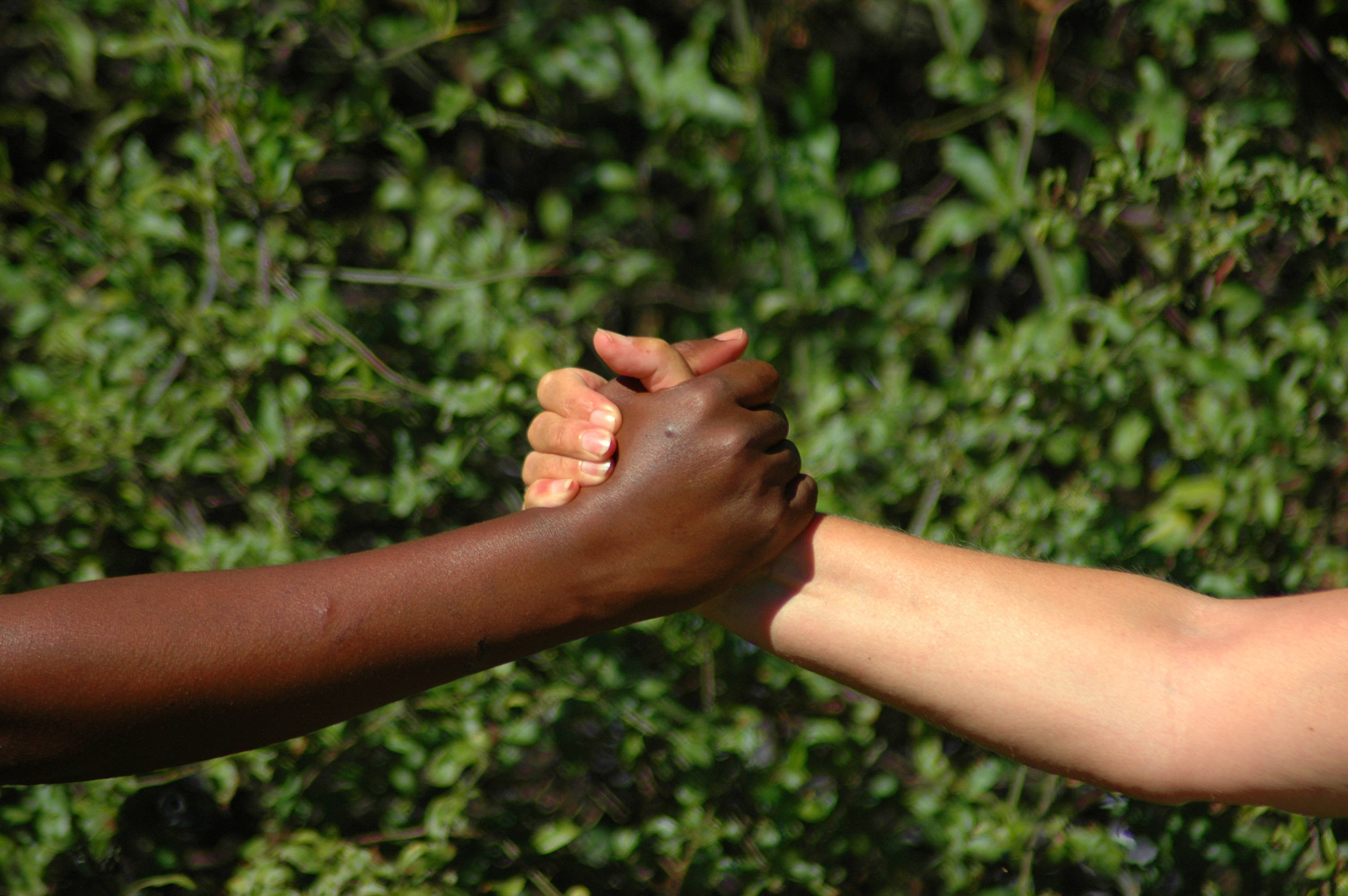
God has shown me that I should not call any man common or unclean. In truth I perceive that God shows no partiality. But in every nation whoever fears Him and works righteousness is accepted by Him.
(The Bible NKJV – Acts 10: 28, 34, 35)
Love is impartial and universal in its adaption and bestowals.
A Sentinel Watch interview with Joan Bernard Bradley. Click here to listen.
.
In this interview Joan talks about how she overcame resentment over incidents of racial abuse and discrimination. She goes on to tell how through prayer and effort she has been able build respectful relationships in racially diverse settings.
At the moment, it would seem that the world is politically quite polarised. In the media more attention is paid to the things that divide us than to the things that unit us. Sentiments are felt strongly resulting in divisions even within families. With US election fresh in thought and the expectation of an election in Australia early this year, this discussion is very timely. David and Mark share ideas on how we as individuals can support a genuine sense of unity and peace.
Come, O fount of every vision, / Lift our eyes to what will come. / See the lion and the young lamb / Dwell together in Your home. / Hear the cries of war fall silent, / Feel our love glow like the sun, / When we all serve one another, / Then our heaven is begun.
For those who seek to know how to think and pray about conflict take comfort in these readings from the Bible (KJV) and Science and Health with Key to the Scriptures by Mary Baker Eddy on the topic: Love – the Only Response to Conflict.
Because everyone is God-created, it is possible to see that each individual is worthy of—and able to—love.
Burning, white-hot hatred. We know it when we see it—fueling wars, spawning deep political divisions. Most of us yearn to see hatred give way at least to tolerance—and certainly love would be the ideal. But how do we get there?
You might be thinking, “I don’t hate.” Or, “I don’t personally deal with hatred.” But as we take a closer look, we may recognize ways we do feel dislike, animosity, or even hostility. For example, are we neutral when it comes to politics? We might even find ourselves rationalizing these feelings because, after all, there seem to be reasons for them. …
Click here to continue reading, or to listen to, Deborah’s article. In it she describes how she managed to overcome a long-term hatred and how she now uses this understanding to help her bring a sense of peace to other areas of her life.
At the moment, it would seem that the world is politically quite polarised. In the media more attention is paid to the things that divide us than to the things that unit us. Sentiments are felt strongly resulting in divisions even within families. With US election fresh in thought and the expectation of an election in Australia early this year, this discussion is very timely. David and Mark share ideas on how we as individuals can support a genuine sense of unity and peace.







 Christian Science Canberra