 Picture this. A young mum powering around the front lawn behind a lawn mower, baby in the pouch on her chest screaming his head off.
Reserve your judgement, because in a very short time he has calmed down owing to the monotonous noise and rhythm. The mother has used her wisdom, love and creativity to avert several hours of frustration for them both.
That mum was me over 30 years ago, and I found that parenting took the most energy, intelligence, selflessness, generosity, kindness, forgiveness, decisiveness, endurance, perseverance, enthusiasm, commitment, organisation and wisdom that I have ever needed to muster.
You’d have to agree that we need to be both mentally and physically fit and healthy to manage the complexities of raising a family.
Recently it was the inaugural, national Women’s Health Week, dedicated to improving the physical and emotional health and wellbeing of all Australian women right across the life span and addressing a range of women’s health issues holistically and to keep women well.
Taking time out for themselves, getting active, eating well and reaching out to family and friends are some of the pledges we’re being encouraged to make during this week.
Have a look at their website. There are the usual pledges to exercise more and eat a balanced diet, but it’s interesting to note that there are also a surprising number of pledges that acknowledge the importance of the quality of our thoughts to our health and wellbeing. For instance, “I pledge to be more grateful on a daily basis”, “I pledge to take better care of myself both physically and spirituality”, “I pledge to practise controlling my thoughts and focusing on the here and now”, “I pledge to love myself”.
All well and good you may say, but how can a spiritual viewpoint help with some of the critical mental challenges we experience when we become parents?
Experiencing post-natal depression after the birth of her eldest daughter well-known news presenter, author and columnist Jessica Rowe struggled with feelings of inadequacy, resentment, fear and shame. It was only when she summoned the courage to ask for help that the psychiatrist helped her to overcome these feelings.
I sought a similar, though different, sort of help as I dealt with the issues of isolation and uncertainty during the early years of child-rearing. I can truly say that it was my daily spiritual practice that developed a growing understanding of the divine Mind and maintained my mental health during this time. When I was ‘tuned in’, it brought moment-by-moment inspiration and answers about the how to, what, when, who and why of child rearing.
Explaining the benefits of ‘tuning in’ to the Divine, 19th century mind/body researcher and religious reformer Mary Baker Eddy, identified Moses’ unwilling acceptance of leadership and subsequent courageous nation-changing actions as such ‘tuning in’, “illustrat(ing) the grand human capacities of being bestowed by immortal Mind.”
“Australia has become increasingly secular over the years. Despite this, however, it is interesting to see a significant relationship between spiritual experiences and better mental health (lower depressive and anxiety symptoms)”, the conclusions of a recent study conducted by the School of Psychiatry and Clinical Neurosciences at the University of Western Australia found.
As healthcare continues to evolve and provide more complete, holistic care for patients, the importance of religion and spirituality is increasingly being emphasised as a central determinant of quality of life and conferring positive benefits to mental health, even to coping with the distress of early motherhood.
Psychologists are now developing and evaluating a variety of spiritually integrated approaches to treatment, including: forgiveness programs to help divorced people come to terms with bitterness and anger; programs to help survivors of sexual abuse deal with their spiritual struggles; treatments for women with eating disorders that draw on their spiritual resources; and programs that help drug abusers re-connect to their higher selves”.
Pledges to develop our spirituality, by taking the time to be more grateful, love ourselves and others more, to be kind when someone is mean or thoughtless, to do a good deed each day and to forgive (even drivers who hog the inside lane) will bring not only increased mental health, but can also benefit us physically.
Along with women’s health, September offers many opportunities to consider a spiritual approach to dealing with mental health issues: RU OK Day, Exercise Your Mood Month and World Suicide Prevention Day.
Ladies, this week join the growing numbers of women choosing to adopt and benefit from a spiritual practice for all round wellbeing.
This article by Kay Stroud, a health blogger who is interested in the mind-body connection, was originally published on her blog, Spotlight on Spirituality and Health. It was also published at The Toowoomba Chronicle, and on these other APN news sites: the Sunshine Coast Daily, the NSW Northern Star and the Mackay Daily Mercury.
It’s Never Too Late to Find a Deeper Understanding of Love
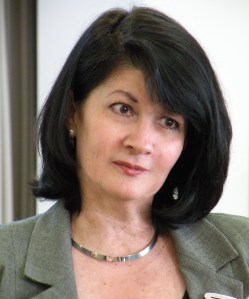 At the invitation of the Christian Science Church in Canberra international speaker, Beth Packer, will be speaking to the Canberra community on Sunday 22 September at 2.30 pm in the Reception Room of the Legislative Assembly Building on London Circuit.
Worldwide, people have heard and loved her moving talk titled, “Love Heals”.
Beth says, “I’ve found that people everywhere, at all stages of their lives, are looking for much the same things – to know that there are solutions to their problems – whether they are problems related to health, companionship, family, finances or our individual sense of purpose. We all need to know that we’re not alone or lost in the world, that there is hope and healing”. She says, “I’ve found through personal experience that the knowledge that God knows each one of us and loves us, is like turning a light on in the darkness, and has brought practical healing solutions to my life even in the toughest, most uncertain times.”
This beautiful talk shows through a personal journey and through healing examples, that the recognition that we are all truly known and deeply loved by God, who is Love, can bring healing and restoration to our lives, our relationships, and our health. It includes examples of the healing of illness, deafness and severe accident, as well as thoughts of suicide.
Beth said, “Together, we’ll explore our true identity as the dearly beloved of God, a knowledge that can transform our lives, making us happier, healthier, and holier”. These ideas are based on the teachings of Jesus as recorded in the Bible, and as discussed in Science and Health with Key to the Scriptures by Mary Baker Eddy.
Having been both an award winning artist and a successful retailer, Beth has lived with her husband and two girls in both Australia and the Middle East. Whatever she was involved in, always she found that prayer was her most effective means for solving the practical problems of everyday life. Eventually, it became clear that this was the best way she could help the world so, fulfilling a lifetime desire to help and heal others, she became a full-time practitioner of Christian Science healing.
Beth is a member of the Christian Science Board of Lectureship. She travels worldwide from her home on the South Coast of NSW.
This free public lecture is given as a gift from the members of Christian Science Church to the people of Canberra. It brings a message of hope and reassurance.
For further enquires ring 0408274498 or visit the Bookshop and Reading Room on the corner of Macquarie and Bligh Streets, Barton.
Listen to a recording of Love Heals.
 Surveys, Conferences, Flash Mob!
It’s been a happy morning so far… 6am gym-without-walls; hearty breakfast; mental fitness session with God; caught up on the news; watched an impromptu flash mob on-line (these always bring a smile!); read a recent report on a scientific breakthrough regarding the “happiness gene” 5-HTT; read the latest health survey finding “Australians are the happiest people in the world”.
What would make me unhappy right now? If the plumbing sprung a leak. If my internet connection bombed out. If the café ran out of cappuccino this morning. If I felt unwell. If a loved one phoned to say there was a death in the family. How quickly happiness can be ripped away! What sure foundation of thinking can I hold on to, especially for my latter “ifs”? Is there such a thing as being completely happy, as opposed to positive thinking making us happy?
1828 Webster’s Dictionary: ALL-HAP’PY. a. Completely happy.
In the 1913 Webster’s dictionary this exact word was not found. I wonder… did the word disappear because it wasn’t believed any longer?
The 5-HTT gene discovery doesn’t claim to have all the answers. Scientists analysed genetic data from more than 2500 participants in a US investigation looking at health-related behaviour in adolescents. A Sydney Morning Herald article quotes: “Jan-Emmanuel De Neve, a behavioural economist from the London School of Economics and Political Science, who led the research, said: “Of course, our well-being isn’t determined by this one gene – other genes and especially experience throughout the course of life will continue to explain the majority of variation in individual happiness.””
There’s no shortage of surveys and conferences in the quest to understand happiness and wellbeing. The OECD (Organisation for Economic Co-op & Development) rates Australians as the happiest people in the world. The survey was done on income, education and health — news.com.au.
How to find it? How to feel it? How to keep it?
Most of these health surveys indicate that thoughts are seen as brain-based. When it comes to feelings like happiness and wellbeing, it makes sense that we should be looking beyond brain into consciousness. Philosophers, theologians and all the thought-storming schools you can muster have looked at these fundamental questions throughout history. But ‘now’ belongs to the individual and we have other choices. It would be an unjust “sentence” to be told that you don’t have the right length “happiness genes” to be happy like some other lucky ones. There are scads of accounts of depression and other mental illnesses being completely healed, through the power of reasoning against sentences of that nature. We have divine authority to expect to be happy and well – these are spiritual qualities that are the makeup of every person. I’ve found in my practice of Christian Science, that reasoning our way through physical problems to spiritual answers is imperative. It’s beyond chemical control, and beyond the common idea of positive thinking.
Some very helpful excerpts from ‘Science and Health with Key to the Scriptures’ published in 1875, by Mary Baker Eddy:
“Through human consciousness, convince the mortal of his mistake in seeking material means for gaining happiness. Reason is the most active human faculty.”
“Happiness is spiritual, born of Truth and Love. It is unselfish; therefore it cannot exist alone, but requires all mankind to share it.”
In the Science of Mind Forum at the Happiness and Its Causes Conference – held in Brisbane, QLD Australia – the Dalai Lama spoke about “human nature that makes it so difficult to change our unhelpful thoughts and bad behaviours.” His talk was titled: ‘Changing our minds for a happier life’. Natasha Mitchell spoke with the Dalai Lama on the subject. Mitchell is a science & health journalist in Australia, and host/producer of the popular program, ‘All in the Mind’ on ABC Radio National and Radio Australia.
It’s great that there’s no shortage of discussion on happiness. At the end of the day, are you feeling any better? If not, it’s worth looking into mental fitness sessions with God (Truth and Love), and understanding that it’s normal to feel “completely happy”.
This article was orginally published on Health 4 Thinkers by Carey Arber. Sydney-sider Carey writes on health, incorporating research on the link between consciousness and wellbeing.
 This post by Kay Stroud was first published on her blog, Spotlight on Spirituality and Health, and these APN news sites: Sunshine Coast Daily, Bundaberg NewsMail and Tweed MyDaily News.
“Aging is not lost youth but a new stage of opportunity and strength.” ~ Betty Friedan
“Men do not quit playing because they grow old; they grow old because they quit playing.” ~ Oliver Wendell Holmes
“You are as young as your faith, as old as your doubt; as young as your self-confidence, as old as your fear; as young as your hope, as old as your despair.” ~ Douglas MacArthur
“We are not victims of aging, sickness, and death. These are part of scenery, not the seer, who is immune to any form of change. This seer is the spirit, the expression of eternal being.” ~ Deepak Chopra
Great thinkers throughout time reveal that being old is very much about your attitude or state of mind. I’ve seen people in their 20s who seem old and others in their 90s who appear youthful.
Older Aussies might be whingeing themselves into an early grave, according to new research linking life-expectancy with attitude. Apparently, approaching old age with negative expectations can directly affect how long you live (Aussie seniors suffering from serious case of self-loathing, The Morning Bulletin, 25 October 2012).
We all want to look and feel young. Some turn to drugs and supplements seeking the elixir of life. The latest is Resveratrol, a molecule found in red wine and now available as a dietary supplement; although, its benefits are probably more from the placebo effect than anything else (The Conversation).
Others are looking to something else; a spiritual viewpoint. This is decidedly positive, as Australian researchers suggest, “Although we are largely a secular society, spiritual care should not be seen as an ‘optional extra’ for older people”. The search for meaning in later life becomes more urgent. One important view of ageing is of a spiritual journey” (Spiritual care and ageing in a secular society, MacKinlay and Trevitt, 2007).
And just this month, an even more conclusive study published in the Journal of Gerontology stated that although it was clear that personal control declines with age, they discovered that it declines less in those with high religious commitment. And here’s the interesting thing. Those that relied on God to help them control their lives, knowing that ‘all things are possible when I work together with God’ – this God-mediated control not only increased with age but partially compensated for losses in personal control. Given the significant impact that declining personal control has on mental health (and possibly physical health as well) this has very positive health benefits (Trajectories of late-life change in God-mediated control, Hayward and Krause (2013) Journal of Gerontology (Psychol & Soc Sci, part B) 68 (1):49-58)
A thirst for fun, adventure, fresh achievements and new knowledge should be part of every life-stage. However, it seems that simply aiming to age gracefully or even dis-gracefully may be missing many of the benefits of gaining a more spiritual viewpoint.
Spiritual practices, religion and near death experiences such as Dr Eban Alexander’s affirm that we continue on after the death of the body.
This knowledge “… will master either a desire to die or a dread of the grave, and thus destroy the great fear that besets mortal existence,” explains Mary Baker Eddy, an early researcher into the connection between consciousness, spirituality and health.
This realisation brings an incomparable peace and shows in ageless grace in later years.
We can only benefit from medical science and religion concurring on the need to allay the fears associated with ageing and death. As they continue to work together, it seems fairly certain that ‘ageless grace’ will become more and more achievable for us all.
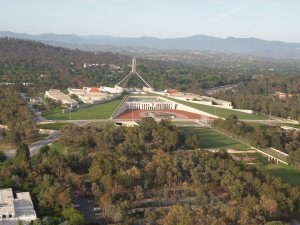 In this technological world there is much discussion about whether there actually is a god, and if there is, is He – or She – of any relevance to us today? To me this kind of discussion indicates not intellectual rigour, but simply a misapprehension of the nature of God. God is not remote nor is God confined to a particular denomination. God is Love. And Love is universal; accessible to all, even atheists! Every time we witness an act of love – of affection, of kindness, of generosity, of forgiveness, of loyalty, of compassion … a warm smile, we are witnessing God in action. When we express these qualities we are ourselves expressing God. Nothing can be nearer than Love expressed.
Christian Science also teaches me that another synonym for God is Principle. Principle is expressed in honesty, in high standards of speech and action, in law abiding behaviour, in honour, in steadfastness to truth. Again when we see these qualities expressed in ourselves and others we are seeing God in action.
Current practice may seek to remove religion from politics, but we would argue that it is impossible to separate God from government. For what use would a government be if it did not love its community? What use would a government be that did not act according to the highest standards of principle?
It is our prayer that we as a community might witness more of the qualities of God – Love, Principle, Truth, intelligence – expressed by those chosen to represent us in government. Then regardless of sect or creed or denomination we are all truly under God’s government.
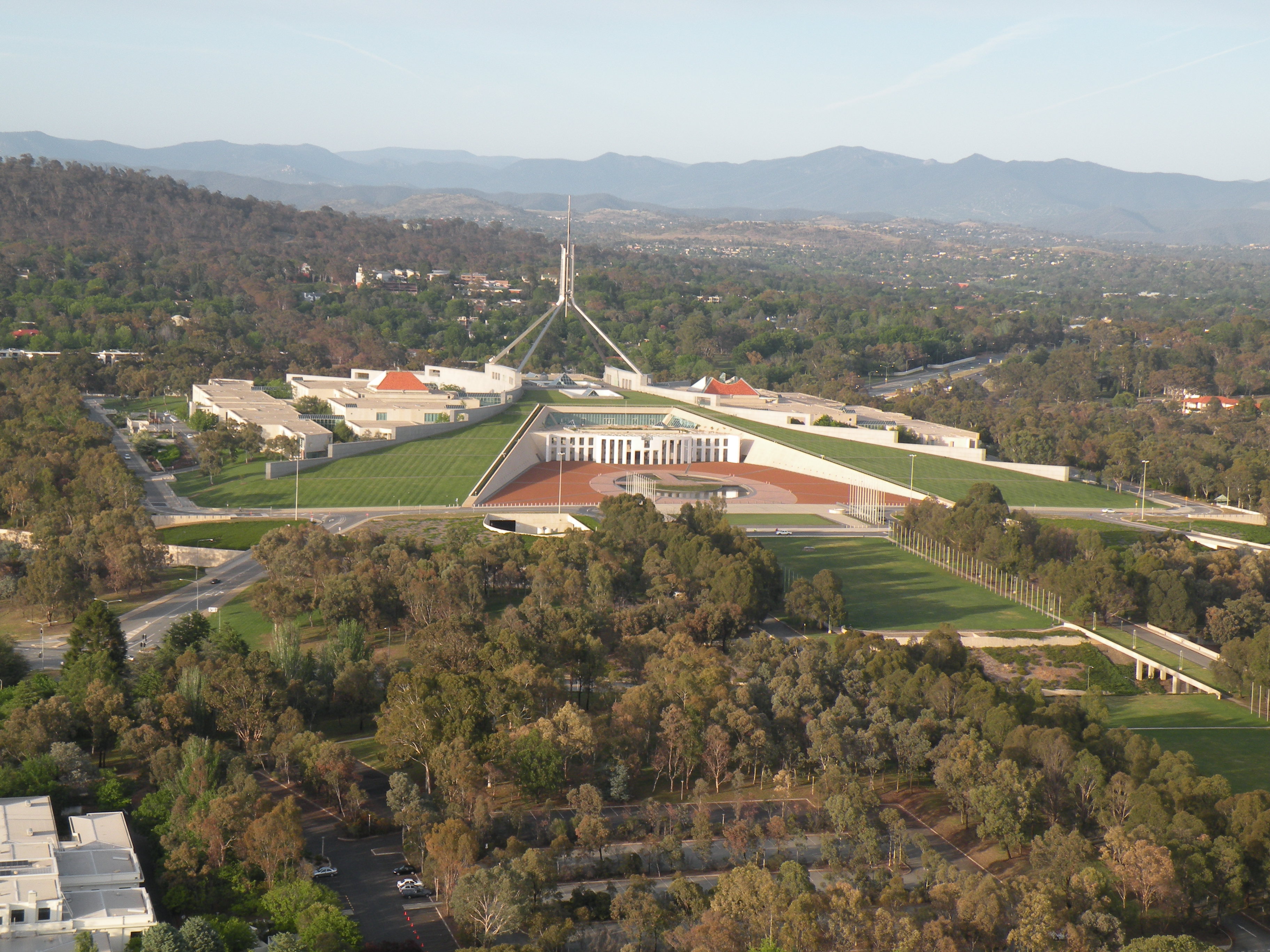
This blog item was originally given as a brief speech, by Deborah Packer, First Reader (2010-2013) of the Christian Science Church in Canberra as part of the Interfaith service held to mark the beginning of the ACT Legislative Assembly’s sitting year.

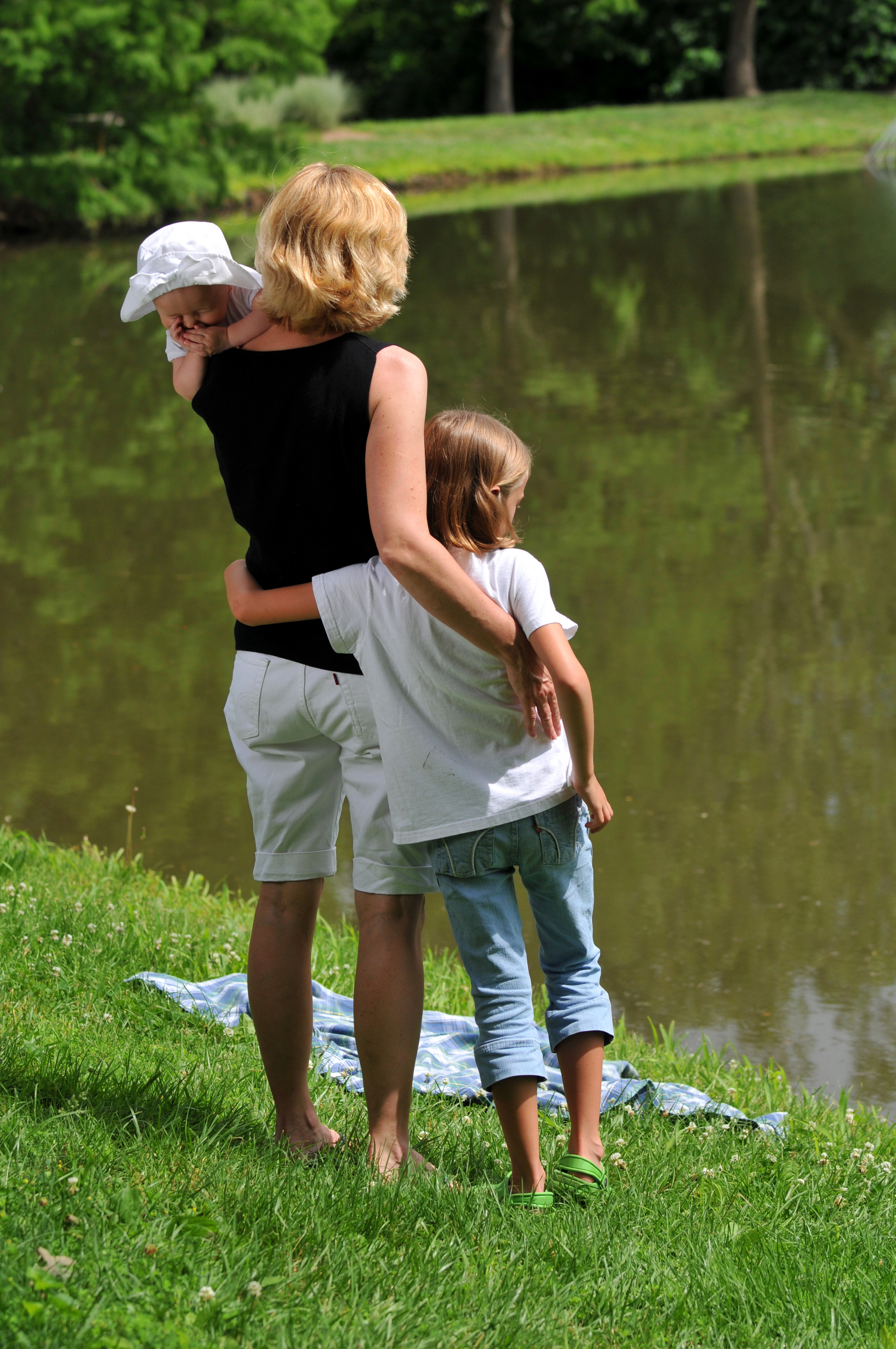 Picture this. A young mum powering around the front lawn behind a lawn mower, baby in the pouch on her chest screaming his head off.


 Christian Science Canberra